Fort Vermilion Heritage Centre
Menu
  • External link opens in new tab or window
  • External link opens in new tab or window
  • External link opens in new tab or window
  • External link opens in new tab or window
  • External link opens in new tab or window

Artifact of the Week

2023 Artifacts of the week


This is a wooden Pack Saddle. These style saddles were very effective in comfortably holding large quantities of goods onto pack animals such as horses and mules. Such pack animals were used in bringing goods over land to Fort Vermilion and often by locals going on extended trips. This one is handmade and is stamped on the side with a label - though the best we can interpret is "Branch". Pack Saddles are still in use today by hunting guides and trail ride experiences.
2018.27.51 / Randolph, Helen
02/01/2023

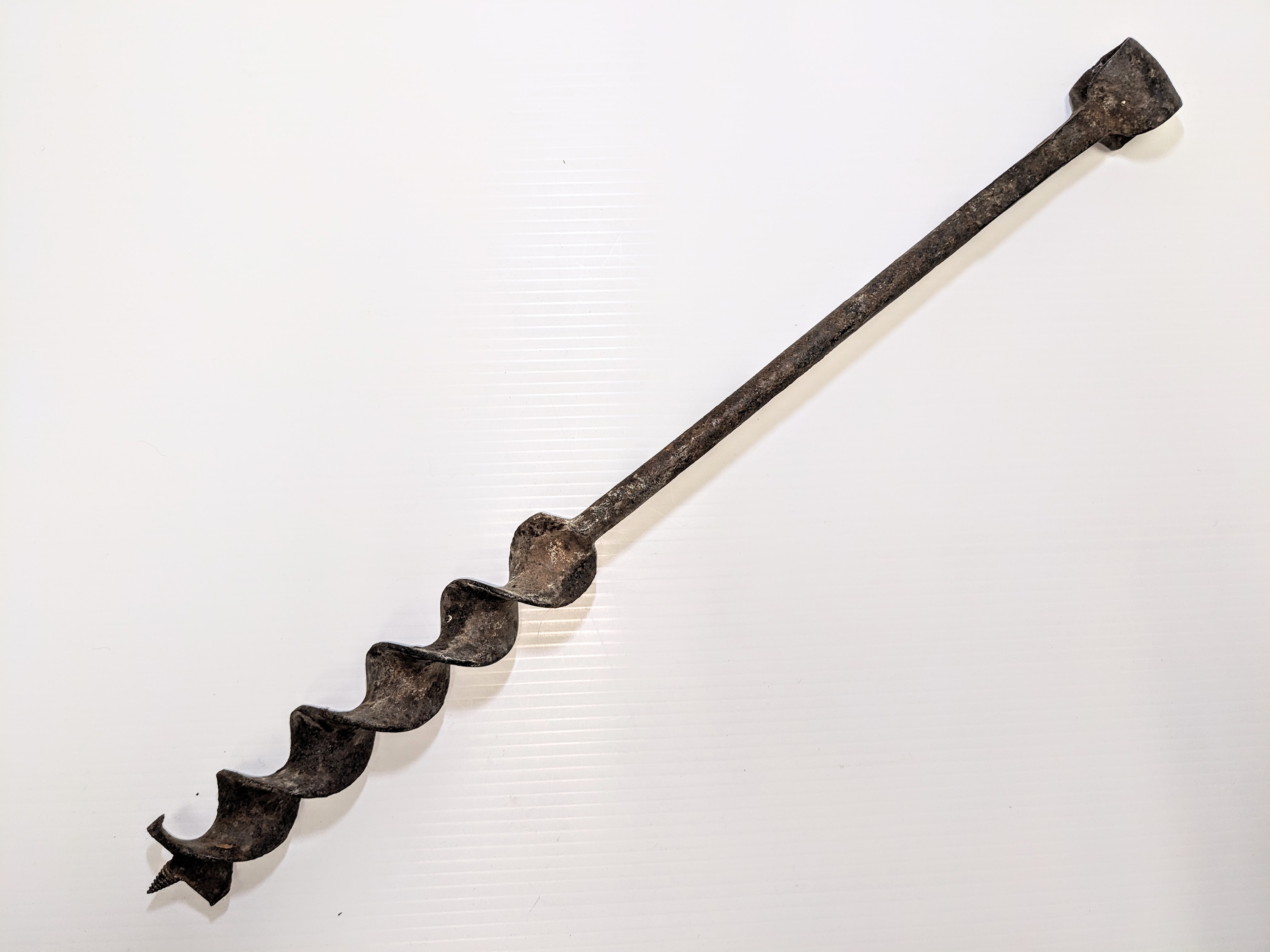
This is a Barn Beam Boring hand Drill. It is missing a handle (usually made of wood) that would pass through the loop on the right side. Twisting this wooden handle would drive the screw end into the beam of wood -and after much more twisting- create a 1" hole through the beam. A dowel would then be driven through this hole into the beam beneath - preventing lateral movement between the beams. This practice was common in building barns (hence the name of the tool) but in Fort Vermilion the practice was also used in building log houses! 
996.39.6 / Clayton, George
09/01/2023

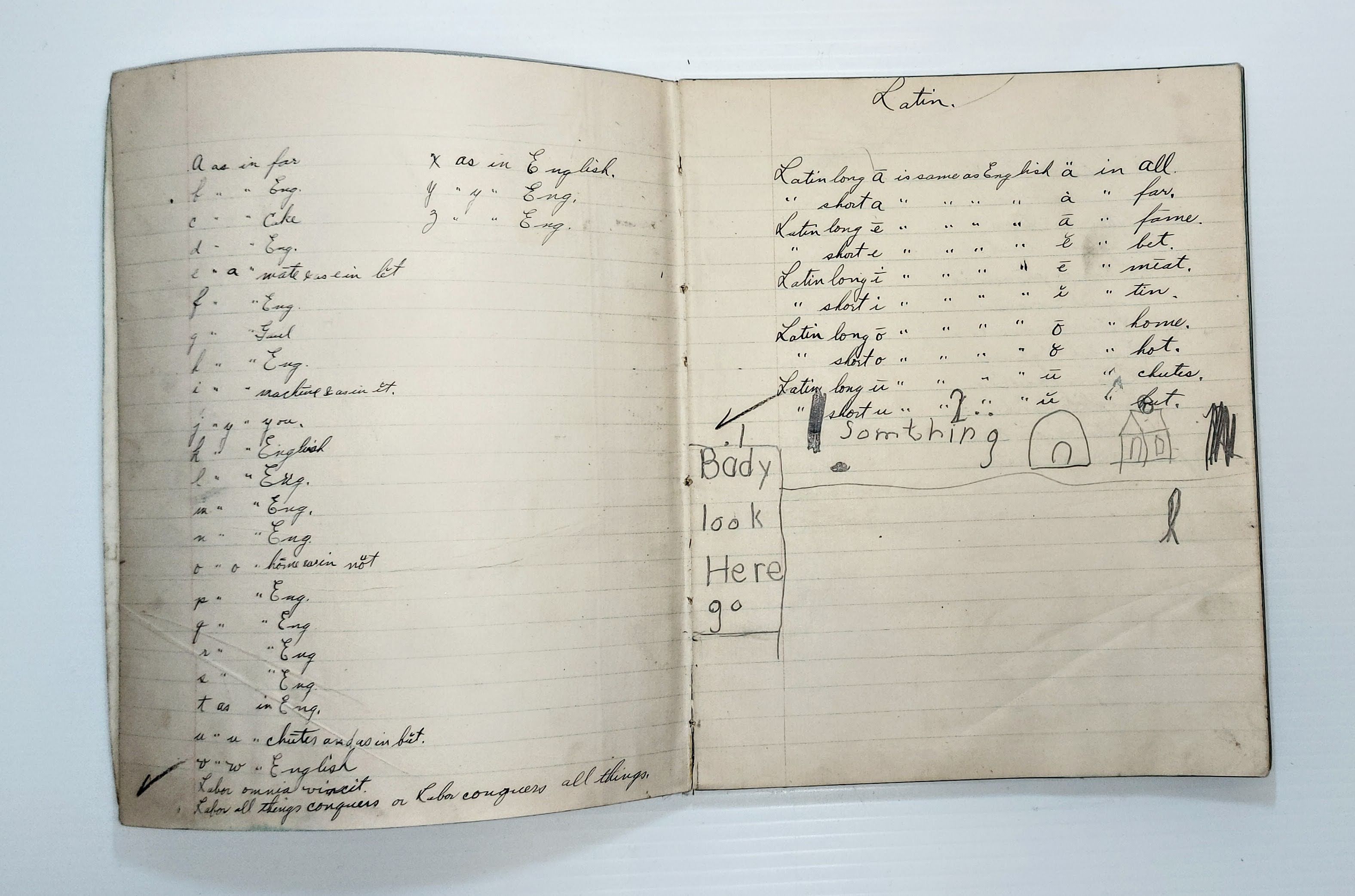
This "Exercise Book" belonged to Walter Letts and contains his homework and writing as he learned latin! Walter came to Fort Vermilion in 1921 with parents Paulina and William Letts and stepbrothers. Walter's interest was piqued by school and this exercise book is evidence of that - detailed lessons in pen with little crossed out. He later became a teacher and helped to establish the first public school in Fort Vermilion. Walter was a committed volunteer of the community and served many years on the Board of trade. The additional drawings (as seen in the picture) likely come from Judy Eek - niece to Walter and Florence.
996.40.99 / Eek, Marilyn

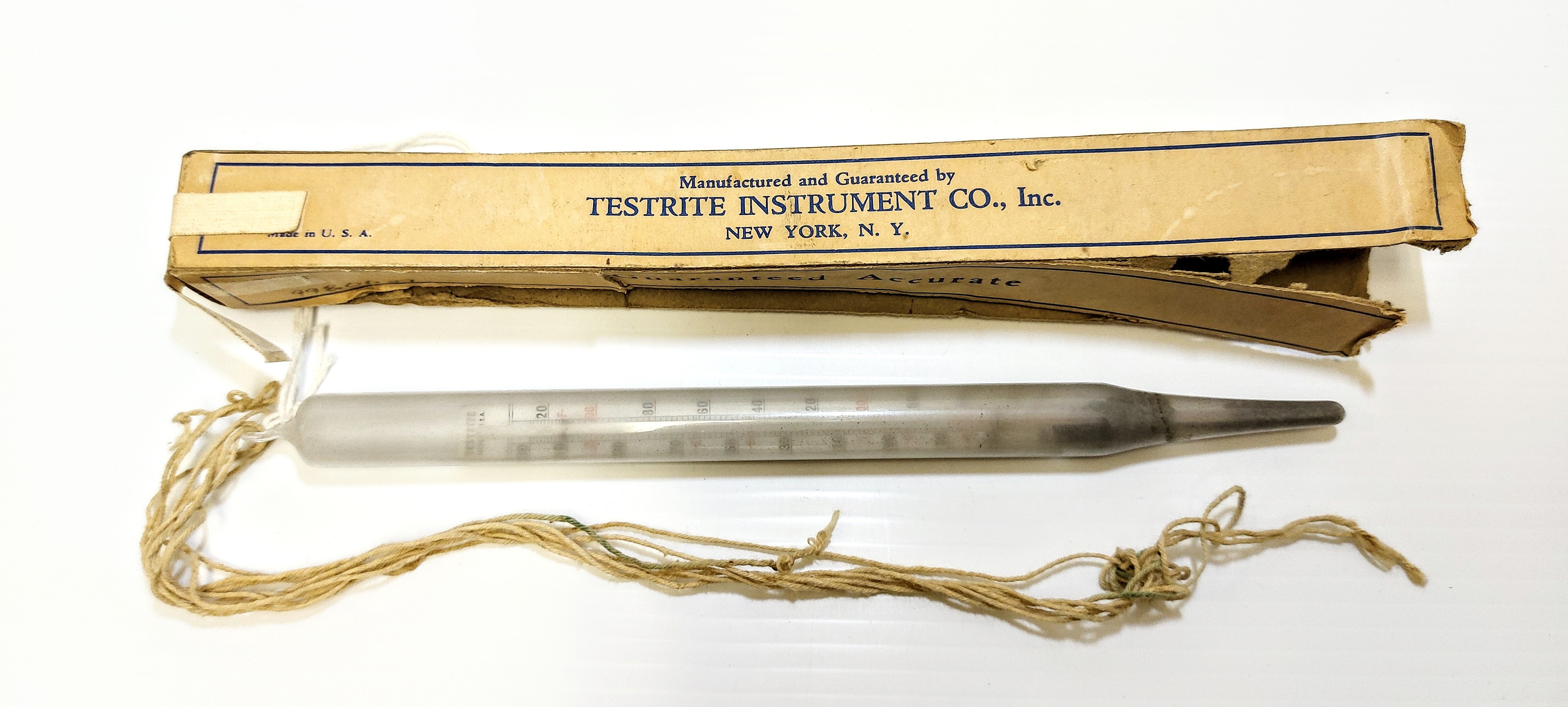
This is a floating Dairy Thermometer. Made in New York, this thermometer gauges temperature with special markings that notate the various stages of milk products. For example, it notates "Cheese" at 85ยฐ "pasteurizing" at 165ยฐ and "Churning" at 62ยฐ. Precise temperatures are very important in producing quality dairy products and this thermometer is labelled as "Guaranteed Accurate". Dairy products were produced throughout the area with notable operations being the Lawrence Ranch, numerous families in "Buttertown" and the Newman Farm.
998.1.27 / Newman, Jack & Pearl

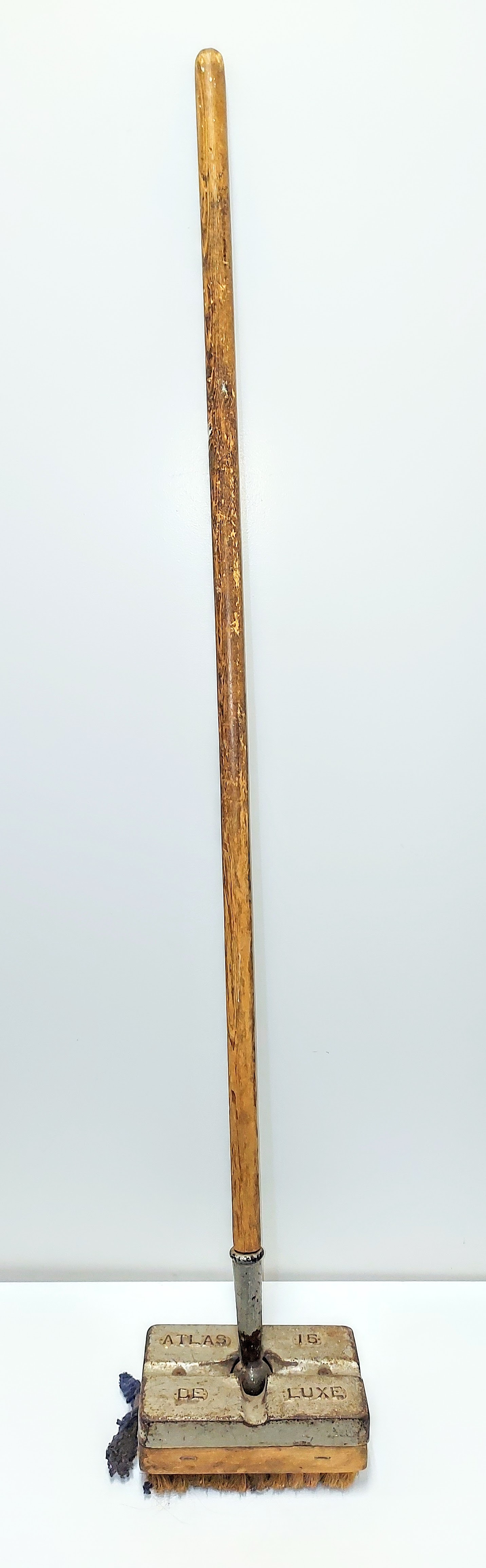
This is a hand floor-polisher. The base is made of cast Iron and has coarse bristles underneath that ensure the polishing wax is evenly spread. Blue felt is attached around the edges as a cushion to protect dings and nicks on other objects. You can see remnants of past polishing jobs on the marked handle. The unit weighs 7lbs - which doesn't sound like much - but is significant if used to polish a large area!
2000.03.23 / Campbell, Edith

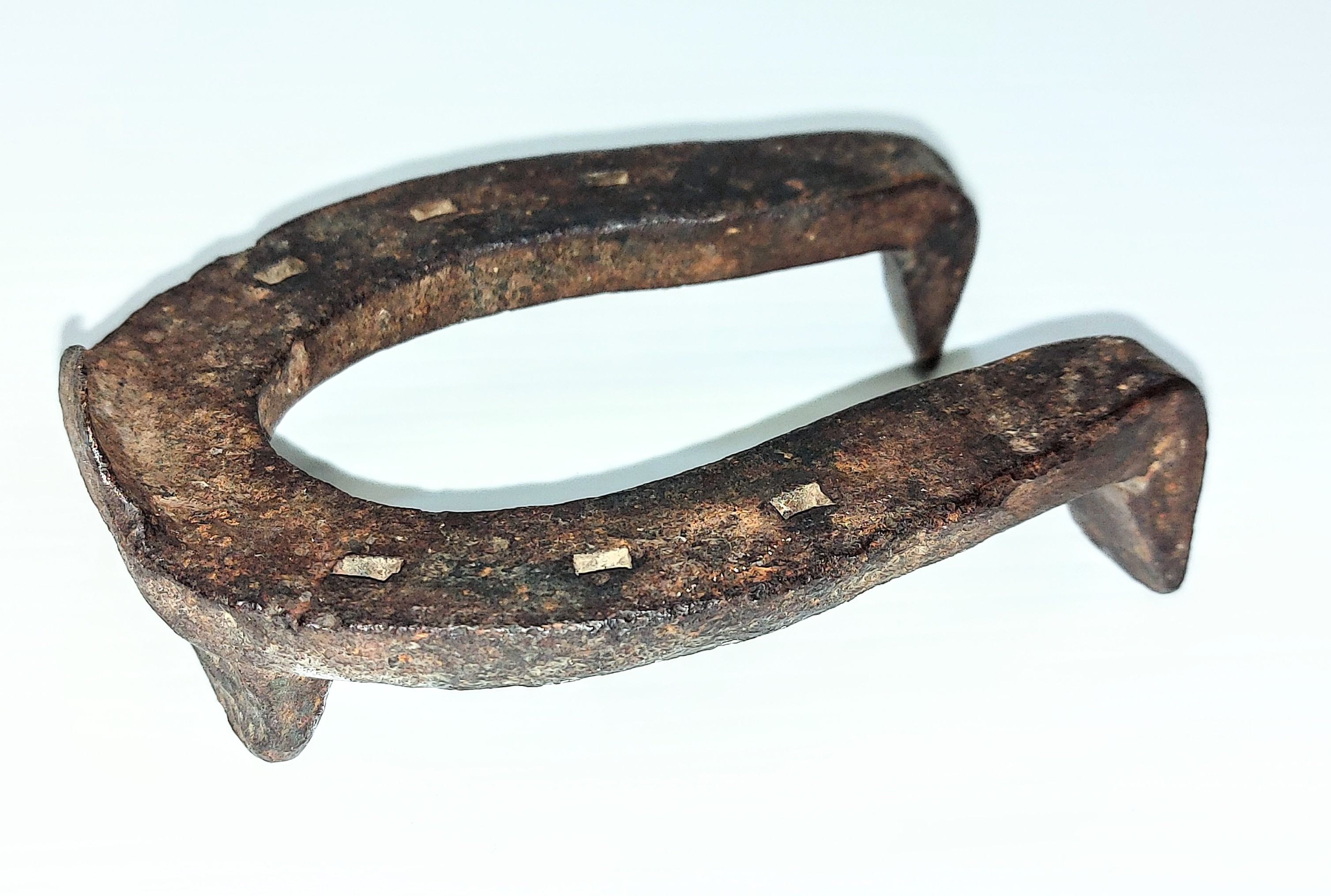
This is a small (it's only 10cm X 7cm) ice or "pulling" horseshoe. The shape is the same as regular horseshoes but also has 3 large spikes - one on the front near the toe and two on the back. These spikes provide extra traction in icy conditions or when pulling heavy loads. Horses used by Louis Bourassa on the mail route, or those used by Jack Whitehouse or Frank Flett in hauling water throughout the community likely would have used such a shoe in the winter season. Horses were also used to move buildings in the community and may have been shod with such a shoe.
2007.61.17 / Tourangeau Martha + Harvey

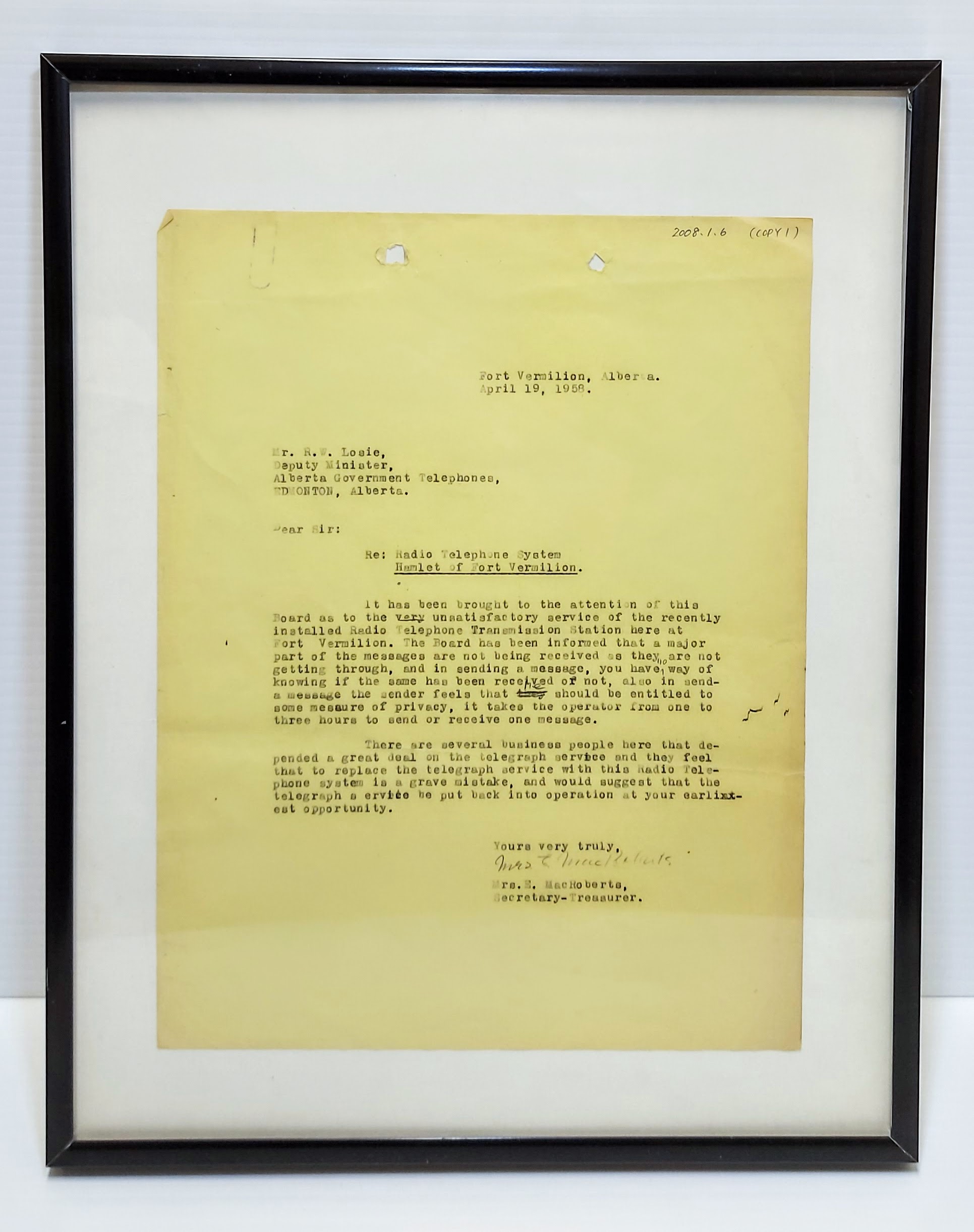
Today is International Radio Day and this is a framed letter from Board of Trade Secretary Estella McRoberts to the Deputy Minister of Alberta Government Telephones. The letter expresses the "very unsatisfactory" service of the "radio telephone" which replaced the telegraph. The letter goes on to express the need for privacy in communications and the hours it sometimes takes the operator to transmit / receive messages. Likely Estella is talking about a radiogram rather then a Radio Telephone. A radio gram was essentially a wireless telegraph which any one could tune into if they knew the correct frequency. A radio telephone provides direct audio connection and does not require an operator to send or receive messages. In any case, it was deemed a "grave mistake" in establishing better communication with the outside world!
2008.1.6 / Fort Vermilion And Area Board of Trade
13/02/2023

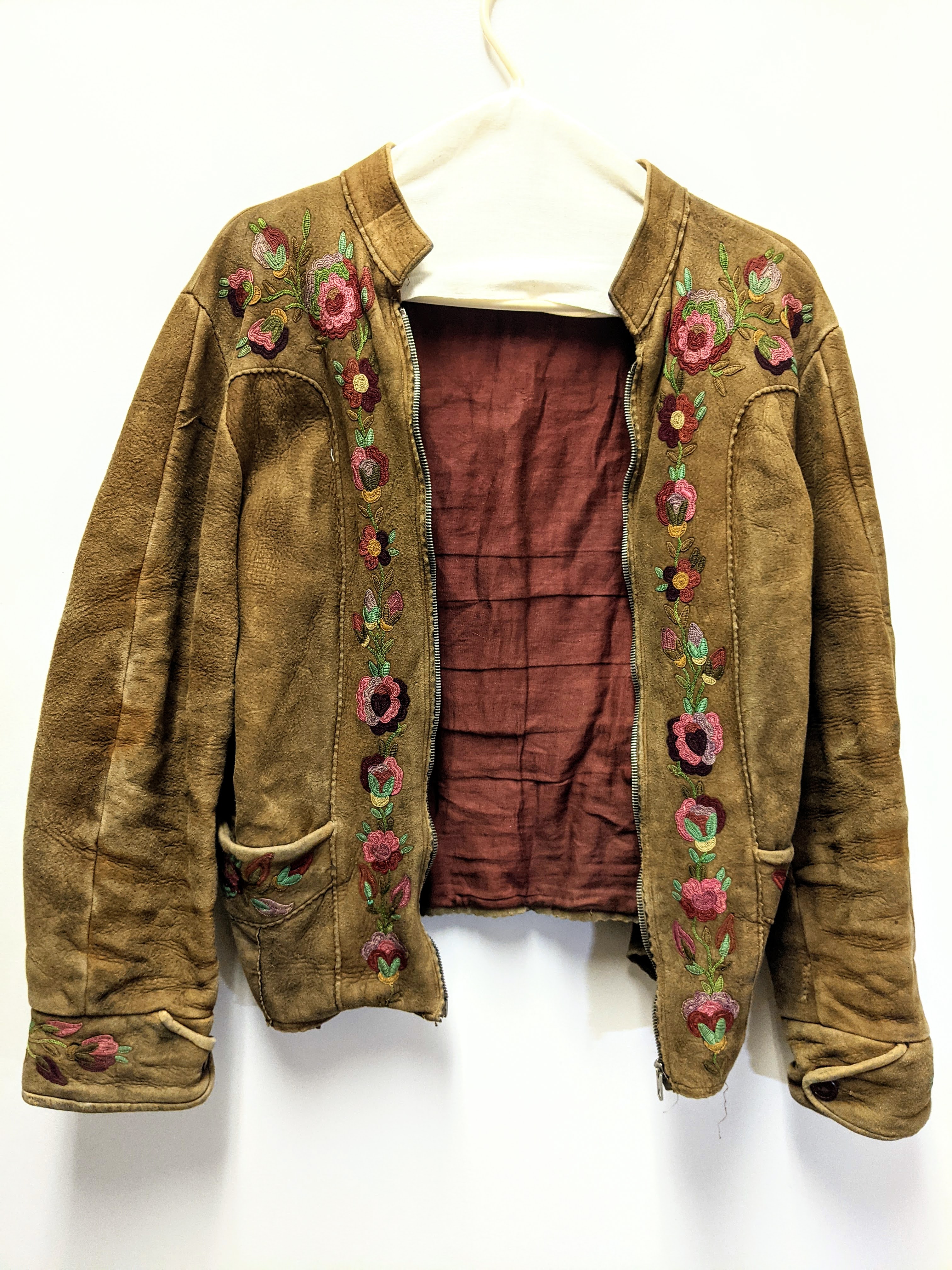
This is a home tanned, beautifully embroidered, moose leather jacket. Likely made by a local in c.1946 it was worn by Pete Clarke for many years - which show in places which are worn out. What has not worn out is the rich smell of home tanned moose hide!
2004.01.01 / Clarke, Pete + Doris
20/02/2023

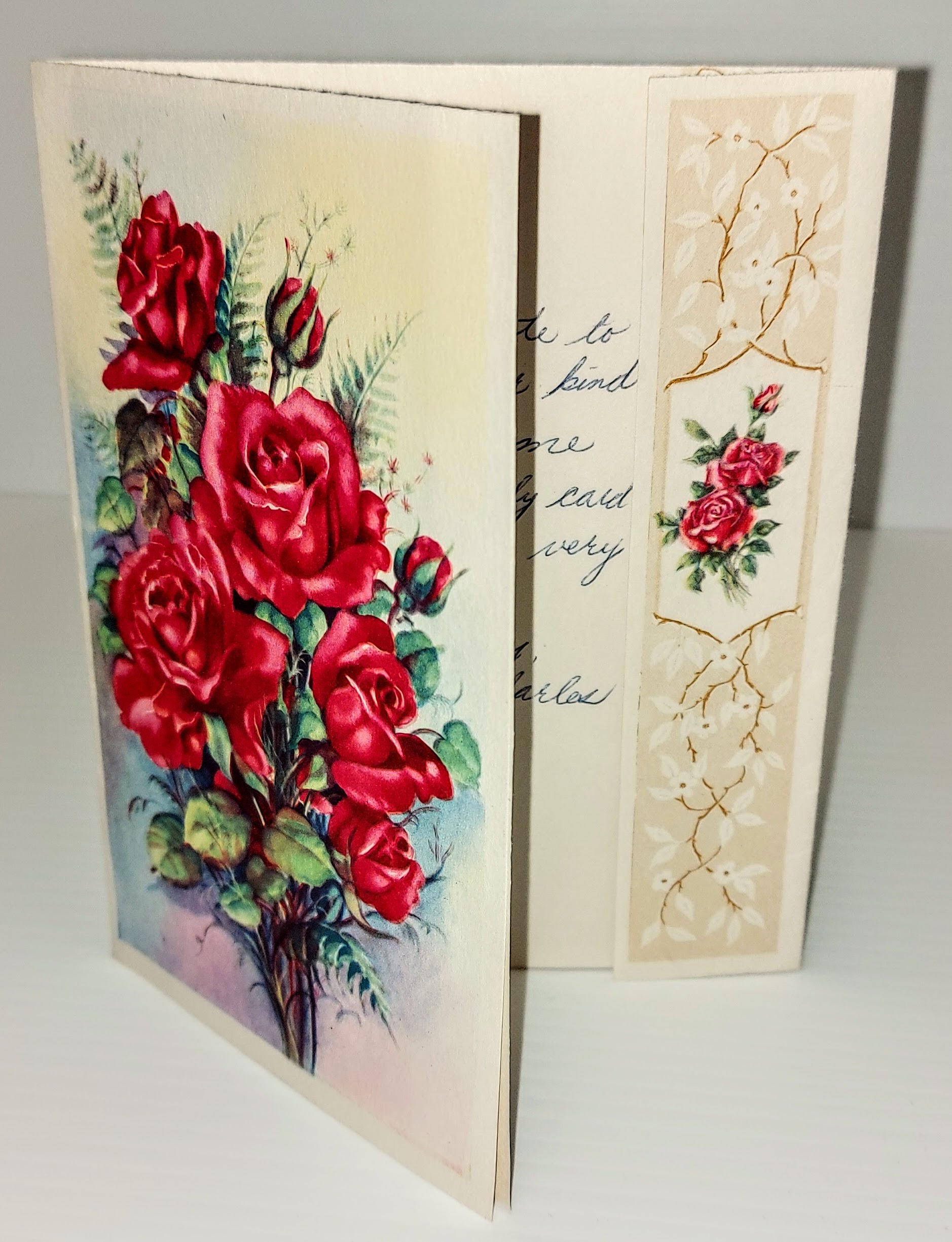
This is a Thank you card from Joyce Charles to the Women's Community Club (WCC) of Fort Vermilion. The WCC was active in the community - often delivering encouragement to those in hospital, the elderly, and those who were struggling. They were also known to support community infrastructure and events. They financed such giving by hosting bake sales, banquets and many other fundraisers. Women's Community Clubs (and other variations) were common across Canada and very popular - in 1932 it is estimated that 1 out of every 8 women was involved in one such club. Wednesday March 8 is international Women's Day.

998.01.168.05 / Newman, Jack + Pearl
06/03/2023

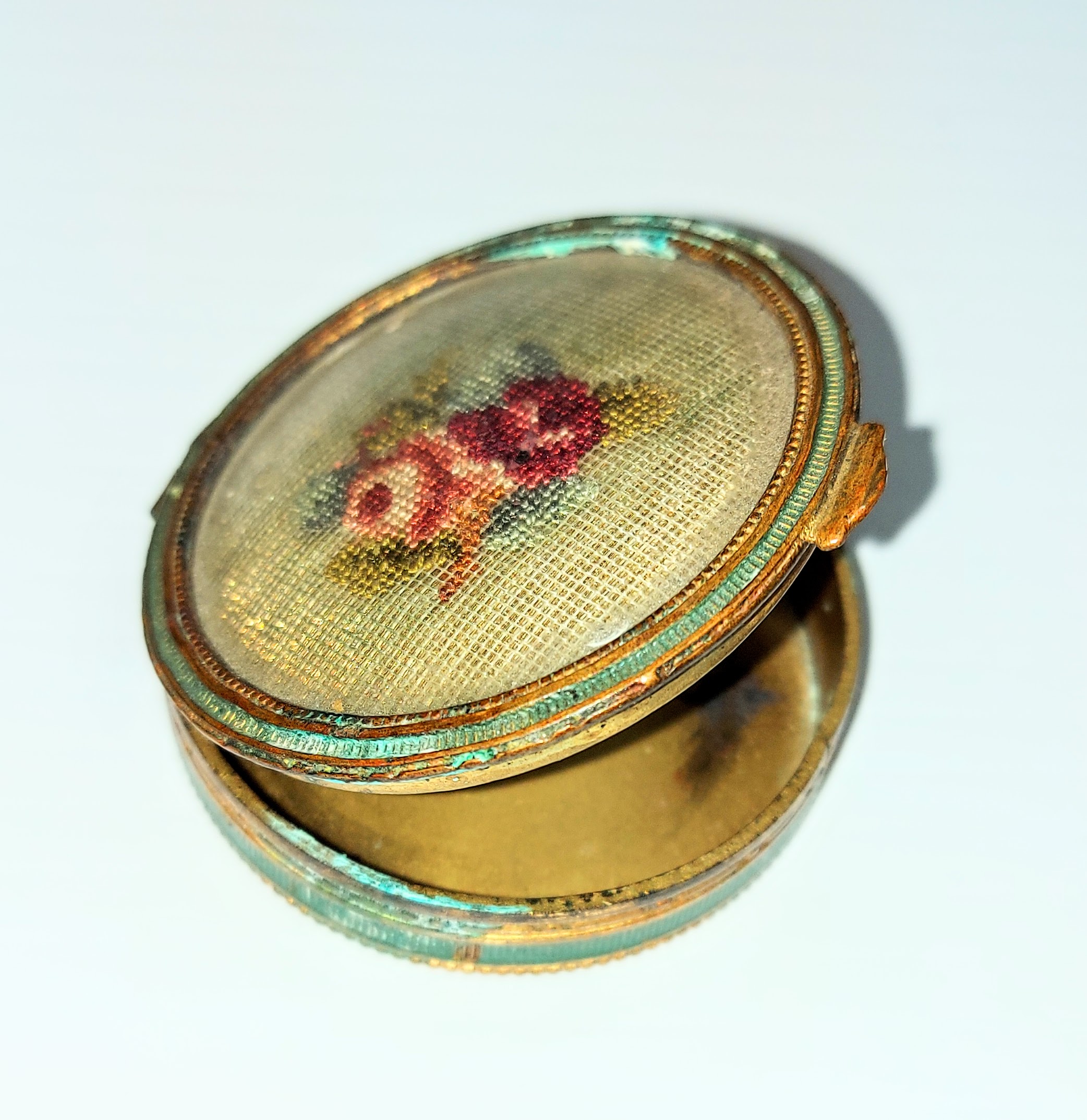
This small case is a makeup compact. On the interior of the lid is a small mirror and though it is mostly empty there are still trace amounts of powder in the base. The floral pattern on the top is intricate needlepoint work - safely held behind a piece of glass. The turquoise color comes from a tarnish on the brass metal of the compact. There is no brand or date labelled on the object but likely dates back to the 40's.
2003.34.02 / Bundy, Val
13/03/2023

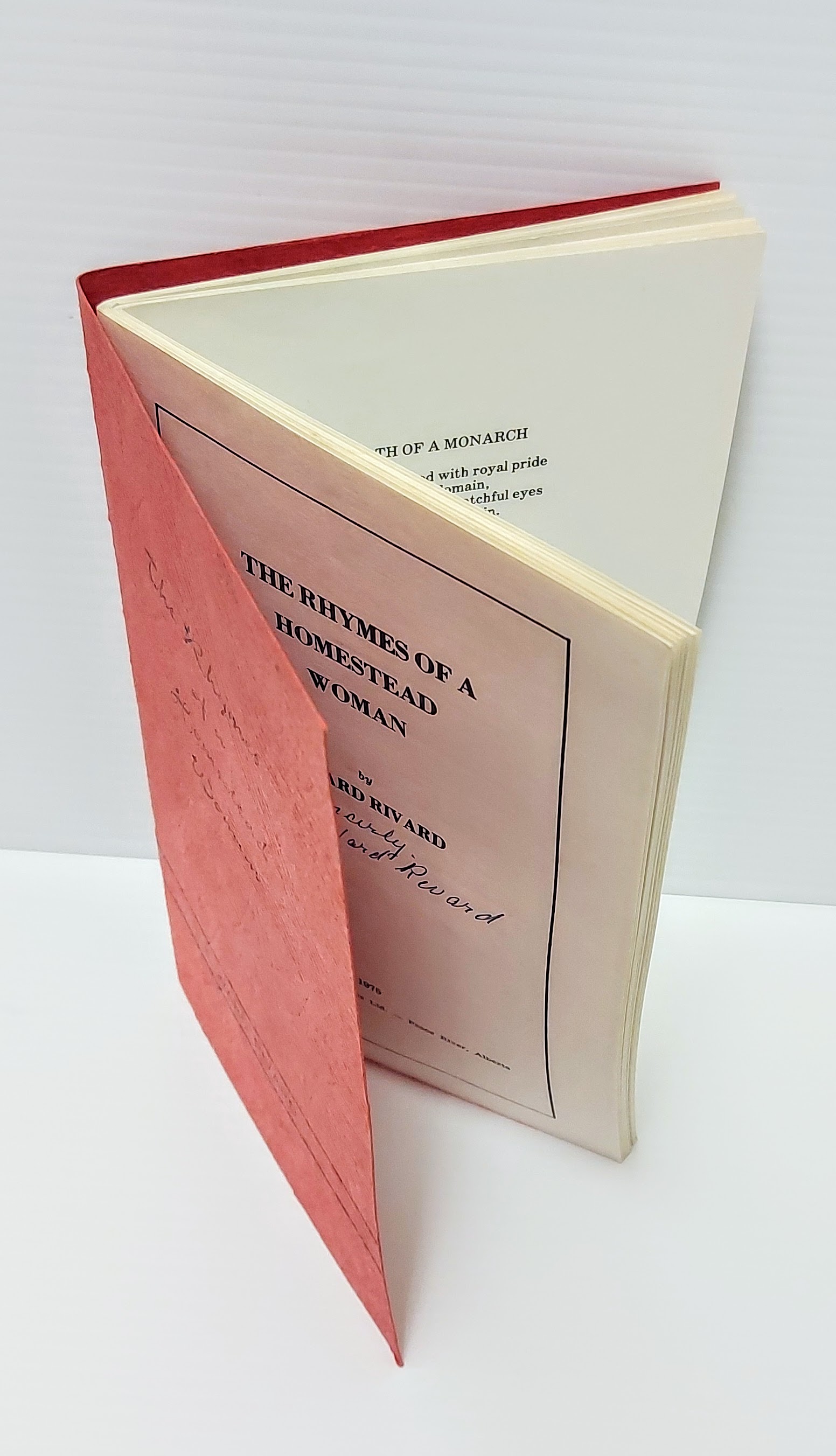
Tomorrow (March 21) is UNESCO World poetry day. As such we have selected Elizabeth Ward-Rivard's self published book "Rhymes of a Homestead Woman" as our artifact of the week! The book contains an impressive 38 poems in 48 pages which tell of the beauty, heartache, and characters of the area that she loved and called home. Elizabeth moved to the area with her husband George and 4 children in 1919. The book was reprinted several times - this edition coming from 1975 and is signed by the author.
990.1.130.2 / Newman, Jack + Pearl

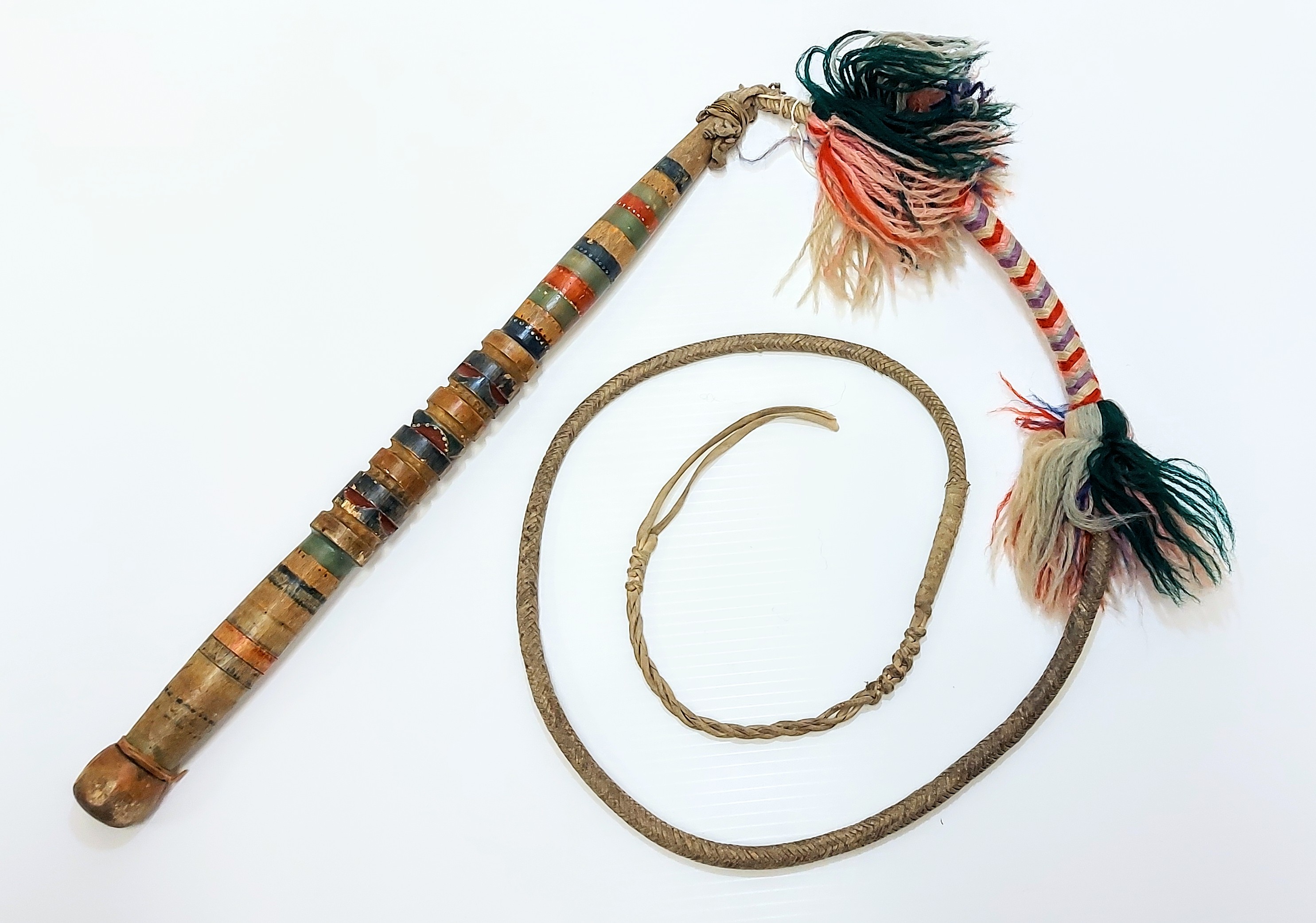
This is a homemade whip used for Dog Mushing. It is beautifully decorated with yarn detailing and an ornately carved (and painted) wooden handle. It generally would not be used to strike the dogs -rather it would be "cracked" which would make noise to encourage the dogs to run. Dog sled teams were a major source of transportation in the area from the early years up until 1950 or so. Kids would mush dogs to school, mail was brought by dog team and trappers relied on them while on the trapline.
2004.01.08 / Clarke, Pete + Doris
27/03/2023

This is a sample bottle (Left) and postage container (Right) for submitting water samples from Fort Vermilion to the Department of health in Edmonton. Submitted C.1955 to Jack Grainge (who was very influential in NWT sanitation infrastructure) the water sample may have come from a well, dugout, or river. In the late 1960's water was still hauled direct from source to homes in Fort Vermilion via horse and wagon / sleigh with little to no sanitation treatment. Good water is integral for good health - to read more of Jack Grainge's legacy follow this link - https://www.uap.ualberta.ca/.../Ope.../9781772121667_WEB.pdf
April 7th is World health Day
2009.08.11.01+02 / Fort Vermilion Experimental Farm
03/04/2023
 
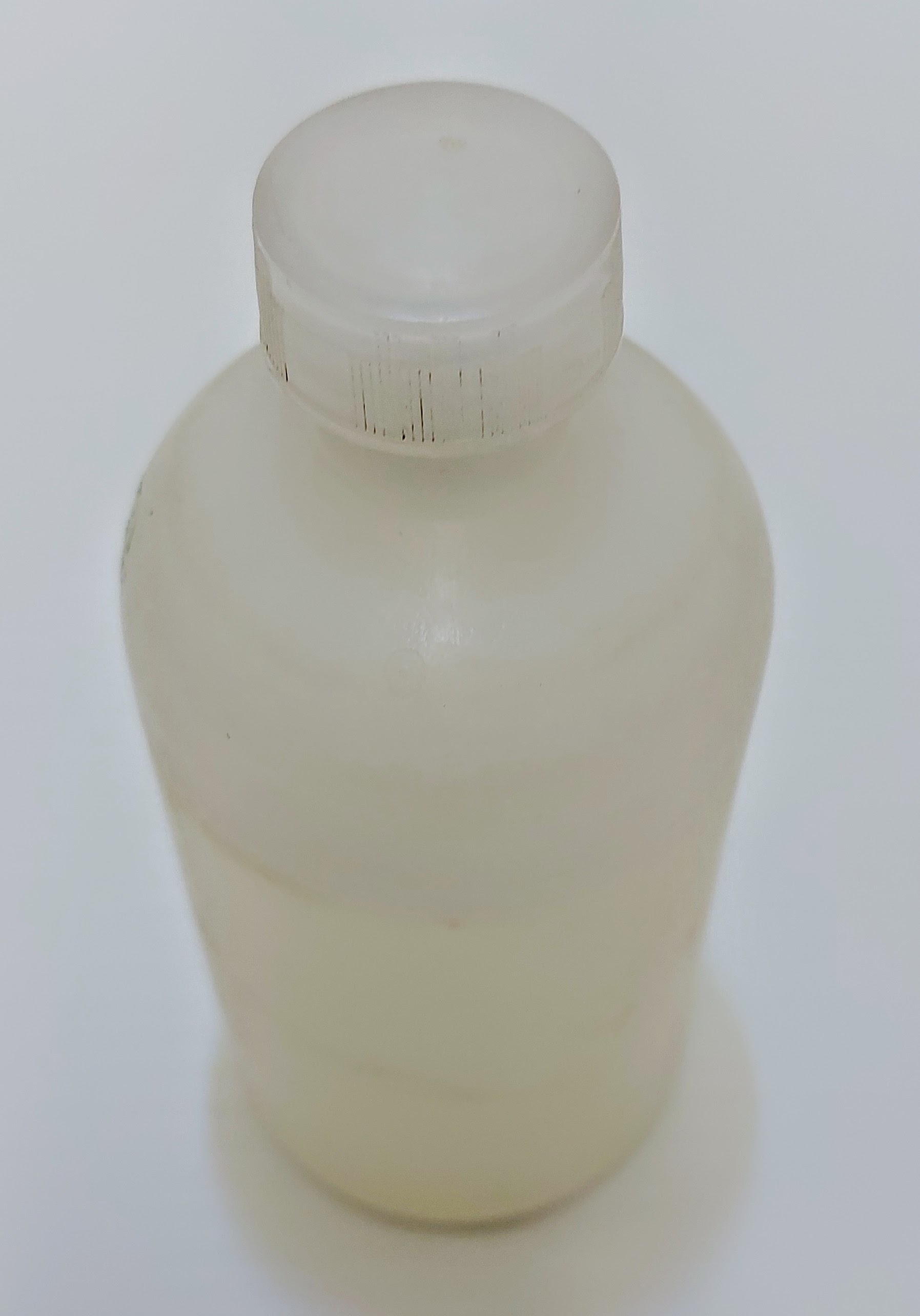
Though this bottle is not much to look at - inside is a solution of lime and water also known as "White Wash". Whitewash was applied in spring to wooden structures as it's natural antibacterial properties aided in fending off bugs, rot, mildew and mold. The solution was applied with a brush and was often a messy affair assigned to teenagers or children of the family. In a report from 1906 it is noted "Great deposits of limestone are found at Vermilion falls and near Red river forty miles farther down the river. A large quantity of very good lime is manufactured every year by the people of the country." This lime was used throughout this northern area and likely was shipped further afield.

2009.08.13 / Fort Vermilion Experimental Farm

17/04/2023

This is a letter addressed to Albert Lawrence from F.H. Reed (director at Lacombe Experimental Farm) dated April 28th 1937. The letter notates the transfer of Art Raybould from Lacombe farm to the Fort Vermilion Experimental Farm to aid in the care of the live-stock. Art was paid 25ยข / hr and expected to work 12 hour days in the summer and 9 hour days in the winter. The Farm provided animal breeding services, and at this time hosted some 10 horses, approximately 20 cattle and a few hogs amongst other animals.
993.3.135 / Agriculture Canada
24/04/2023

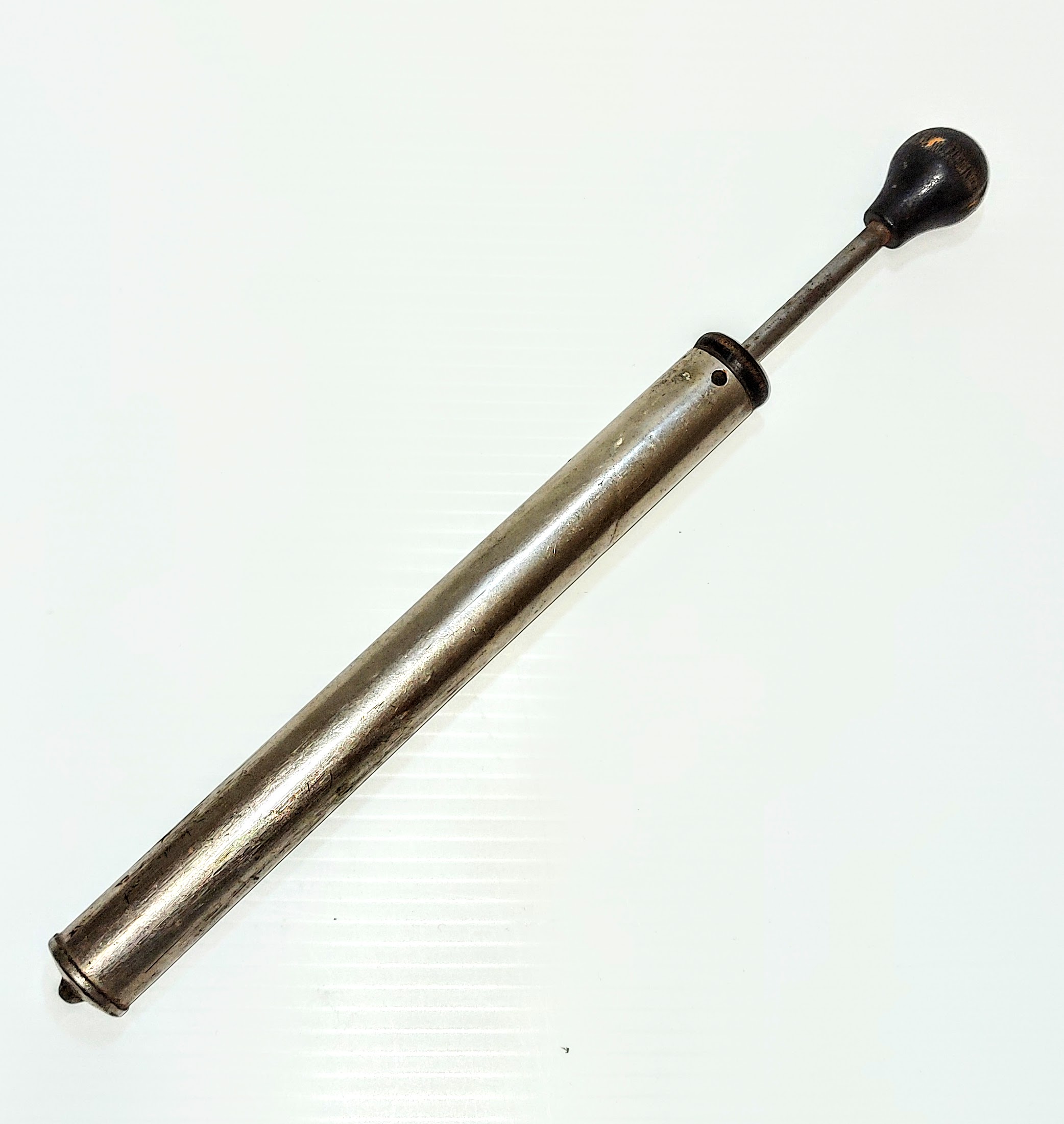
This tubular object is a Pressurized kerosene lamp pump. Such a pump was used to pressurize the fuel chamber of the Kerosene lamp which forced the fuel to atomize and consequently burn hotter and brighter. Though more complex in design and operation, this method provided a much better light source - ideal for a lamp - but was not as fuel efficient.
2000.03.22.01 / Campbell, Jean
01/05/2023

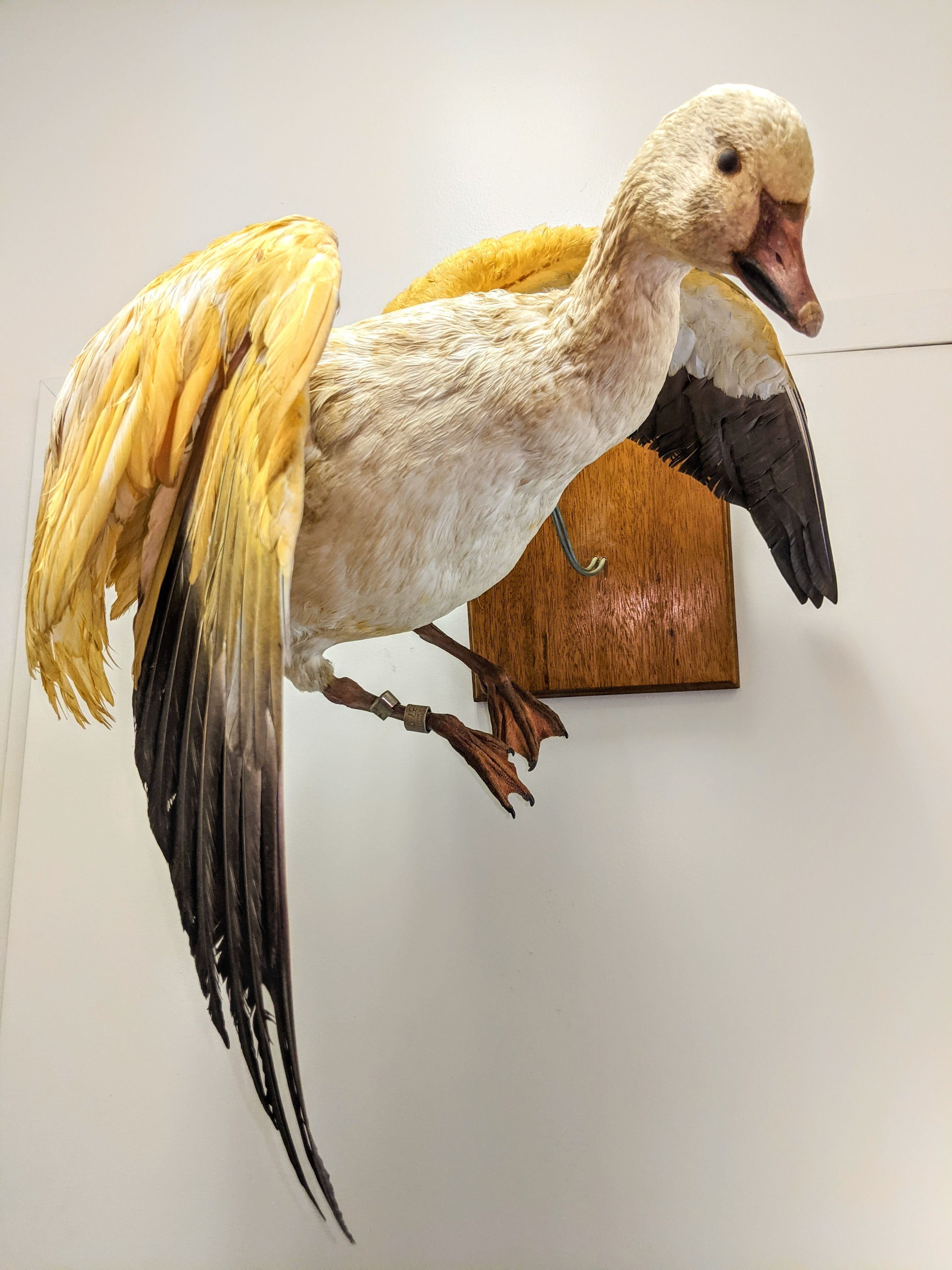
This Saturday is World Migratory Bird Day. As such, we have chosen this specimen as our artifact of the week! This Golden Goose (who has yet to lay any golden eggs) is actually a snow goose that has been dyed yellow for research purposes. The bird was banded and dyed in the Anderson River Delta of the Mackenzie River in 1974 by T.W. Barry. Snow geese are migratory birds that breed in the arctic and spend winters in the united states - passing through northern Alberta in the tens of thousands. The Hay Zama lakes is a RAMSAR internationally recognized wetland site that is used by 3 of the 4 north American migration routes and hosts up to 177,000 geese during migration periods. Read more about the Hay Zama Lakes site under the "Ecospaces" Tab!
2022.05.01.03 / Smith, Louise
08/05/2023

This is a black tea brick. Made of finely ground tea leaves and a binding agent (historically blood, flour, or animal dung) these molded bricks made transporting tea much easier and less likely to spoil. These characteristics made tea bricks ideal for voyagers covering long distances through North America on their Fur trade routes. Tea bricks of this nature were also used as currency in Asia and could be cut into small portions for smaller change. One would scrape about 10 grams off this brick into a litre of hot water - allowing it to steep before consuming - this brick could make about 6 litres of tea. May 21 is international Tea Day.
2006.57.1.2 / Friesen, Joy
15/05/2023

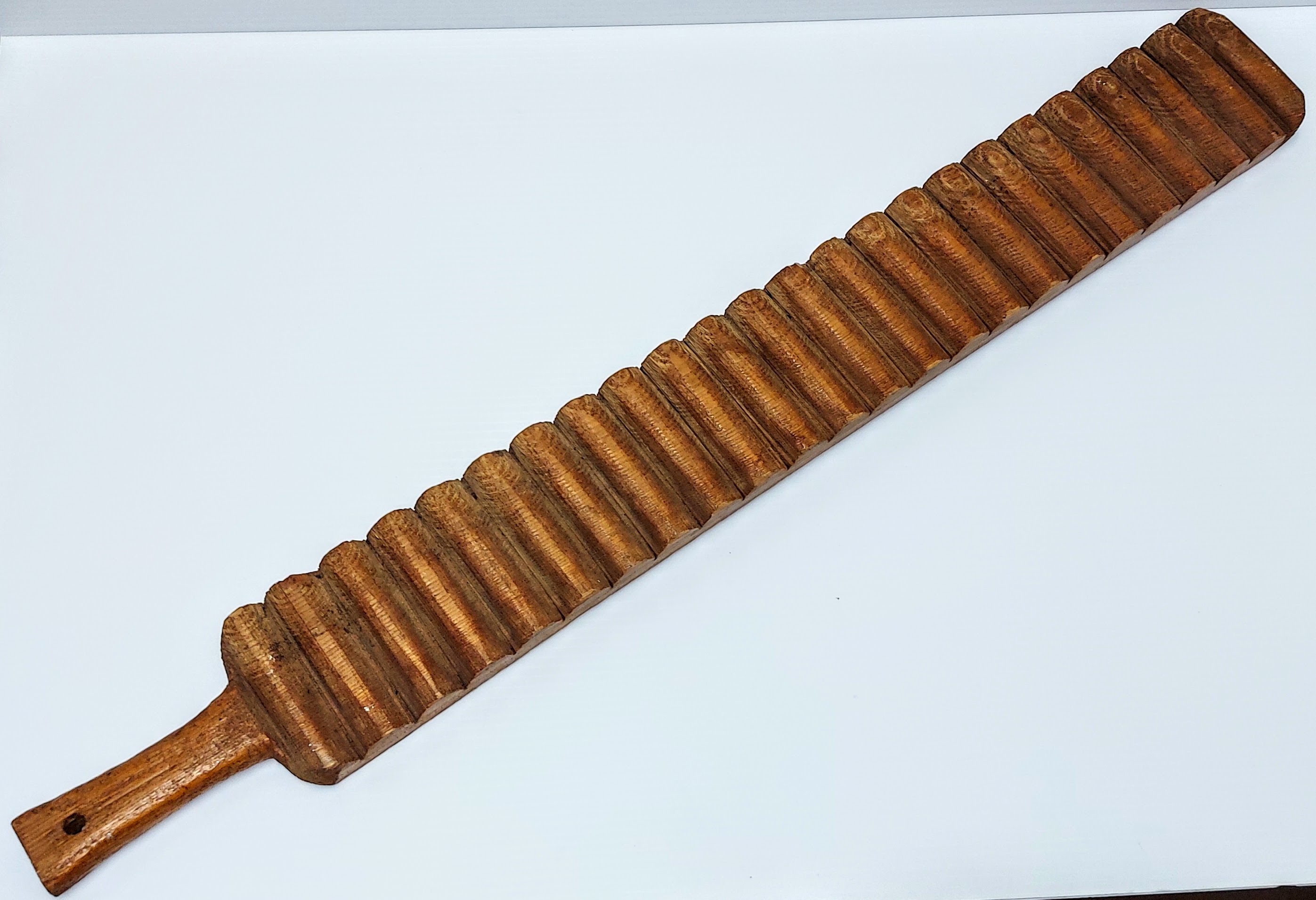
This is a hand Laundry mangle. It served multiple purposes and was a staple tool in the laundry process when the chore was done by hand. The smooth back side would aid in squeezing excess water out and smoothing linens by rolling the fabric between the board and a round roller underneath. The textured top was treated like a wash board - softening fabrics that had become quite stiff after drying on a clothesline. If you look closely you can see some of the wear from use.
2008.39.01 / Twidale, John & Alfa 05/29/2023

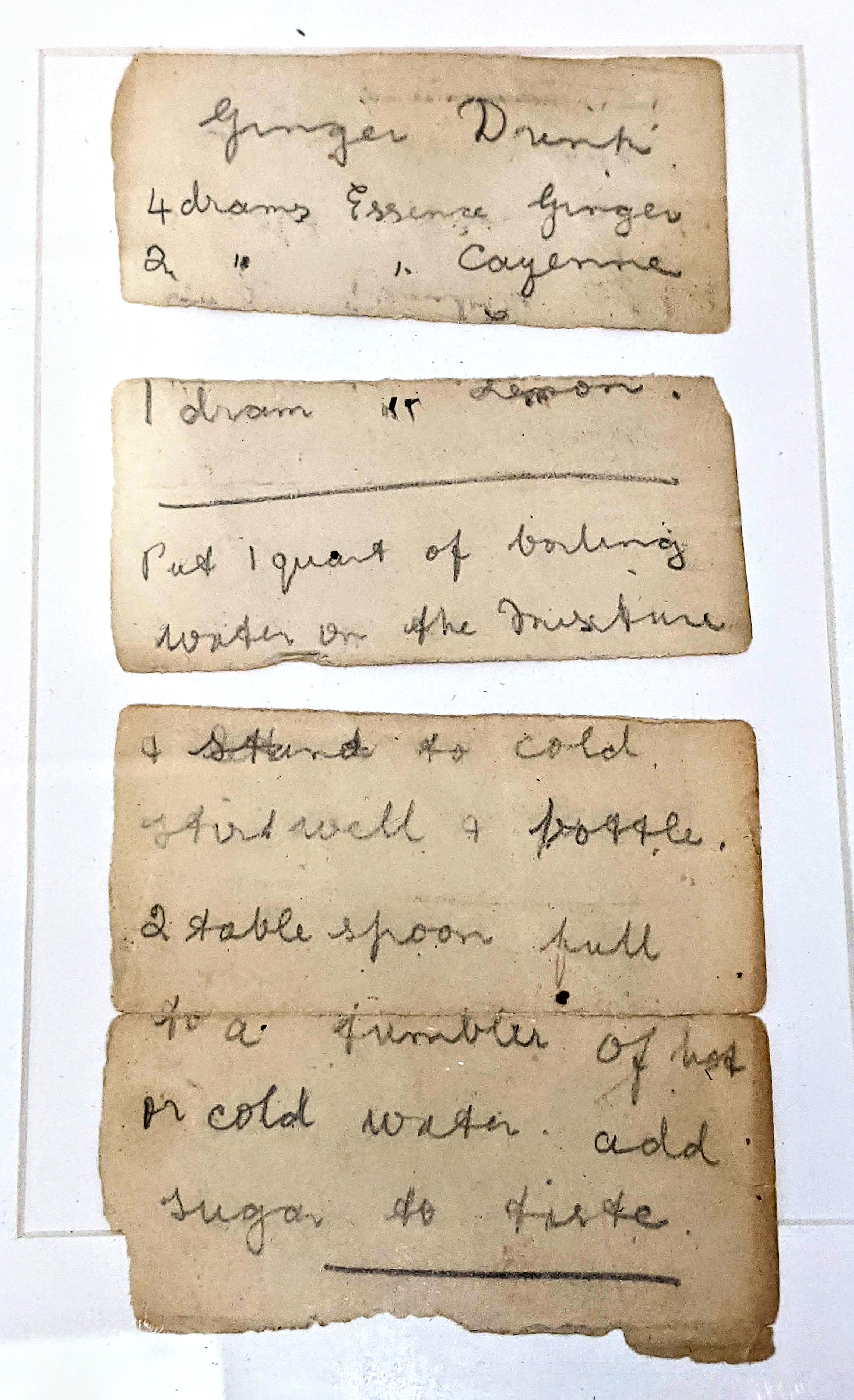
This is a recipe for "Ginger Drink" - which sounds like it could be a thirst quencher - but also a medical aid. The ingredients listed are Ginger essence, Cayenne essence and lemon essence - all of which have powerful flavors and are known for their health benefits. The last instruction is to "add Sugar to taste" - make yourself a batch and let us know what you think. Medical drink or thirst quencher?

998.1.14 / Newman, Jack + Pearl

This is the Christian Bible written in Cree syllabics. James Evans was a Methodist minister in Norway House Manitoba and is commonly credited as being the one who developed the syllabic method for writing it. The Cree oral tradition notates that "Calling Badger" was gifted the syllabic style writing from the spirit world - and James Evnas learned it upon his arrival. James Evans printed the first known syllabics text in 1840. For a more in depth look at this history read this CBC article
https://newsinteractives.cbc.ca/.../a-question-of-legacy.../
997.52.01 / Toews, Marilee

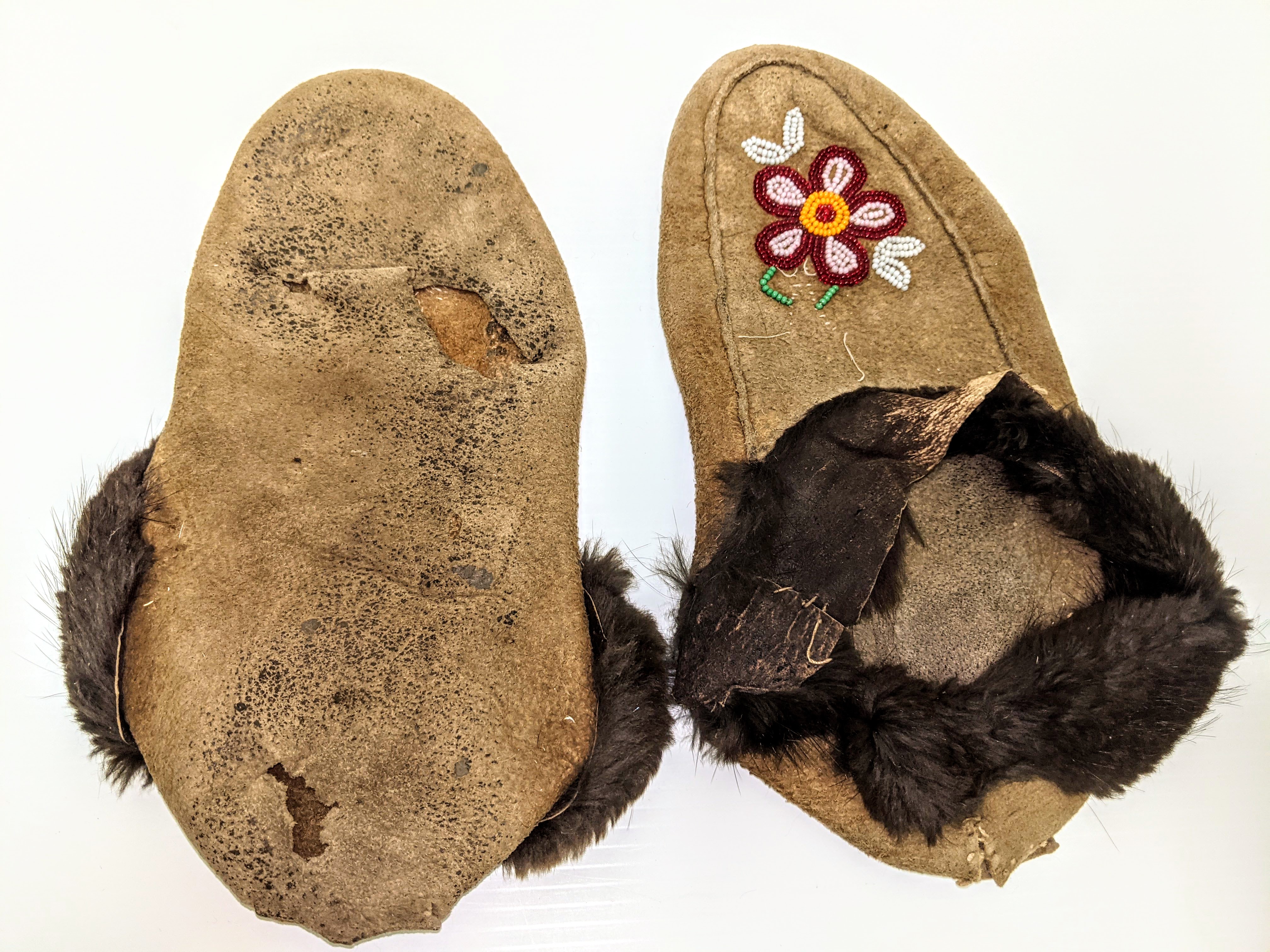
These well worn moccasins once belonged to Verne McRoberts - a notable trapper local to Fort Vermilion. These ones are hand made with traditionally tanned moose hide, trimmed with beaver fur and adorned with glass beads. They have seen many miles (and probably dance floors) as indicated by their worn nature. Moccasins (especially handmade ones) are a prized possession among many locals.
2017.01.01 / McRoberts, Verne

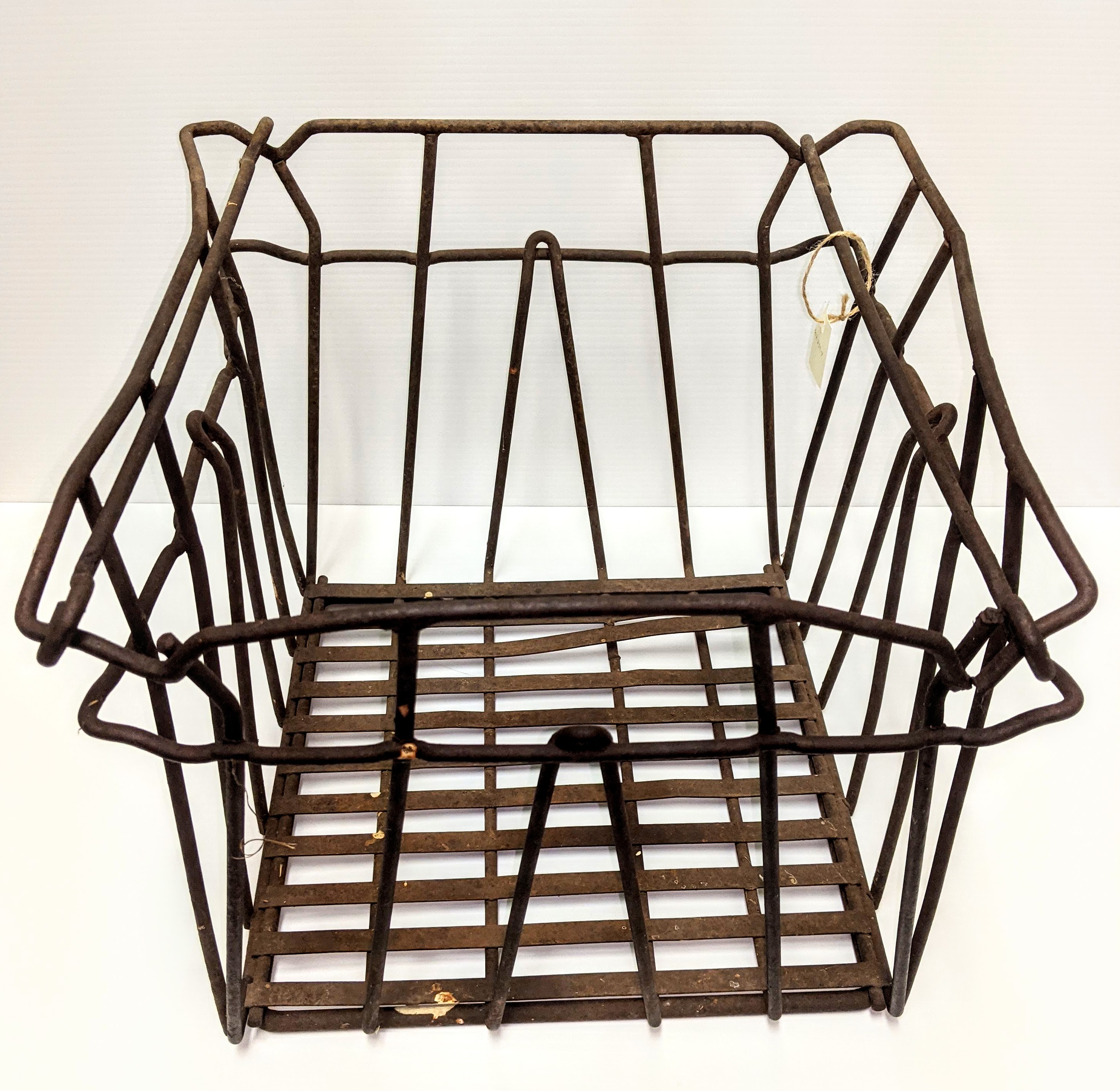
This is a vintage milk crate. The use of milk crates dates back to late 1800's but it wasn't until after WWII that crates made out of heavy gauge steel wire (such as this one) were designed. The crate made distributing and collecting milk bottles much more efficient - but not necessarily easier. This crate weighs 10lbs empty and when filled with full milk bottles would be well over 30lbs. The Newman and Lett families had a milk / cream route through Fort Vermilion for a number of years in the 40's with deliveries all across town.
2002.234.04 / Stanley-Turner, Glean & Laurene

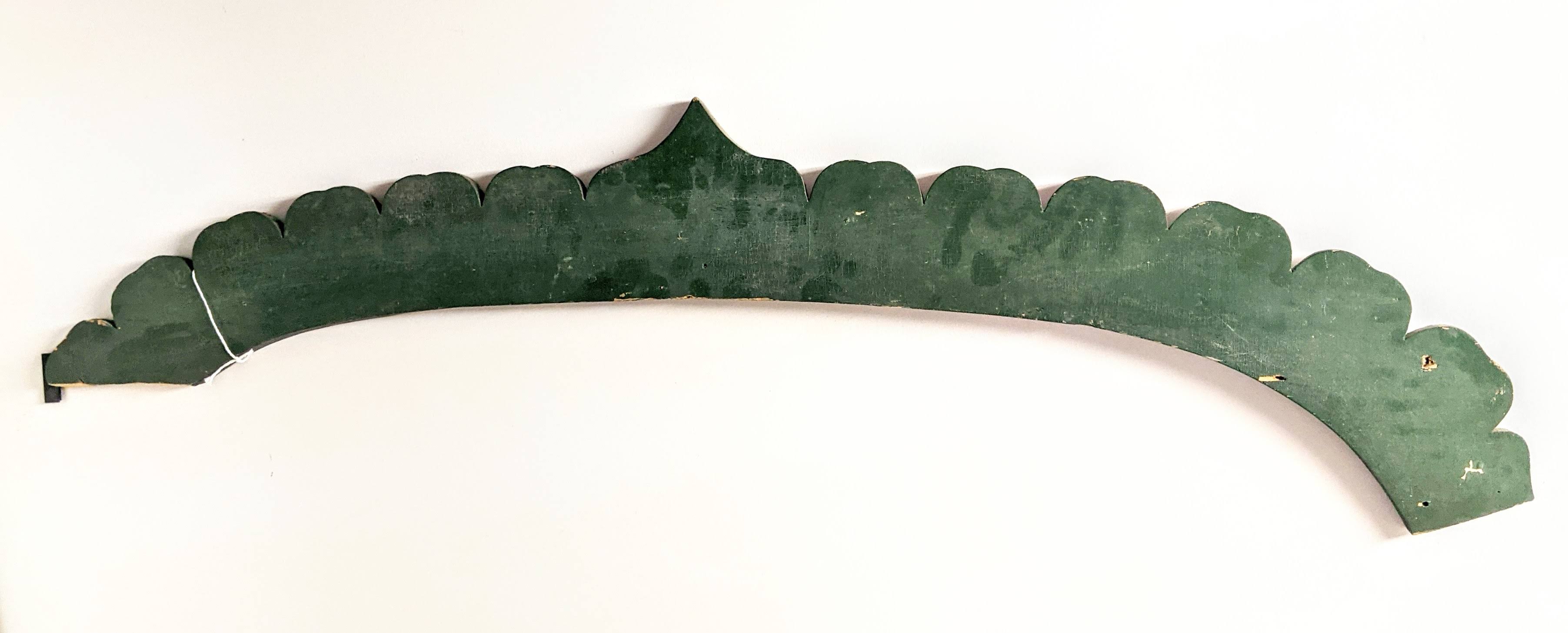
Cut by hand, this decorative arch once stood over the door between the front room and kitchen of the Robert Jones house. Such decorative pieces were common throughout this house including carved hand railings and newel posts. This house stood overlooking the experimental farm at Stoney point for many years - and was the last standing structure of the original farm. The house was consumed by fire in 1993 - arson the suspected cause of the blaze.
996.36.01 / The Robert Jones House

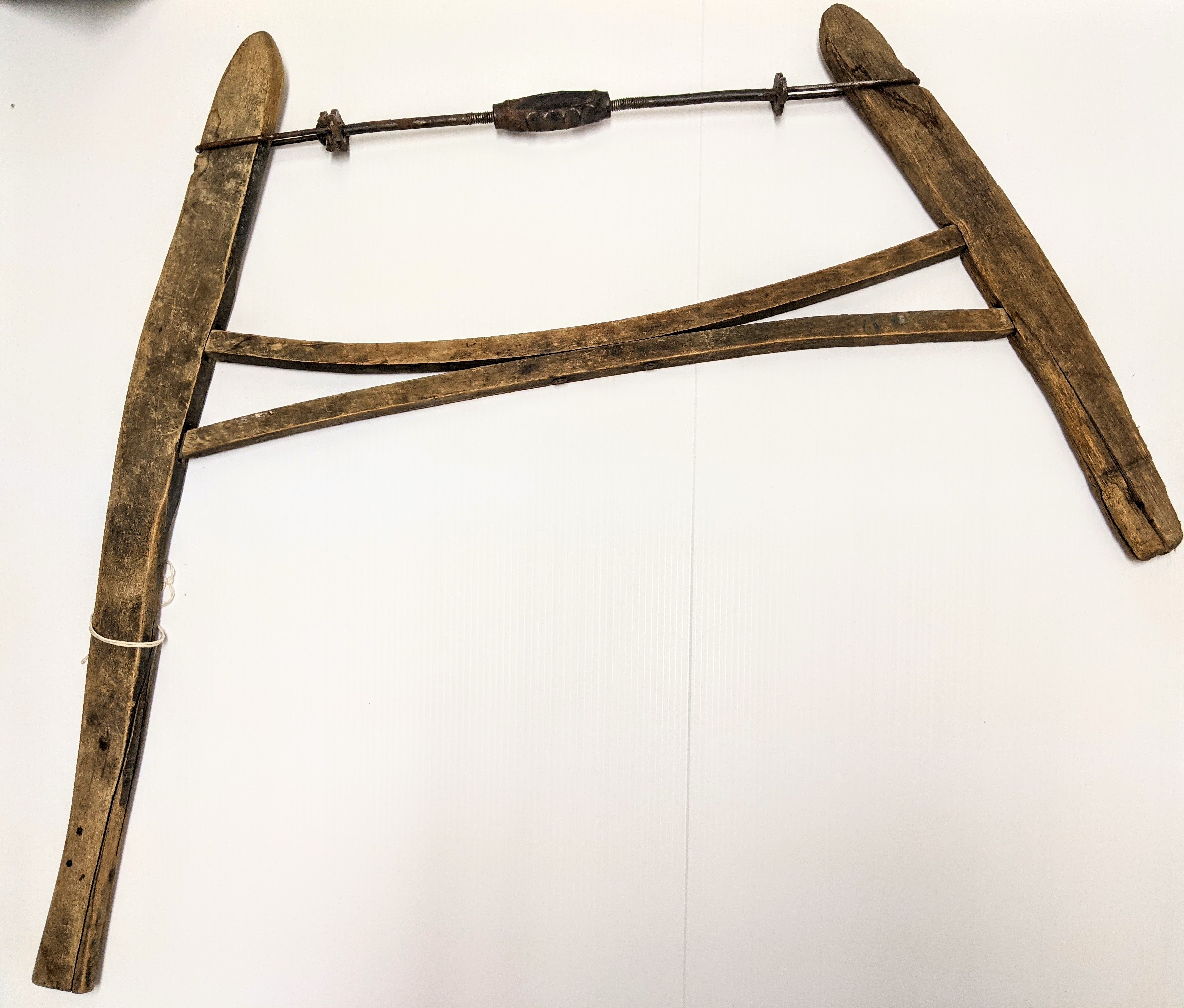
Commonly referred to as a "bow saw" or "buck saw" this wooden apparatus was a staple in Fort Vermilion life. It was this type of saw that was used for slicing up logs into manageable chunks which then could be split and used as fire wood. Designed for use by one person, the blades of this saw could be easily replaced and the user could change the style of blade based on the task at hand. It was a very useful tool in everything from collecting firewood, - to building furniture for the home. The longer arm on the left allows the user to grip above and below the blade of the saw - which is missing on this one.
996.40.130 / Eek Marilyn

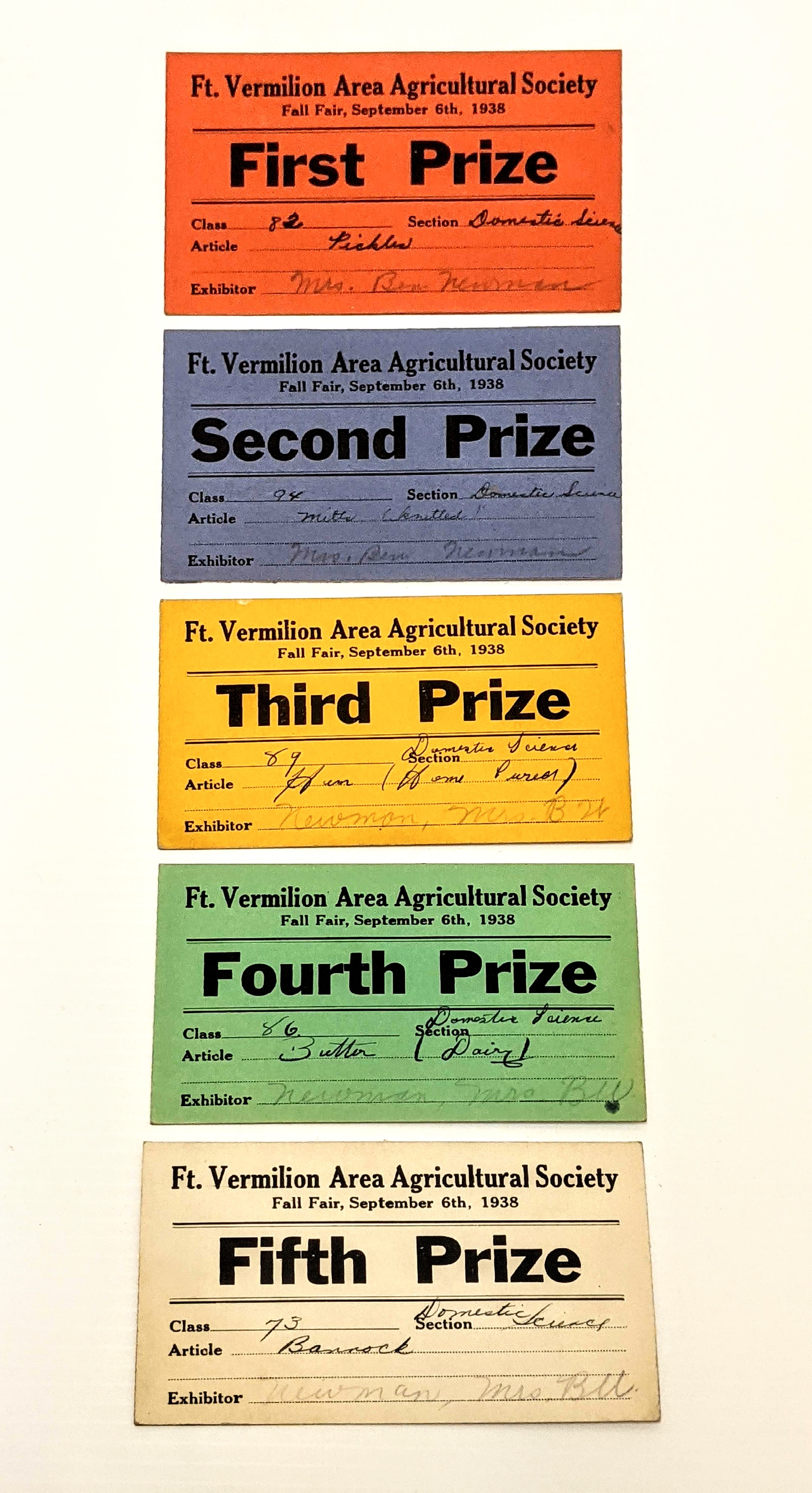
These are prize cards from the Fort Vermilion Fall fair of 1938! Awarded to Mrs. Ben Newman (Dorothea) they represent only a small selection of her winnings that year. From our records, Dorothea won 8 firsts, 4 Seconds, 6 Thirds, 5 Fourths and 2 fifths that year in the bench show - and likely had many other entries. Most of her entries are from the Domestic Sciences section, and as you can see in the picture, range from knitted mitts to bannock and cured hams. Such winnings at this years Bench show (Aug 11 + 12 at the MARA grounds) would have earned Dorothea $38 plus a chance at the Grand exhibitor prize of $300!
998.01.18 / Newman, Jack and Pearl

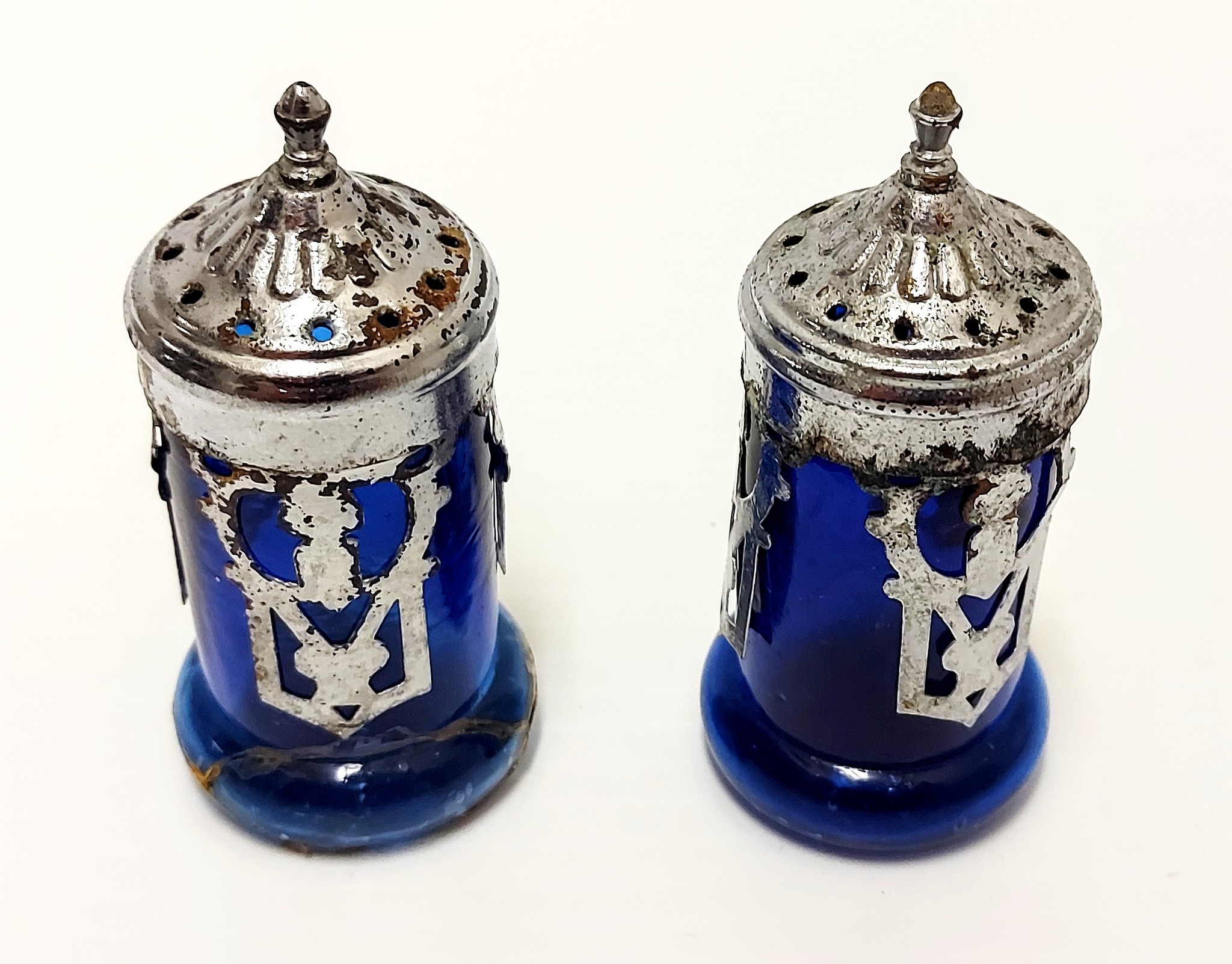
These are salt and pepper shakers from the DA Thomas steam paddler wheel boat. The ship is noted as having "White linen and the finest Silver" as well as electricity and hot / cold running water in the staterooms (Where go the boats pg. 14). The ornate details and cobalt blue glass of these shakers would have added to the luxurious atmosphere - though as far as we can tell there is no indication as to which one is salt and which is pepper!

2002.226.61 / Campbell, Jean

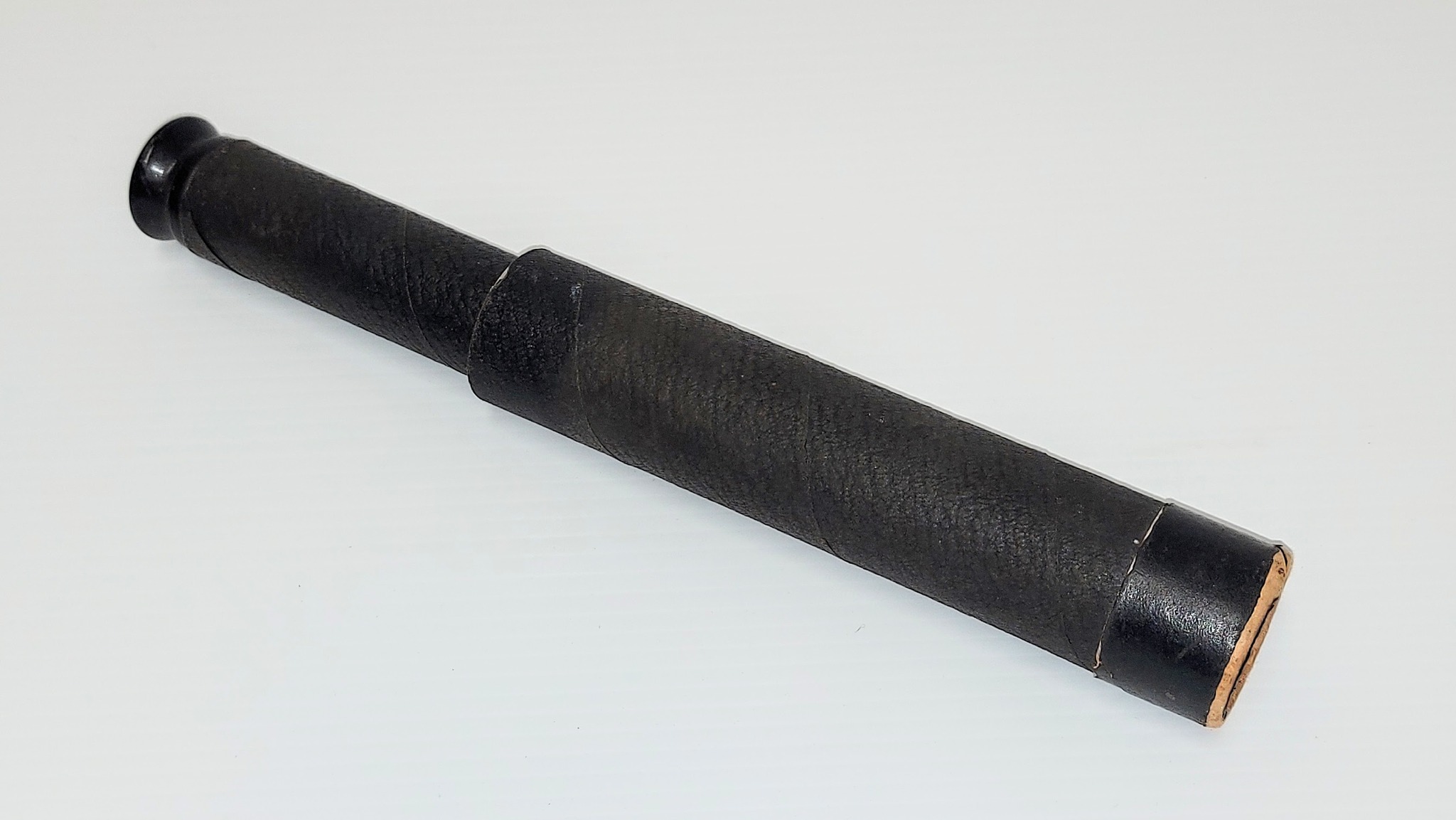
This is a cardboard toy spyglass. It is not branded nor have labels of any sort - but does work and provides about 4X magnification! The lenses are glass and the eyepiece is wooden but all other elements are cardboard. Though our research into it has proven futile we estimate it to be a toy from the 1940's.
2002.162.02 / Campbell, Jean

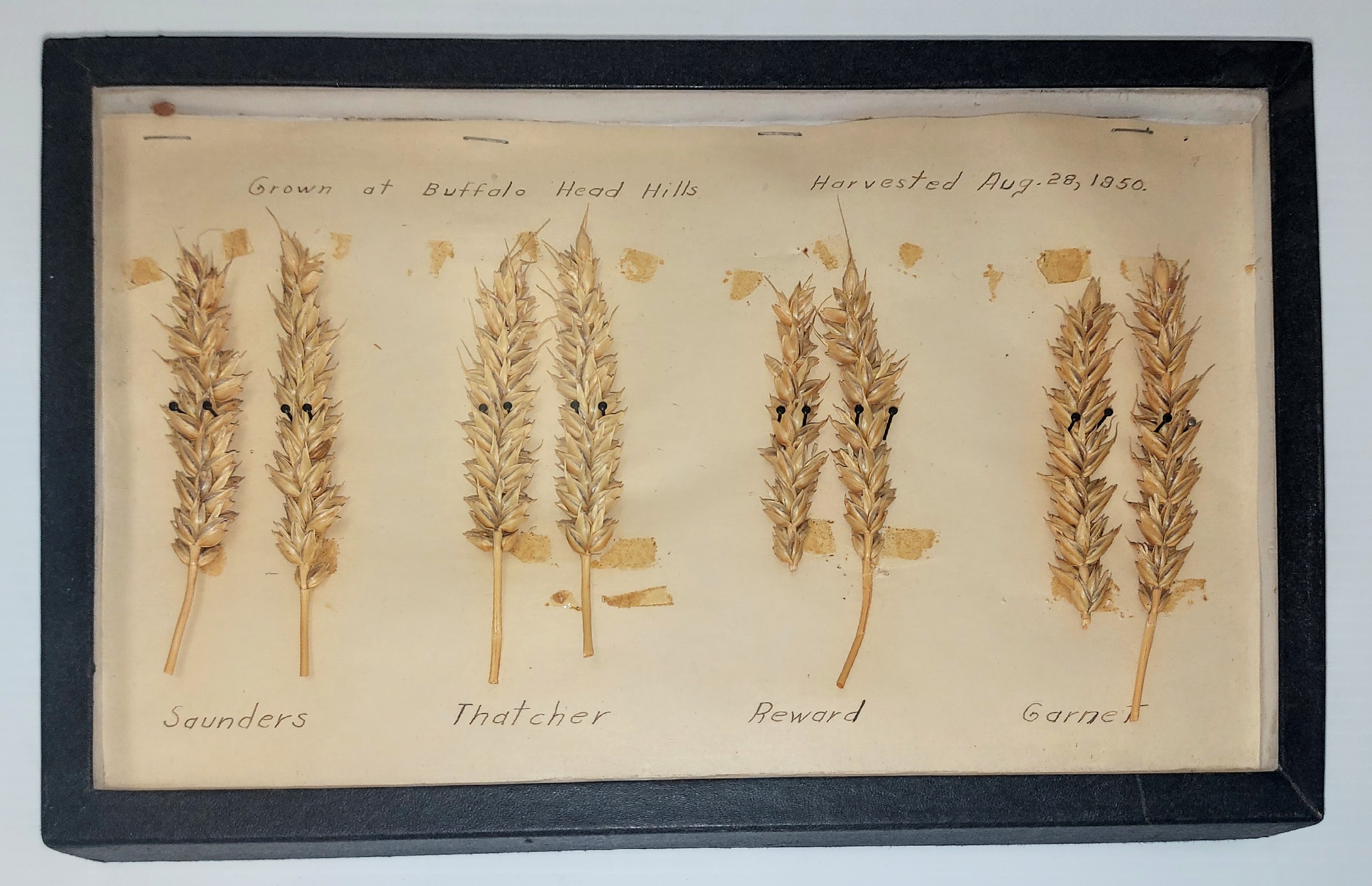
In keeping with the harvest season that is well underway - these wheat samples were harvested nearly 73 years ago to the day! Cut from their roots on August 28th of 1950 they have done well in standing the test of time. They were grown at a farm in Buffalo Head Hills in partnership with the Fort Vermilion Experimental Farm. Of the 4 varieties displayed "Thatcher" was the most popular - in 1953 it accounted for 70% of the wheat grown in Canada!
999.75.574 / Fort Vermilion Research Station

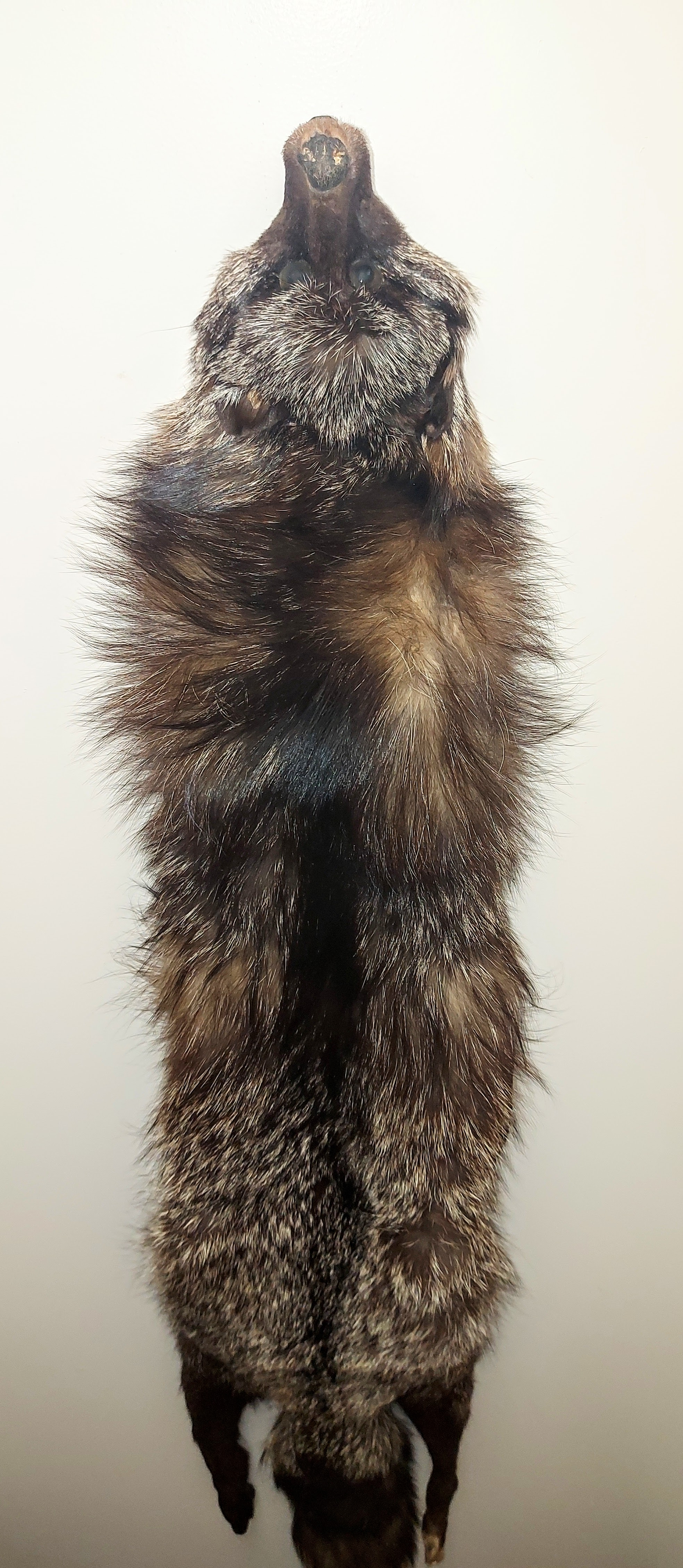
The third Saturday of September is recognized as 'National Hunting, Trapping and Fishing day'. This year, that is this Saturday Sept 16. Recognizing this - we have chosen this stunning Black (Silver) fox Stole. Trapped near John Do'r Prairie in 1935, this specimen was beautifully preserved with buckles and clasps added so it will stay draped across the shoulders. Trappers traded their furs for credit, money, goods at trading stores and sometimes kept pelts for their own creations - such as this one. It is not known who trapped / craft this stole.
996.4.2 / Family of Gordon H. and Harriett G. Fitzsimmons

This is a knitting scrapbook that was found in the attic of the Edgecomb house. It was a place one could paste knitting patterns, stitch styles, and notes on projects. It was common for patterns (and the like) to be in newspapers and provided creative inspiration for anything from slippers to jackets and underwear. Some of the patterns in this scrapbook are handwritten as well. Scrapbooks like this were common in households as they provided quick reference and efficient storage of the newspaper clippings. Some focused on one craft (such as this one does) or a smattering of different topics.
2017.26.06 / Ward, Elda

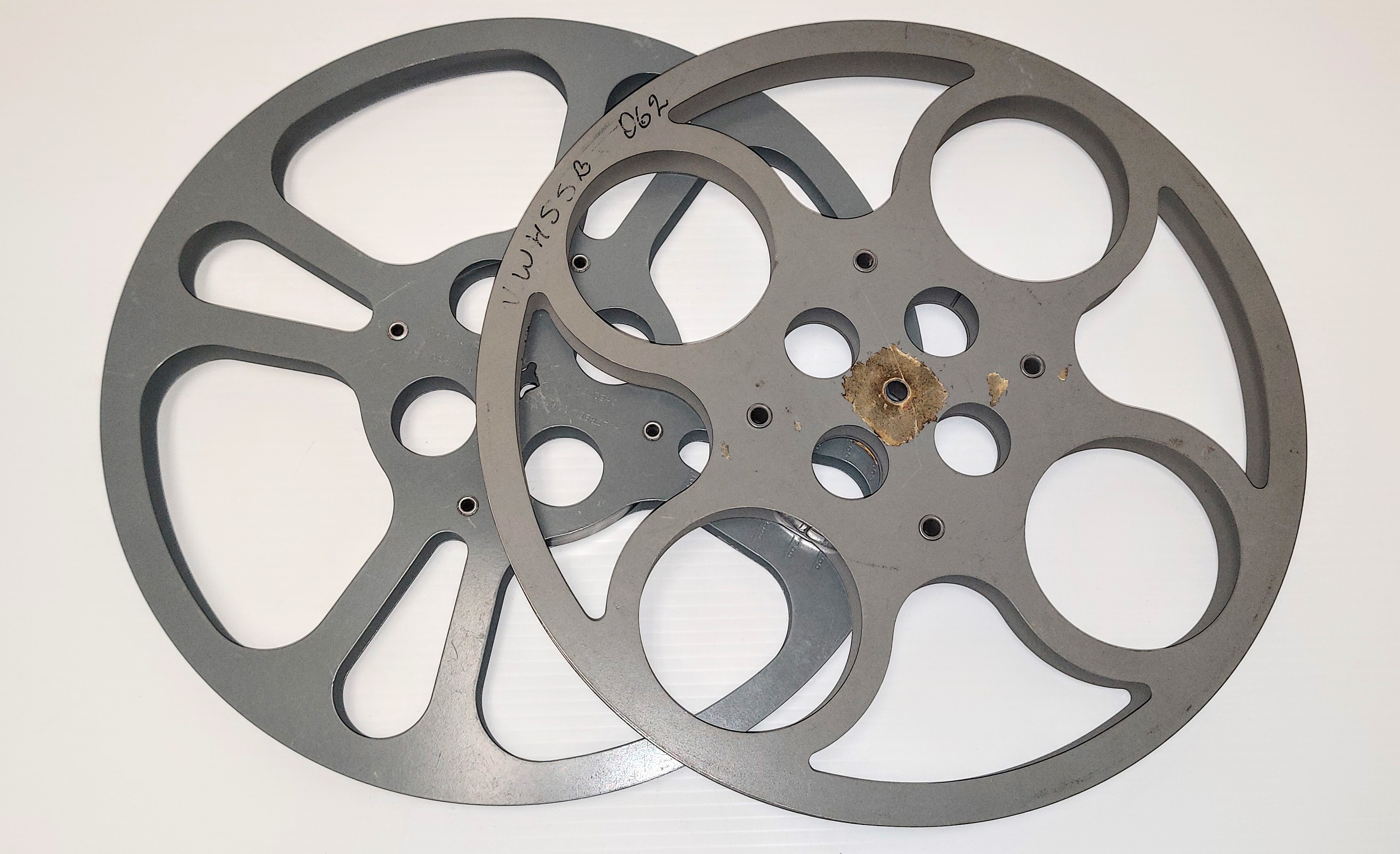
These are two 16mm film reels from the Fort Vermilion Recreation board. The reels held film 1200ft of film or just over 1/2 hour of footage. If a film was longer - a "projectionist" would have to switch out the reels to continue playing the film. If the film was not inserted correctly the image could be upside down, played back wards or reels played in the wrong order. This reel and projector system is what was used at the movie theatre in Fort Vermilion during the 60's - which was known to have the mishaps as noted above!
2010.45.06, 210.45.08 / Fort Vermilion Recreation Board
0

2022 Artifacts of the week

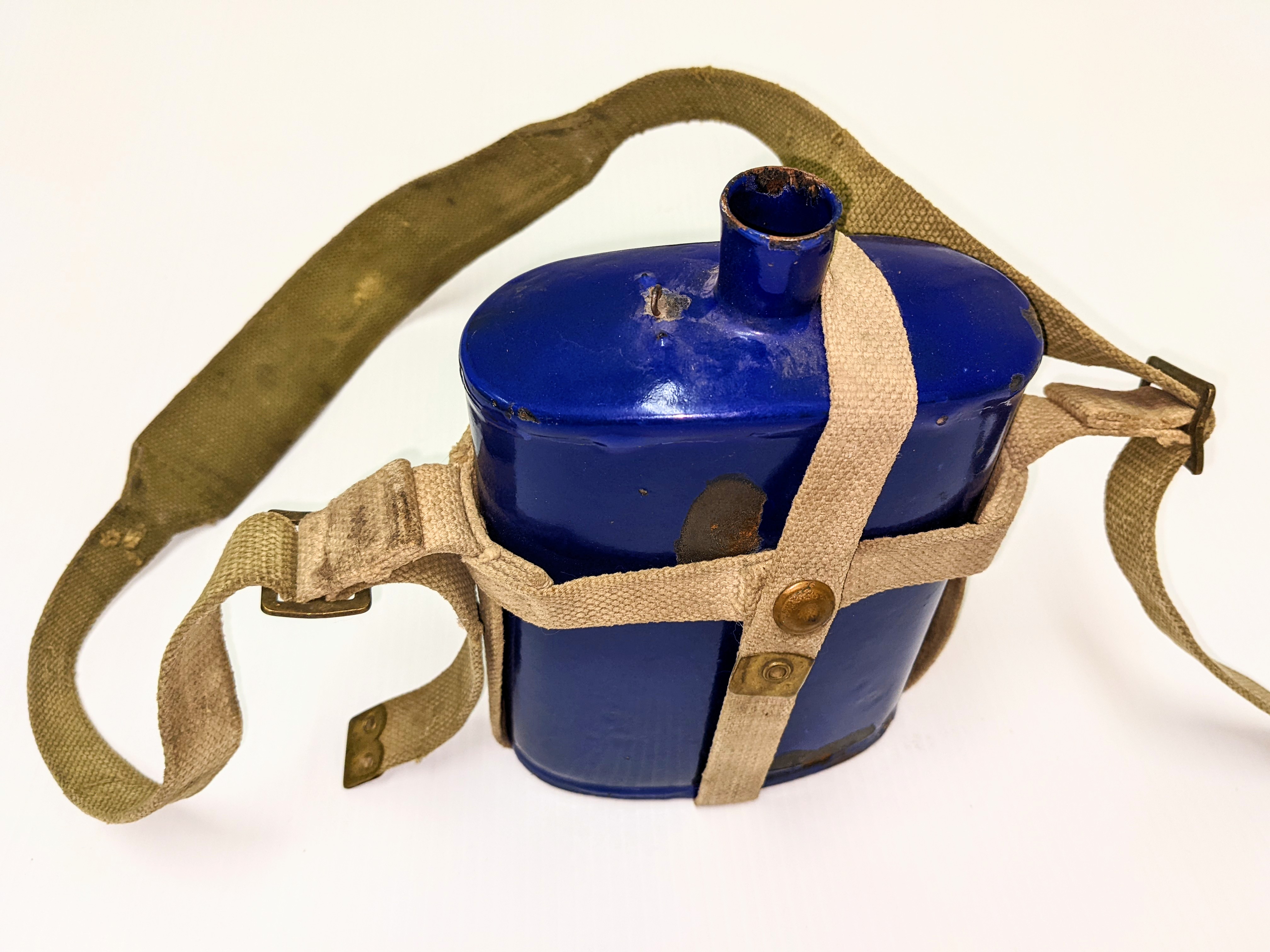
This is a Canadian WWII standard issue cobalt blue enamel waterbottle. The style of bottle was common amongst allied forces but small details such as the loop on the shoulder used to hold on the stopper (Missing) and design of the canvas carrying straps indicate it is Canadian made. It resides in the Eek, Marilyn Collection and was likely used by her Great Uncle Alfred During his years in service from 1943-1946.
03/01/2022
995.5.9 / Eek Marilyn

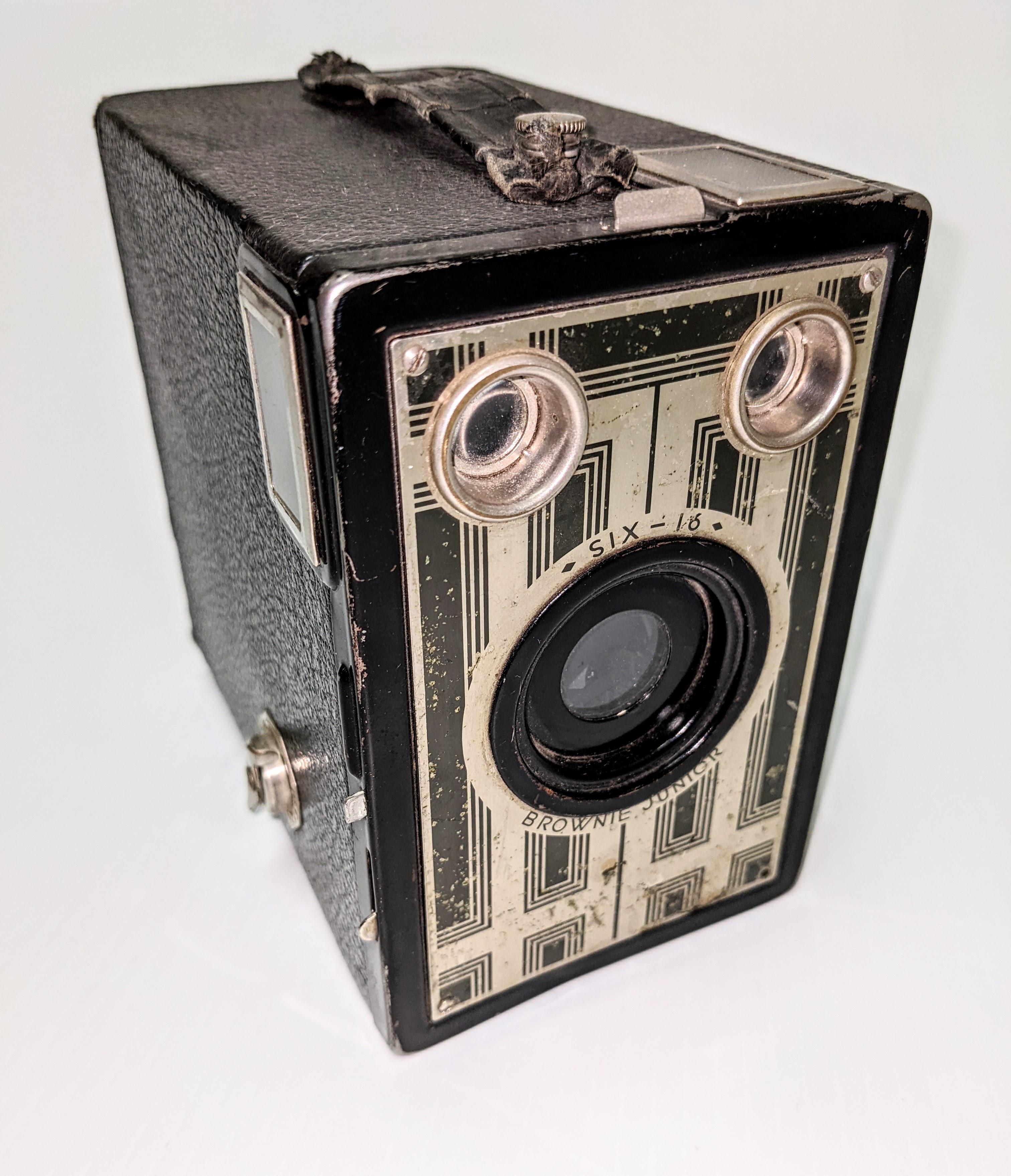
In 1936, when Rachel Ehrman (then Boire) was 9 years old, her brother Charles gave her this Six-16 Brownie Junior Camera. This type of camera was very popular and produced by the Kodak company from 1934 - 1942, and retailed for $2.75 - which is equivalent to about $55 today. This may not seem like much, but, considering this was in the midst of the great Depression - when the average annual wage earned in Canada was $896 - this was a prized possession; one that She treasured for the rest of her life.
10/01/2022
2010.95.05 / Erhman, Rachel Boire

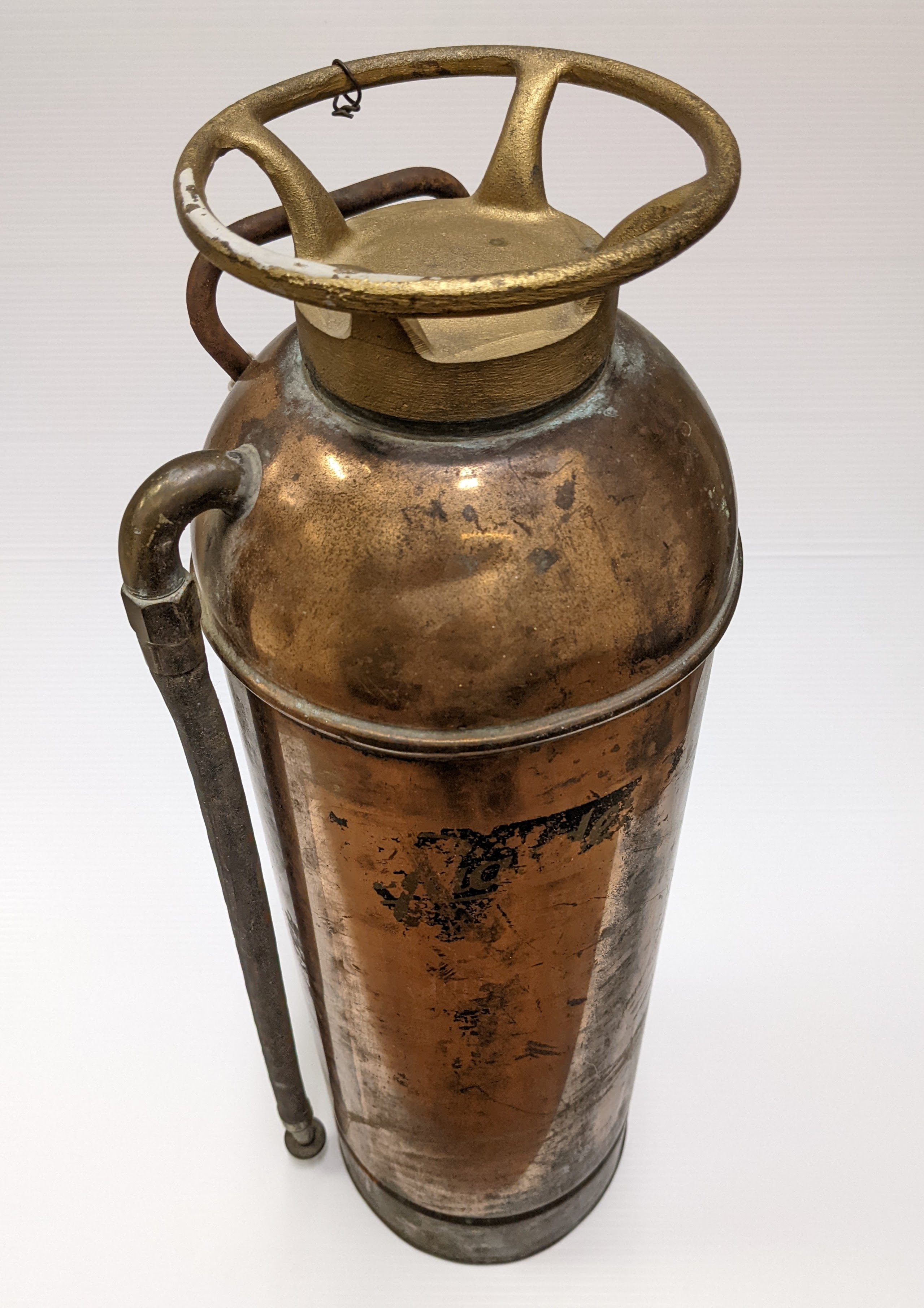
This fire extinguisher comes from the Fort Vermilion Experimental Farm. "Guardene" brand, it is an inversion style extinguisher - meaning to use it one has to flip it upside down and hold it from the bottom. This action causes the internal elements (hydrochloric acid and Bicarbonate soda dissolved in water) to mix and react - producing carbon dioxide gas. The pressure created by this chemical reaction then forces the contents of the tank (water, acid, and carbon dioxide) out the rubber hose for the operator to direct on the flames. The soldering job on the back indicate the tank was repaired at one point and the rivets date it as pre-1942.
17/01/2022
2020.07.18 / Cranna, Marilee

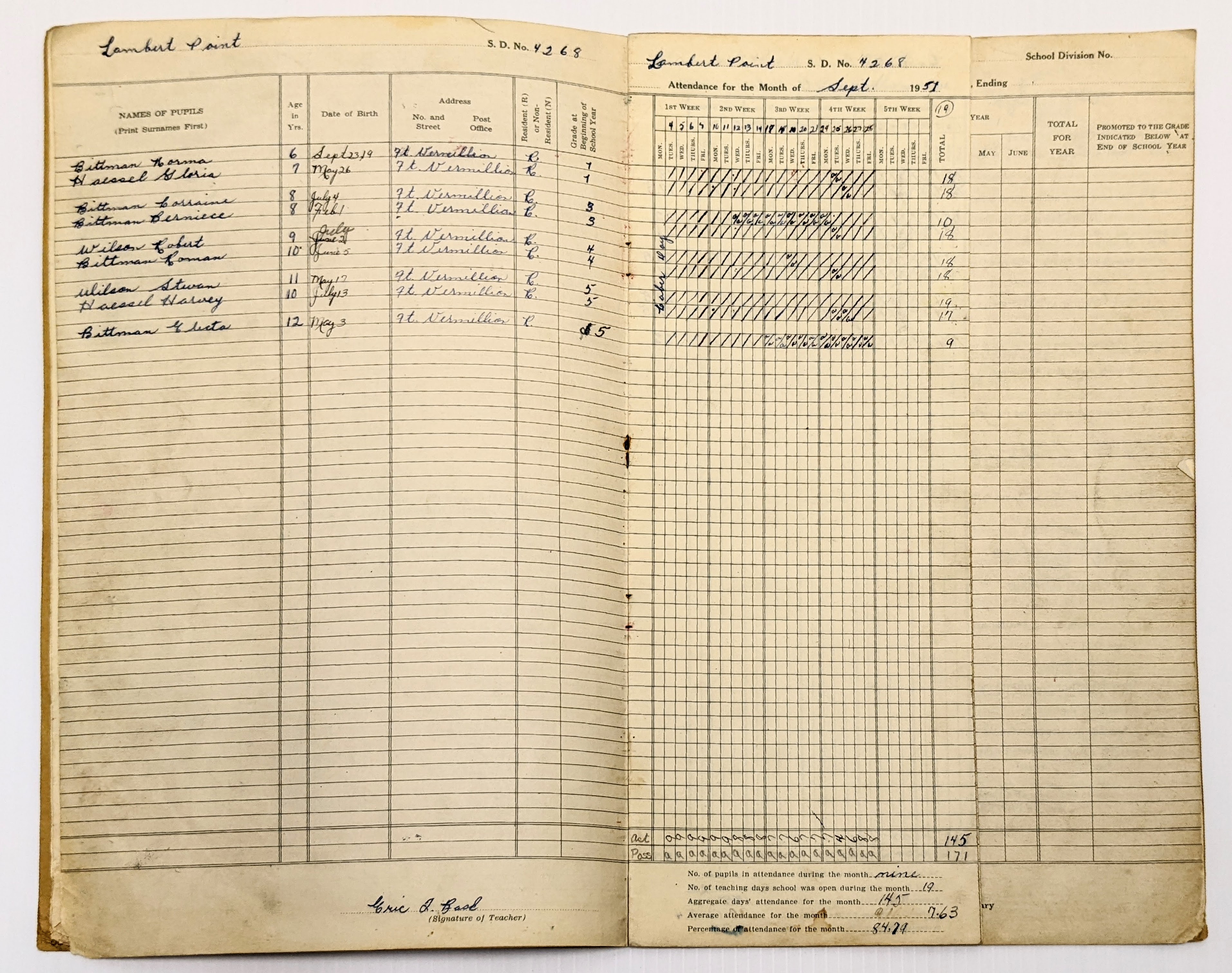
Today is the international Day of education according to the United Nations; as such we have chosen this attendance ledger as our artifact of the week! Formal education in the Fort Vermilion area started with the St Henri Residential School (Catholic) and Irene training school (Anglican). This was followed by the public school system which included the one room country schools (Buttertown, Lambert Point, Stoney Point, Batts, Ponton, Fort Vermilion) and later St. Mary's separate school. This public system has modernized with time and provides education as we know it today. As you can see this ledger comes from the lambert point school - in which 9 students were enrolled (5 Bittman, 2 Wilson, and 2 Hassell) from grades 1-5. Eric Bask was the teacher and it is dated as the 51' -52' school year - making it 70 years old!
24/01/2022
2002.226.97 / Campbell, Jean

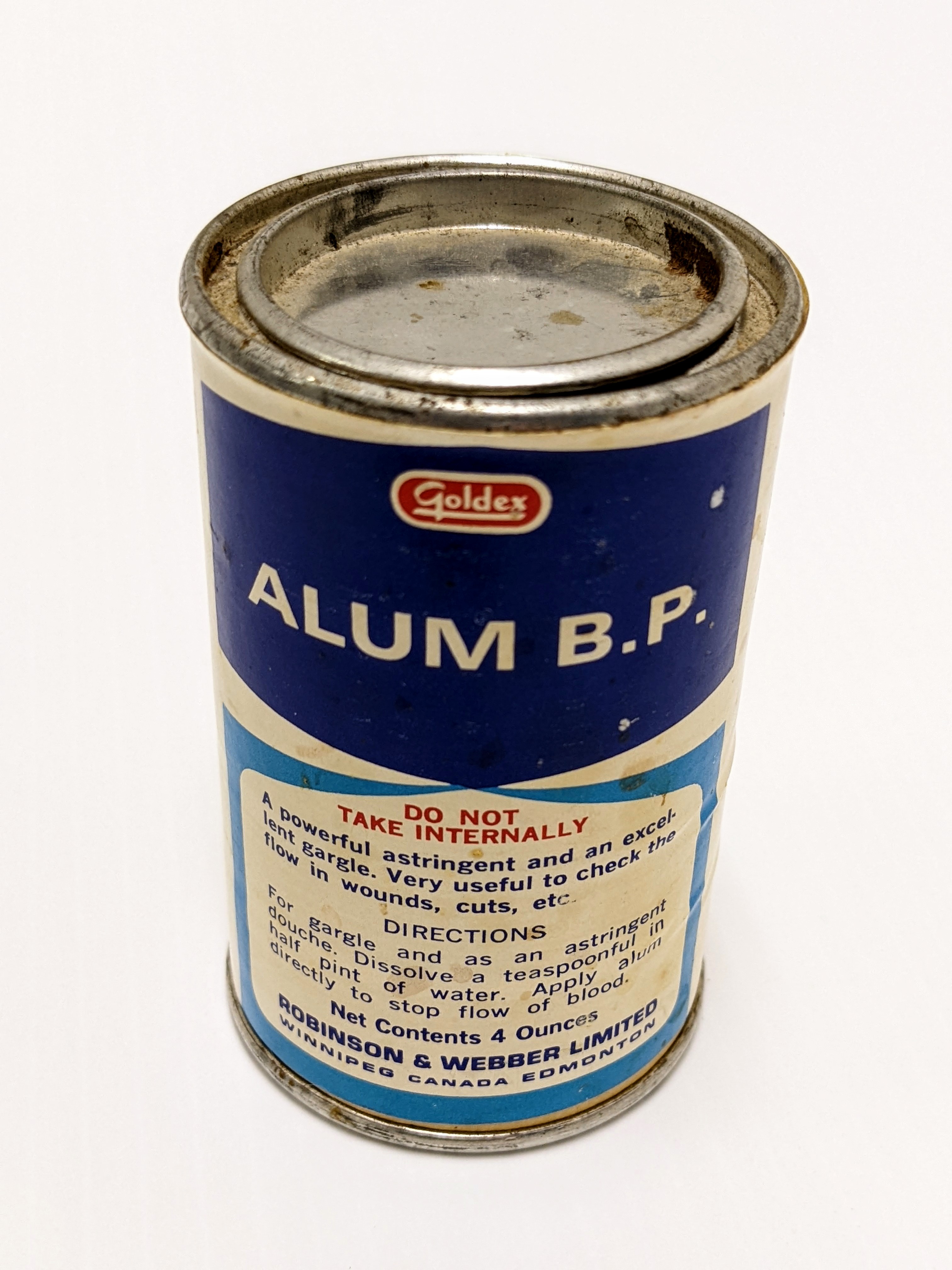
Before the days of running water, Fort Vermilion residents relied on water Haulers. Through the years there were many individuals who fulfilled this job (Jack Whitehouse, Daniel Ducharme, and Frank Flett to name a few) using horse teams and 45 gallon drums. The water was direct from the river and often had a fair bit of sediment (and other impurities) floating in it. The alum powder above would then be used to purify it - adhering to the impurities and sinking to the bottom of the barrel. Common in most households this alum also served various medicinal purposes. Running water was not established in Fort Vermilion until the late 60's.
31/01/2022
2000.01.20.01 / Cranna Toews Marilee

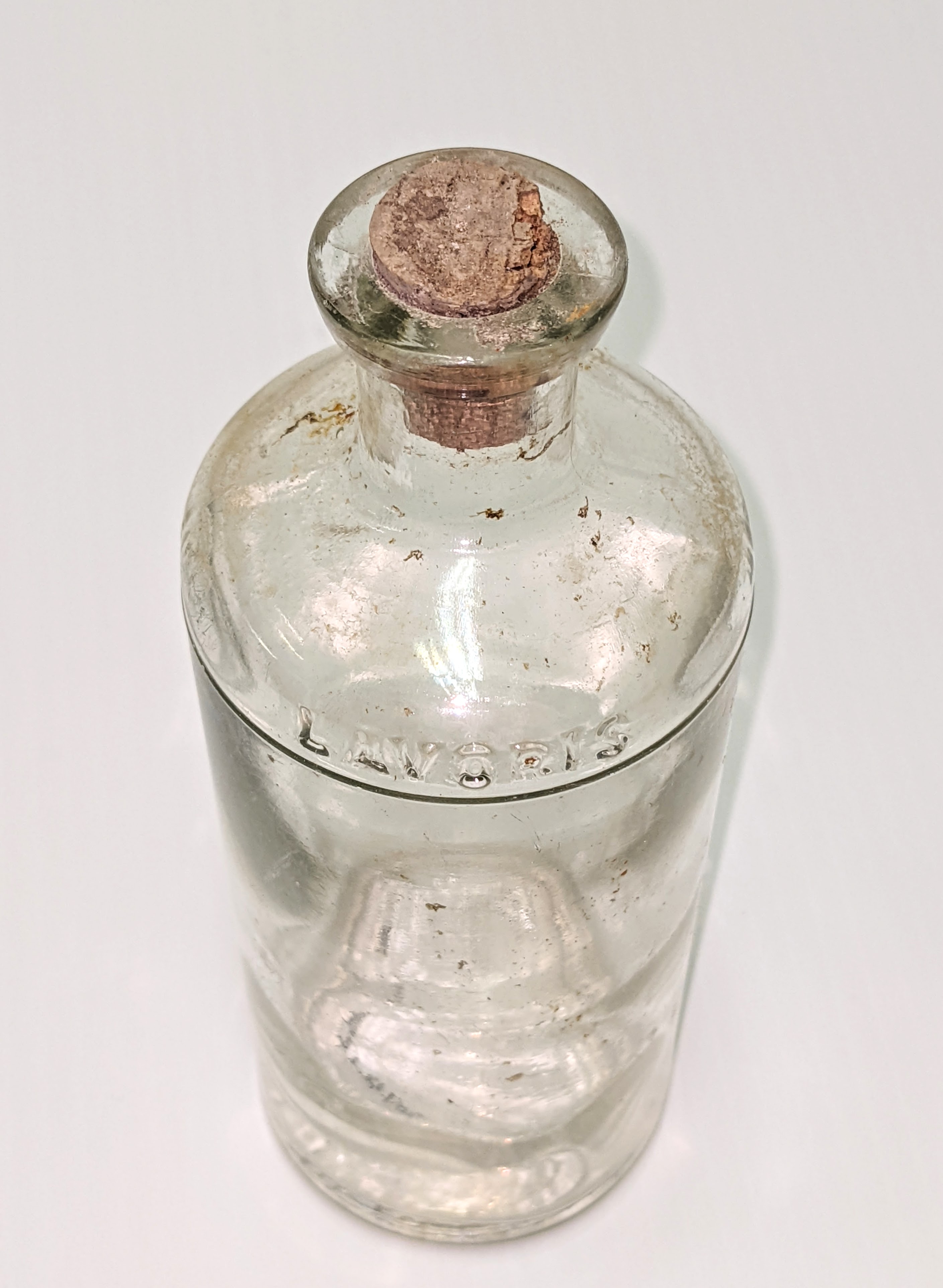
This bottle is from the "Lavoris Chemical Company" as indicated by the glass imprint on the front shoulder of the bottle. Lavoris was a popular mouth wash started in Minneapolis USA and spread widely across North America. This bottle is missing it's label but the bottom indicated that it was made in Toronto Canada and so could be from the 1920's. The mouth wash was mint flavored and contained 3% alcohol.
07/02/2022
2007.48.02.04 / Friends of the Old Bay House Society

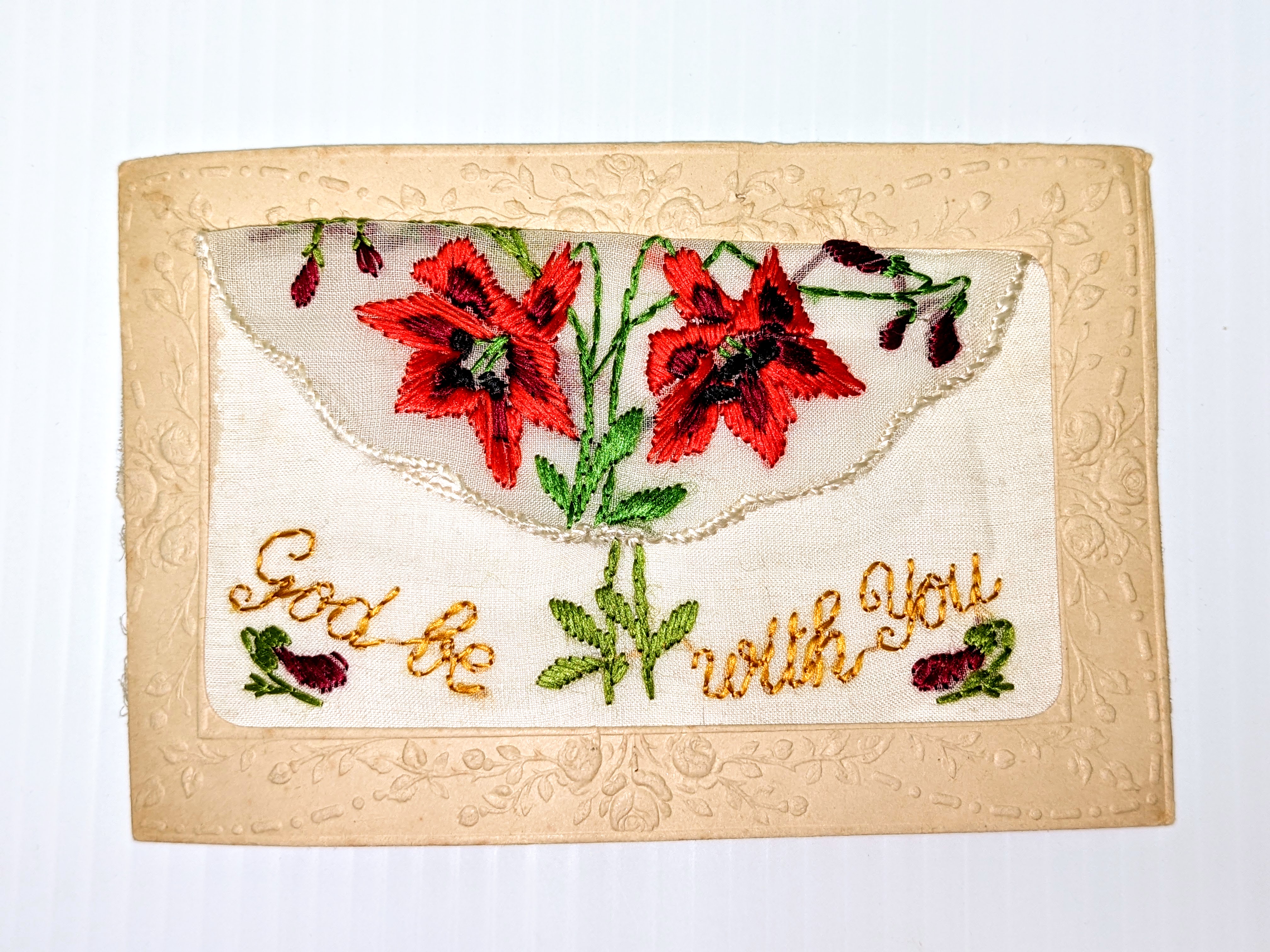
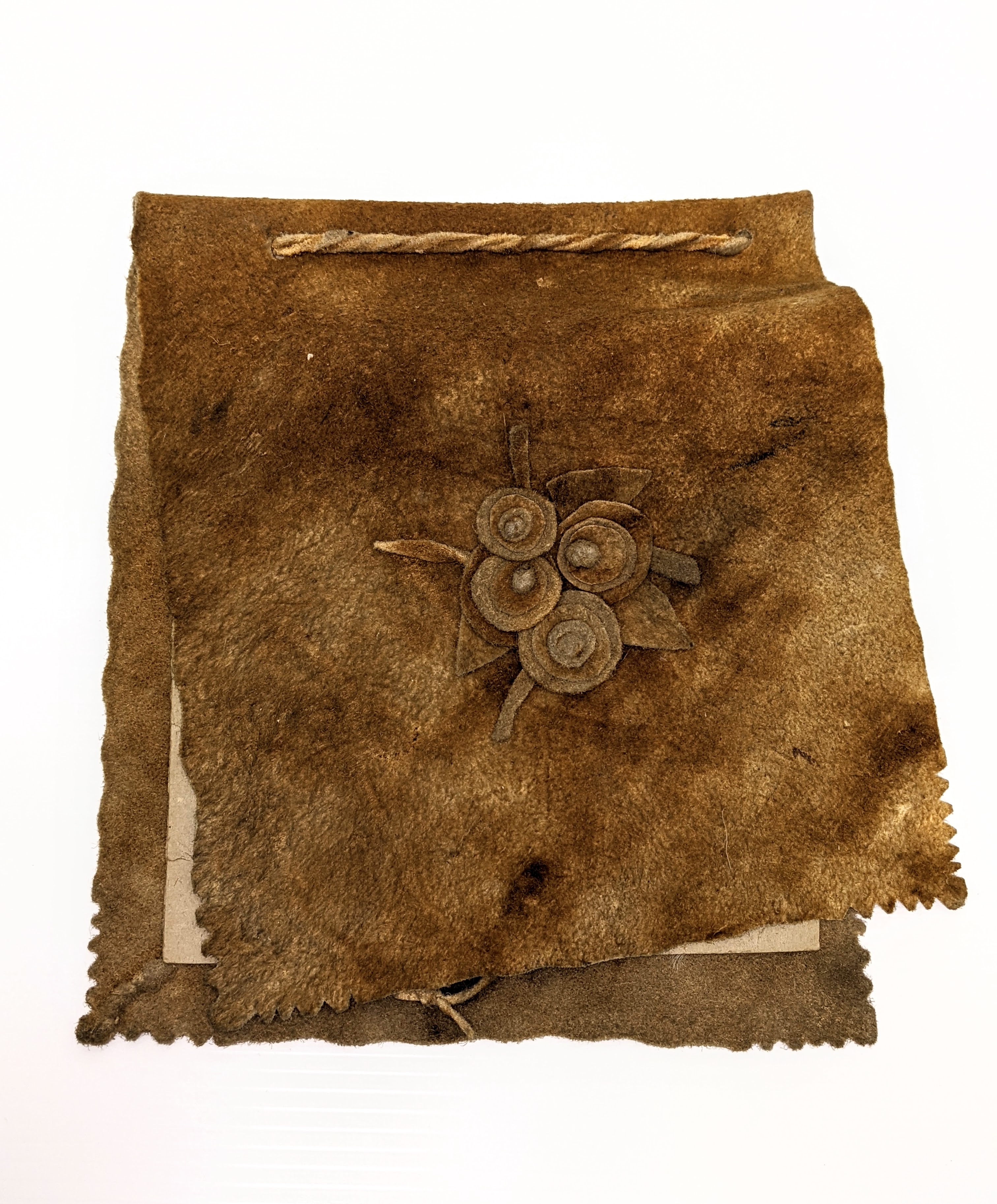
It being Valentines day today - we opted to choose a love letter for the Artifact of the week! The letter is written on the back of this handmade, intricately detailed, and unique postcard. The front boasts an embroidered fabric Pouch in which a card or small handkerchief was held. On the back side the letter is written in pencil by one "Ken" and sent to "Belle". Although the letter is not full of eloquent words of undying affection - it speaks of an honest love spanning time and space; for it appears Ken is a soldier overseas. He describes "It is something to be contented and safe during these tough times" and the letter is dated "France March 17, 1918".
14/02/2022
Hitchcock, Eunice / 998.3.7
PS. If you have any information about who "Ken" and "Belle" may be - please let us know!

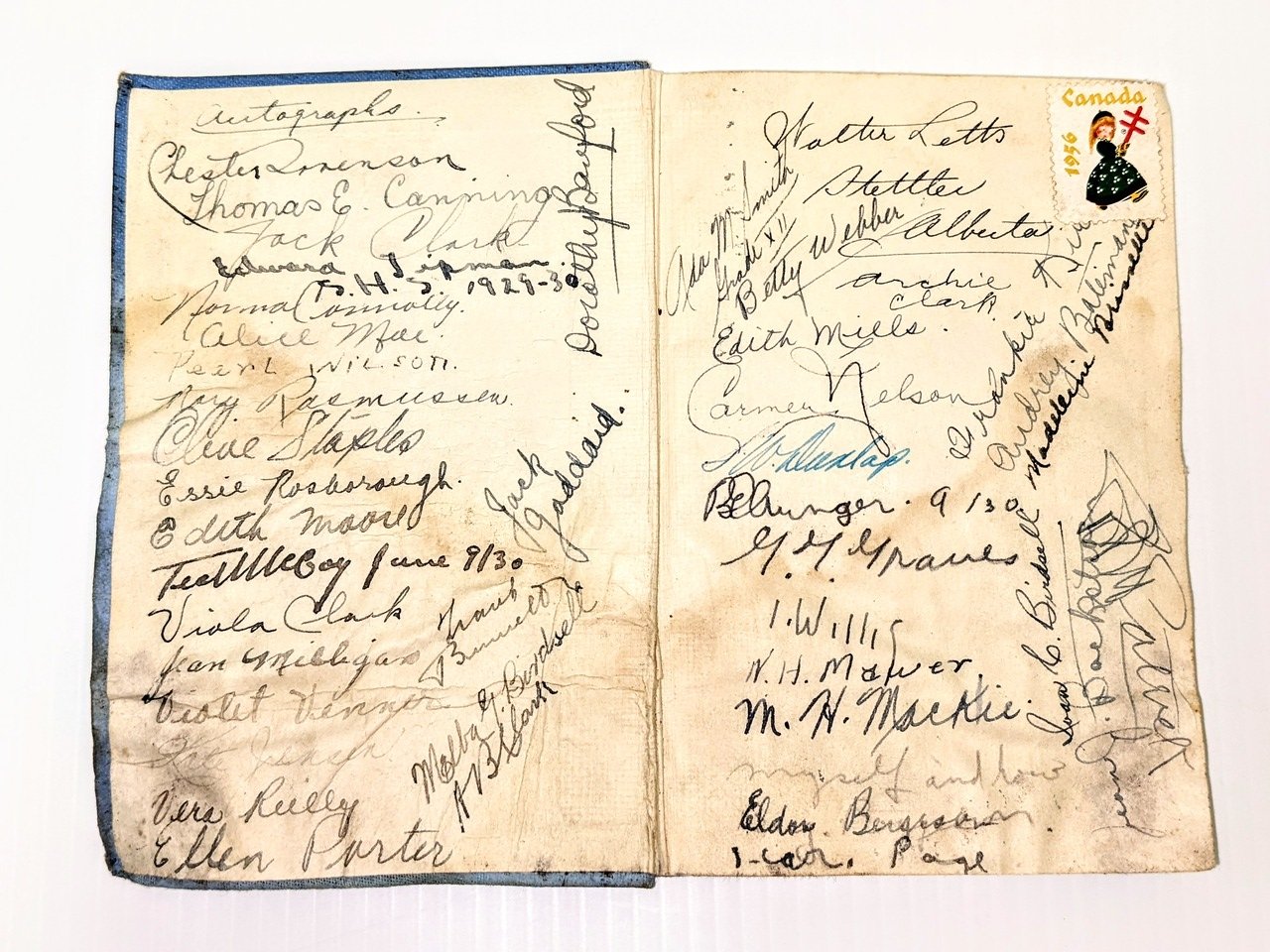
The artifact is a book titled "Cornelius Nepos lives of Miltiades and Epaminondas" which is a mouthful! More interesting however, is the first page which is full of handwritten signatures as shown by the picture. The most prominent seems to be "Walter Letts, Stettler Alberta" on the top of the right page. This - and the fact that it is a part of the Eek, Marilyn collection- tell us that this classic belonged to Walter Letts. We don't recognize many of the other signatures - though there are familiar surnames such as "Clark" and "Wilson". The book is well used with notes throughout its pages, and even more signatures - some of which are dated 1930.
22/02/2022
996.40.108 / Eek, Marilyn

A remnant of seismic exploration, this odd looking metal object is called an "Exploration Plug". Invented by Canadian Oliver B. McReynolds JR. this object was placed over core holes to prevent injury to animals / humans and to make the holes reusable should they need to be. This style of plug was the first iteration of this invention by McReynolds with others to follow - you can read all about it via the Government of Canada Patents Database which is found here - https://www.ic.gc.ca/.../eng/patent/550499/summary.html...
This particular plug was located in the Hungry Bends Sandhills near snake lake and is stamped "1954".
28/02/2022
2002.272.01 / Friesen, Joy

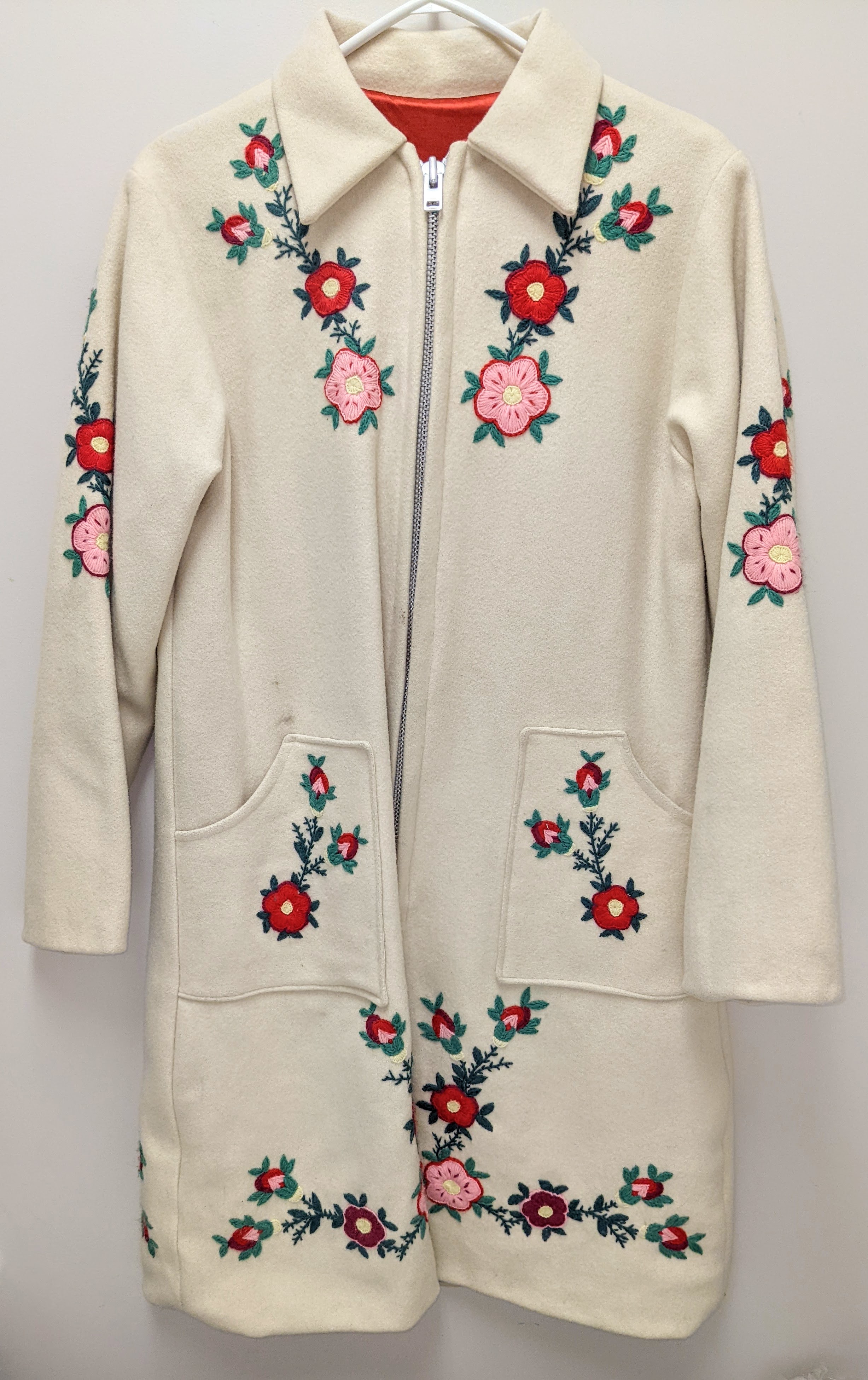
This stunning Evening Coat is hand made by Hanna Lambert Ruth Randolph and Helen Randolph. Hanna and Ruth made the outer layer of the coat (with all the incredible embroidery) and Helen gave it a silky red liner and functional zipper. The floral embroidery continues on the back of the jacket and must have taken many hours to complete.
14/03/2022
2009.40.01 / Randolph, Helen

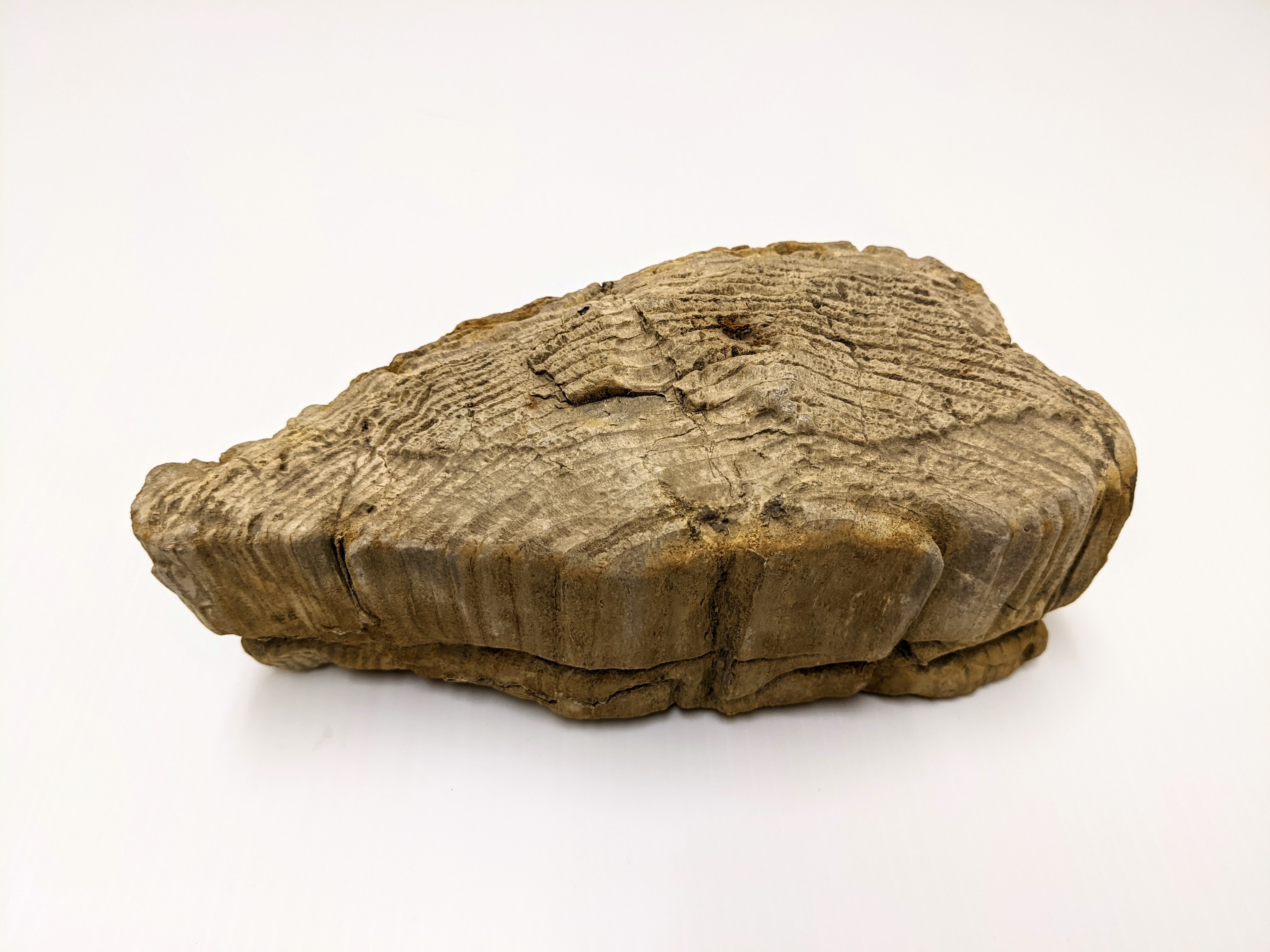
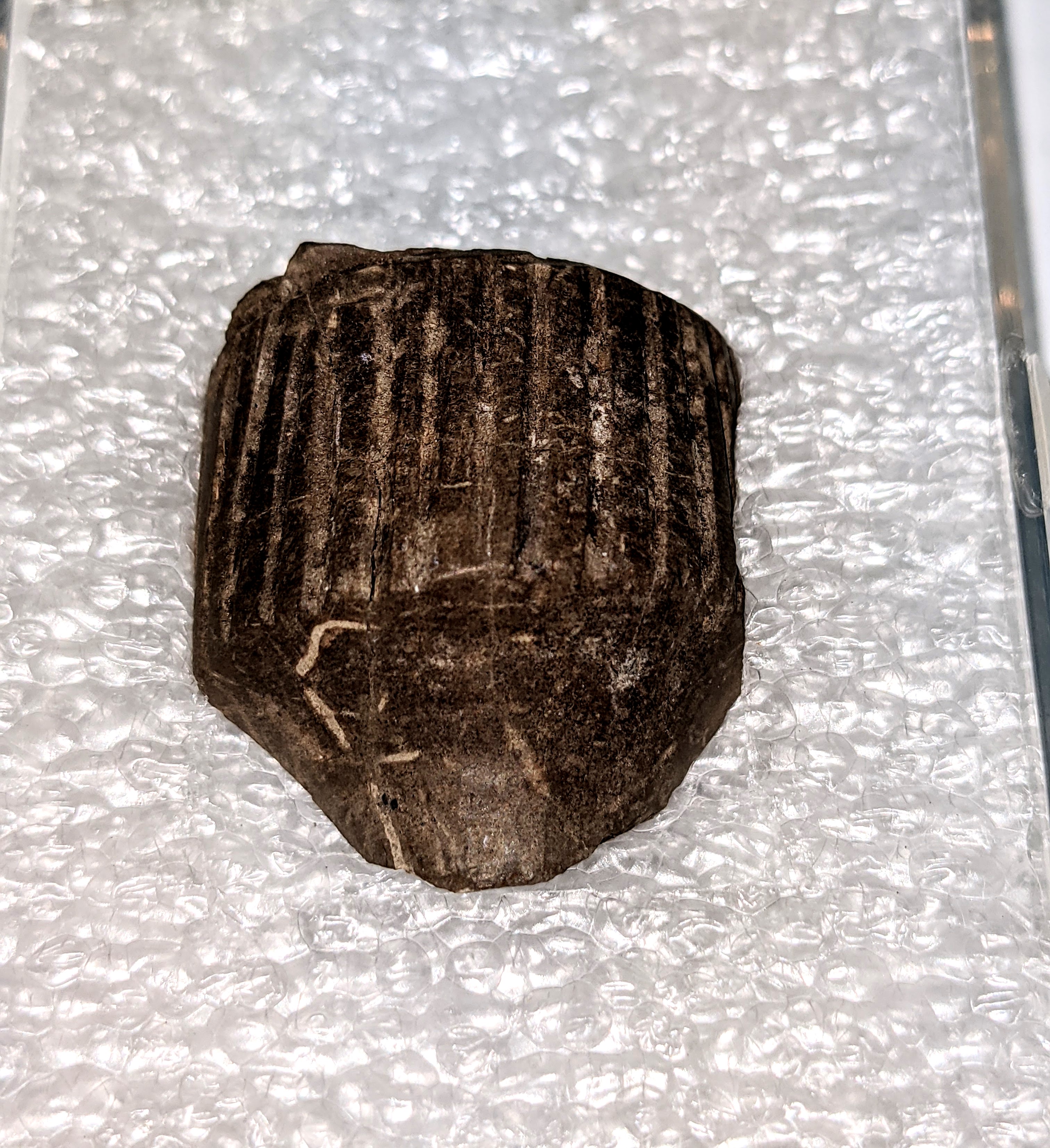
Today is "International Day of Forests" and as such, we have chosen an artifact from an ancient forest of Northern Alberta. This piece of Petrified Wood once stood as a living tree - enjoying a decade of great growing conditions as indicated by the large growth rings. The tree then found itself submerged in sediments at which point the organic wood material was slowly replaced with mineral deposits -forming a rock that bears the mold of the original tree! Petrified wood is considered a fossil and is the provincial stone of Alberta. It is commonly found along the banks of the Peace, Ponton and Caribou Rivers.
21/03/2022
2010.96.177 / Morin, Guy

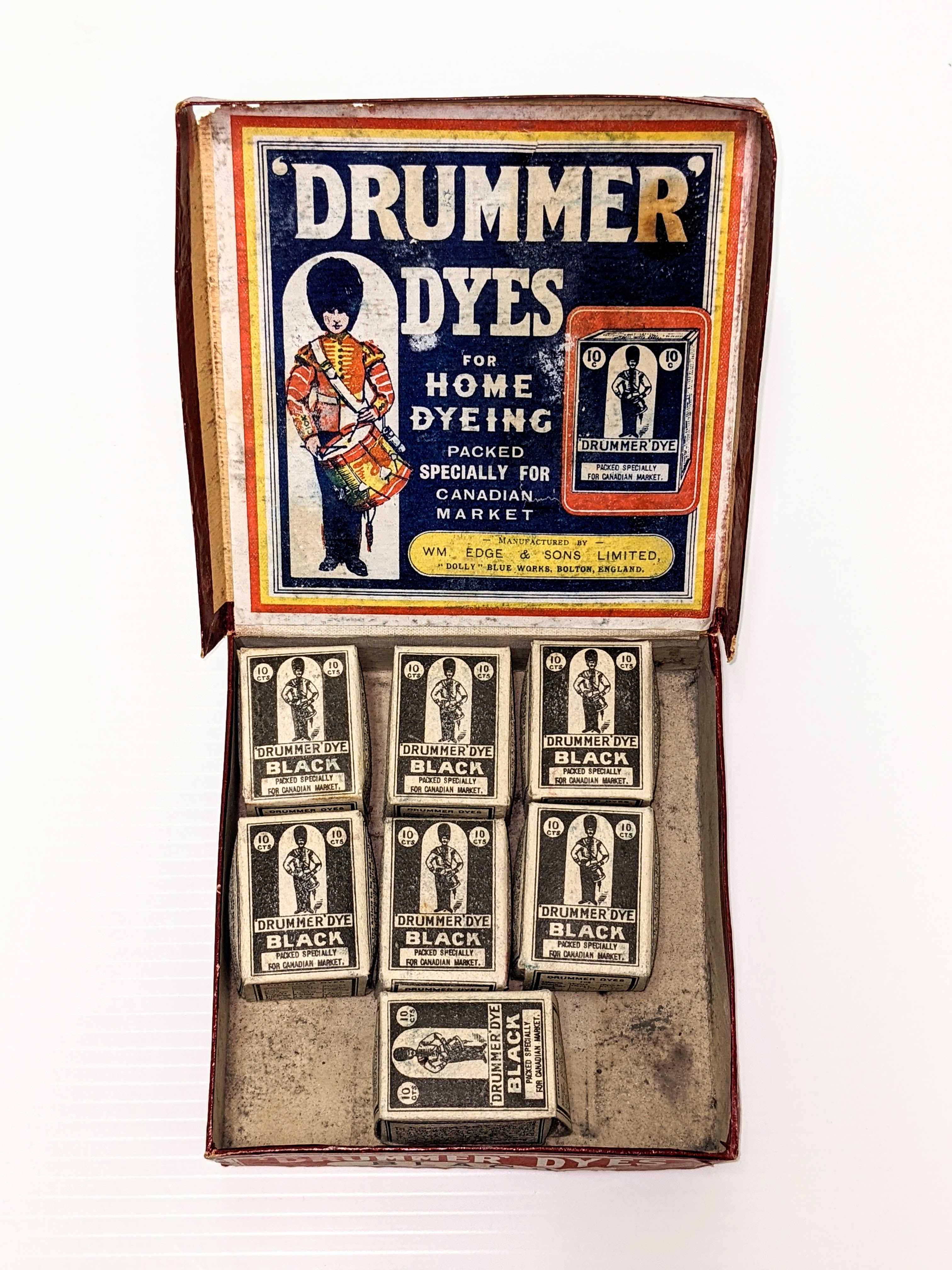
This box contains packets of Black Dye. Used for dyeing all sorts of fabrics / garments, the "Drummer Dye" brand was known worldwide. Made in Bolton England, this package was "Packed specially for Canadian Markets" - we are unsure how that may be different from other packaging - but we do know that the "WM Edge and Sons Limited" company trademarked their dye in Canada in 1946. Considering the numerous other sewing tools, accessories, and materials i the Tourangeau collection we can only assume someone in the family was proficient in the craft!
28/03/2022
2007.61.04.19 / Tourangeau, Martha + Harvey

This is the cover of the guest book from the Hudson's Bay Company Post at Little Red River. We also have the original pages from the guestbook - though in the interest of preservation they have been removed from the moose hide cover. The earliest entry in the guestbook is Jan 23, 1944 and tracks, traders, priests, and customers through to 1950. The cover is hand made - and has the rich scent of fire cured moose hide - but there is no indication as to who created it.
4/4/2022
2007.12.16.03 / Stevens, Douglas + Ann

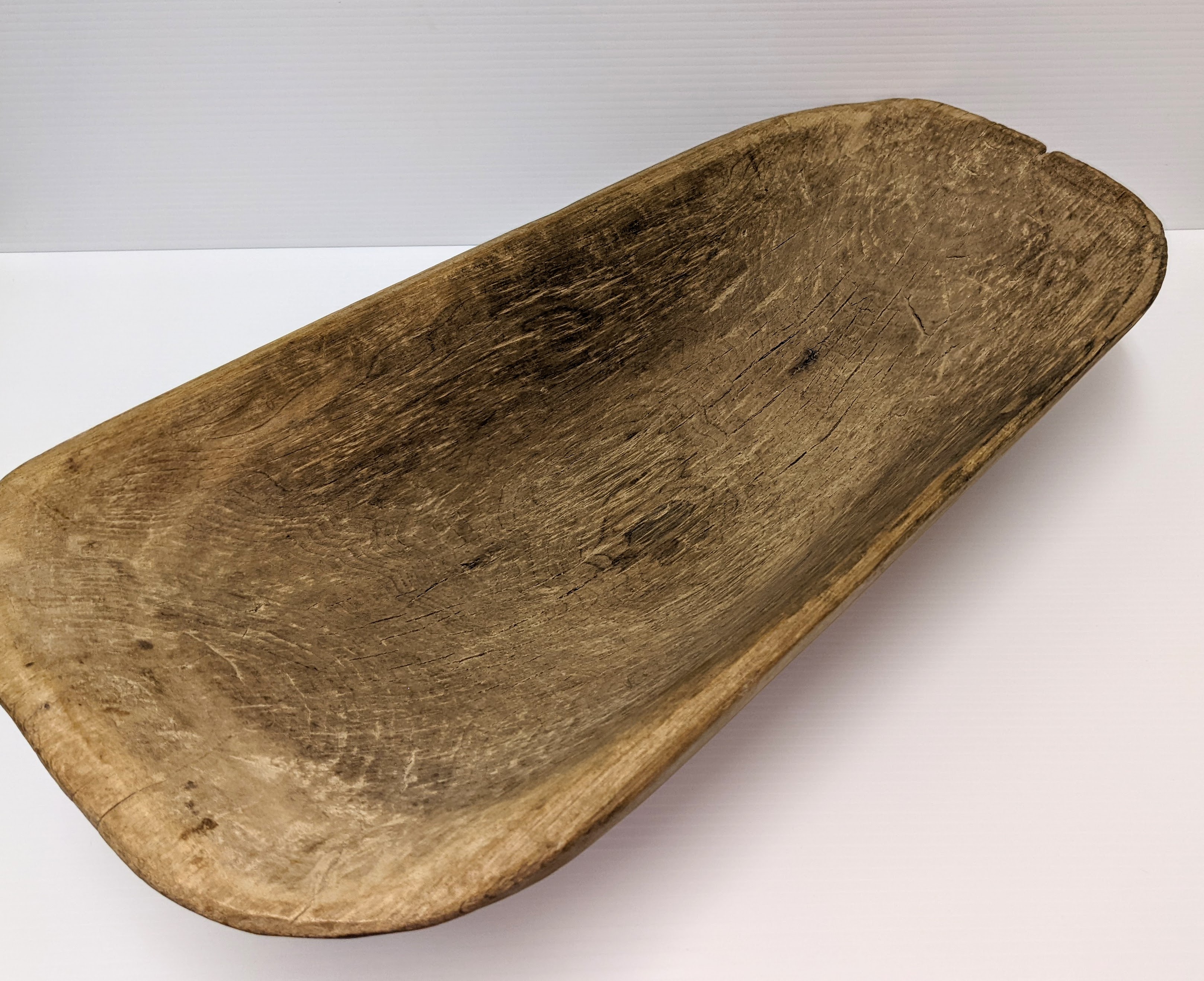
This large wooden bowl is labelled as a babies bathtub - though it also has an uncanny resemblance to a "Bread Bowl" - used for mixing and proofing bread dough. Potentially it was even used for both. In any case it's 'dug-out' in style meaning it once was a full log that has been carved into its bowl shape.
11/4/2022
999.03.94 / Hitchcock, Eunice

-----EDIT-------
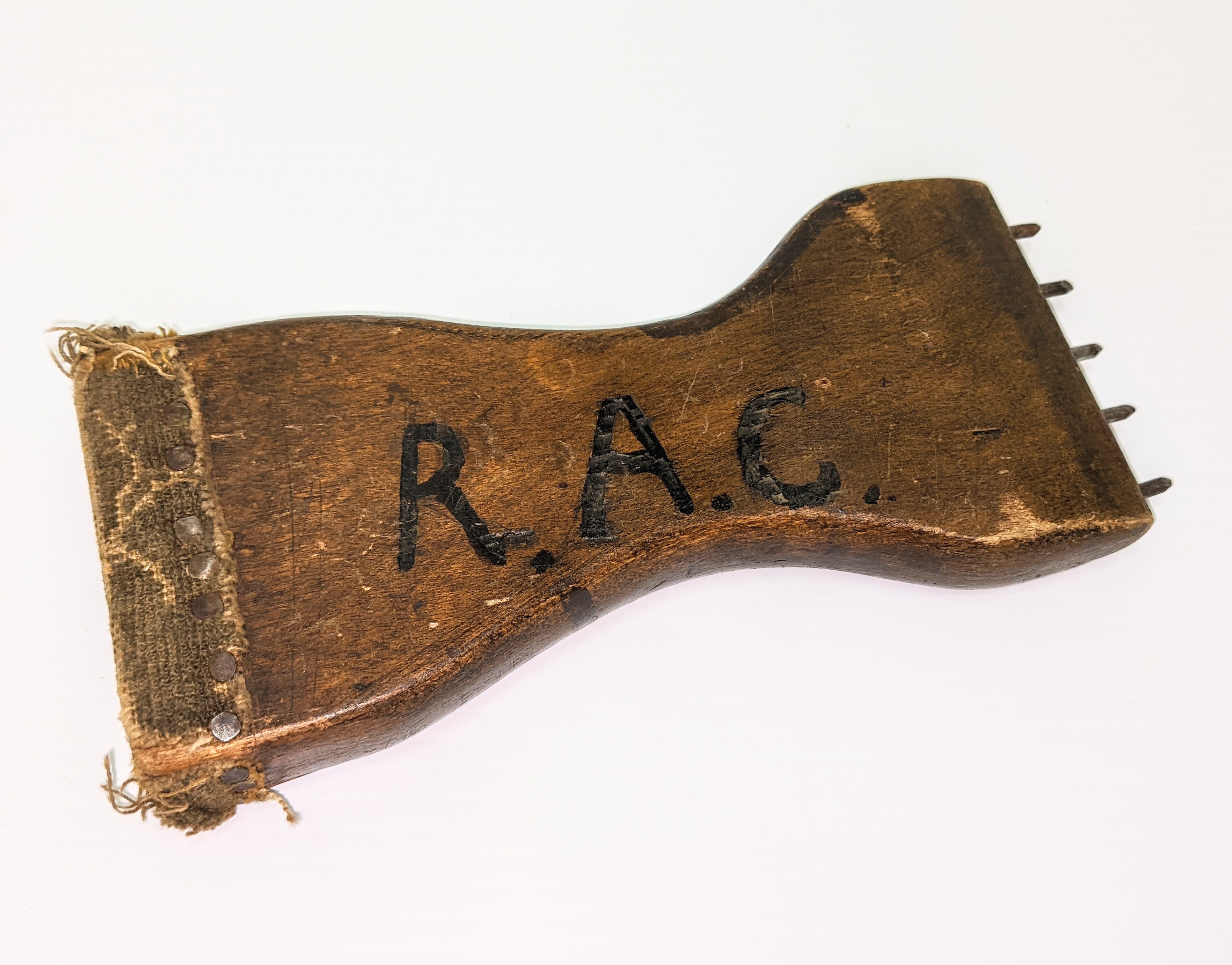
We were wrong in our description of this tool as a "weaving comb" rather it is a "webbing stretcher". Used in upholstery, the short nails on the end stab into the webbing while the fabric side is pressed up against the furniture piece pulling the webbing taut - kind of like a wedge. This also explains why the fabric on the top side is well worn, the fabric is necessary to prevent scratching. We are still unsure the meaning of "R.A.C".
18/4/2022
Newman, Jack + Pearl / 998.1.238

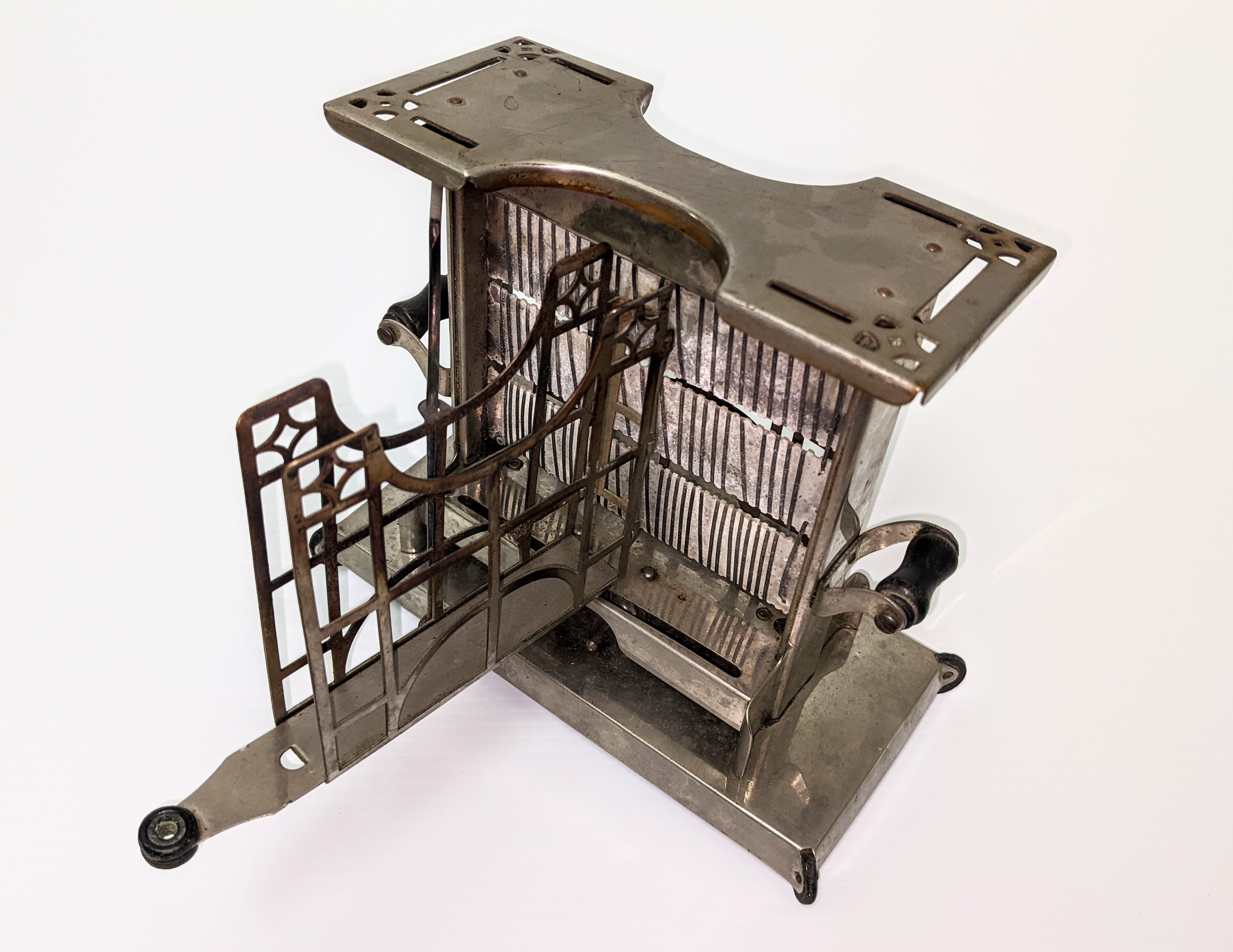
This is an electric toster from the "Landers Frary and Clark" company based in Connecticut USA. Each holder on the side of the device holds one slice of bread and is flipped laterally by pulling on the lever. This allows for easy toasting of both sides. One had to be careful though as there is no timer or "popping" device to let you know when the toast is done. This model was patented in Canada in 1915.
20/04/2022
2010.95.02 / Rachel Boire, Ehrman.

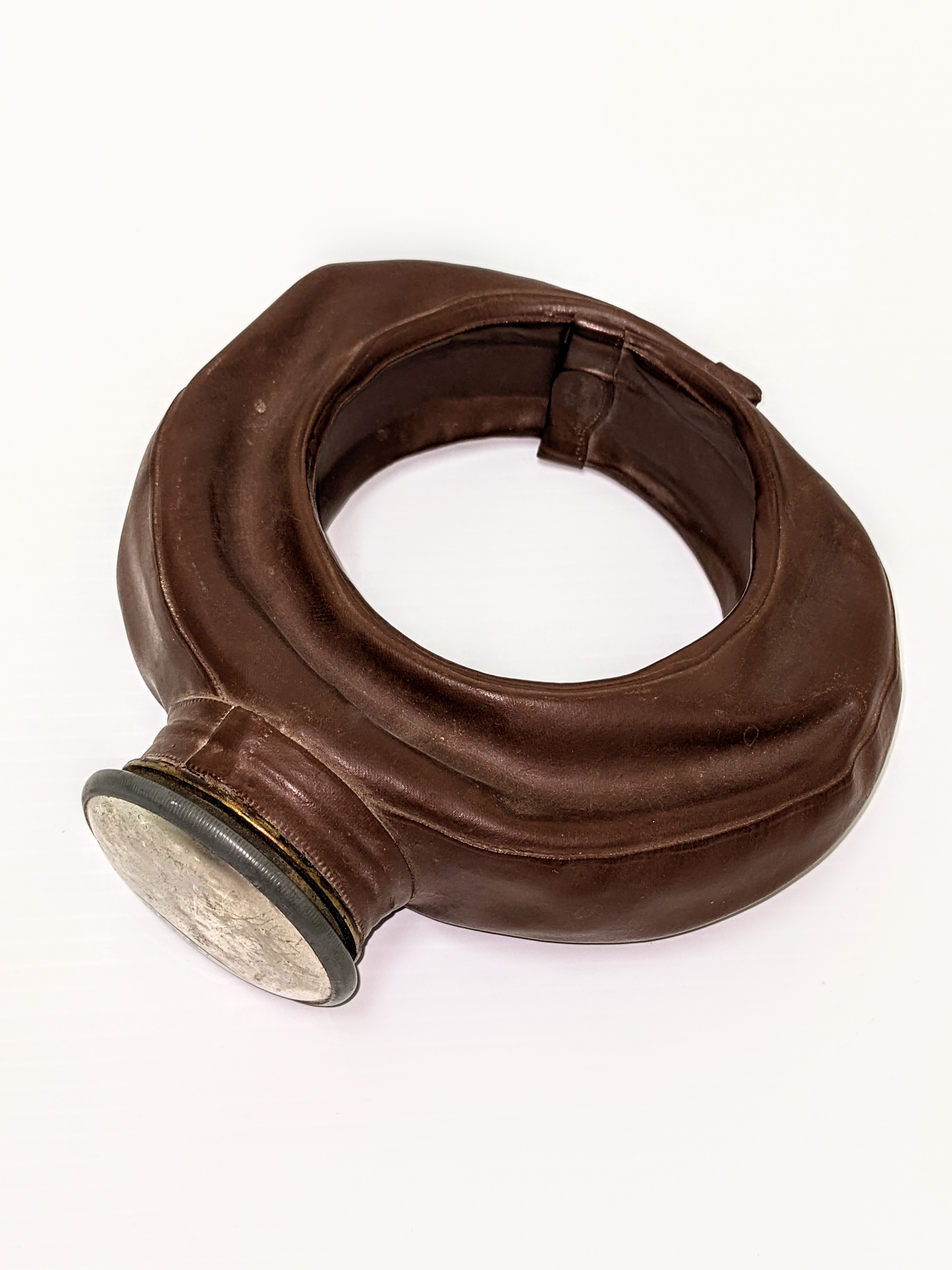
This strange looking bottle is called a "Tonsillectomy Bag". Manufactured by the Davol Rubber company of Rhode island in the 40's and 50's, this bag assisted in soothing a patients throat after having a tonsillectomy. The bag was filled with water then frozen / chilled so it could be wrapped around the patients neck - the cool temperature aiding in reducing swelling and pain. It is made of real rubber and has become very brittle - with the invention of pliable bags like ziplock, these unique devices were quickly phased out of medical practice.
02/05/2022
2004.18.01 / Simpson, Ena

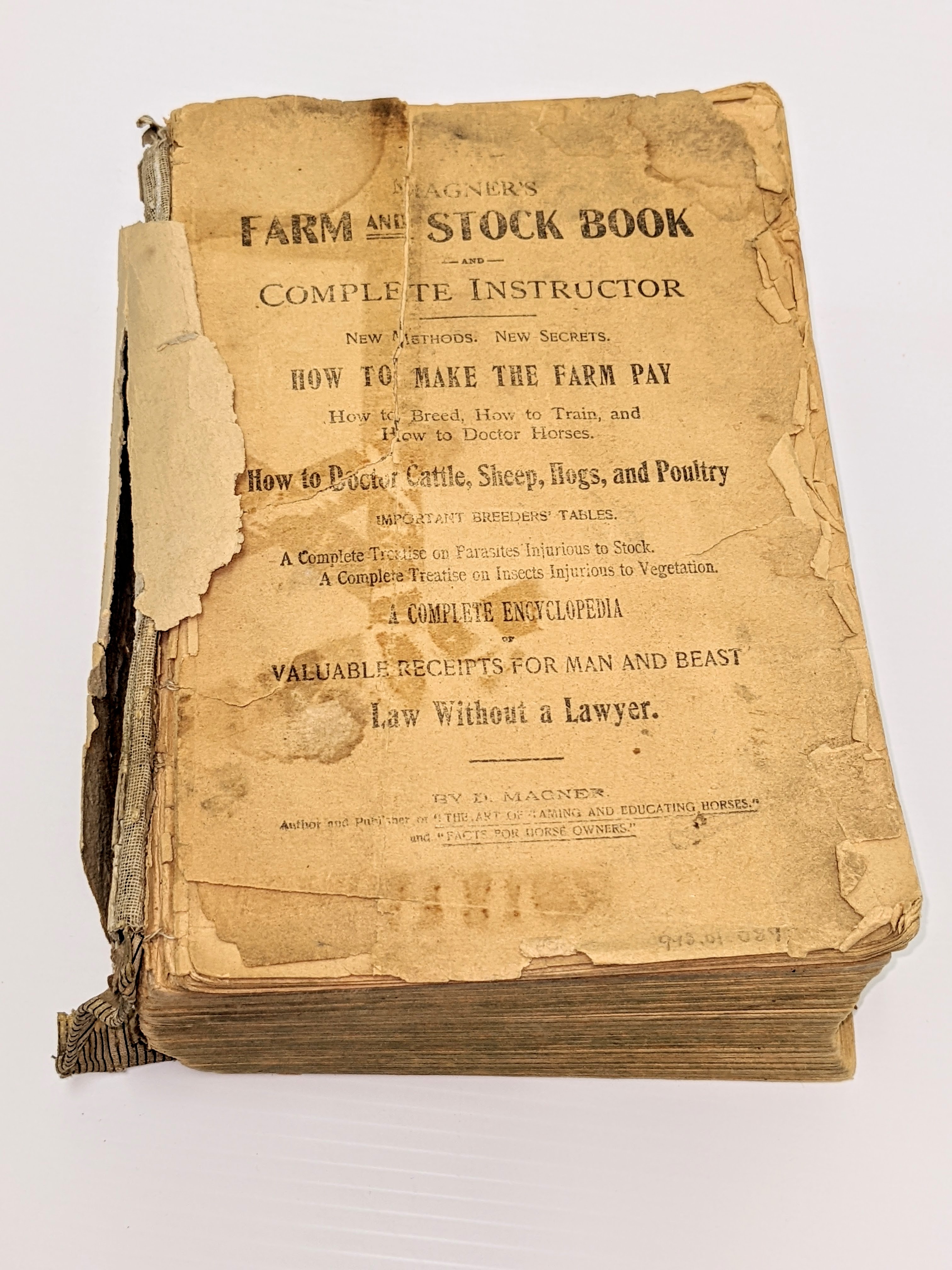
Published in 1906 this "Magners Farm and Stock book" was a one stop resource for learning "how to make the farm pay". The inside page pictured shows details of the topics covered within it's thick binding. The book belongs to the Newman Jack + Pearl collection and is well used and quite fragile- which makes sense considering relations of the family have been farming in the area since 1924!
09/05/2022
998.1.89 / Newman Jack + Pearl

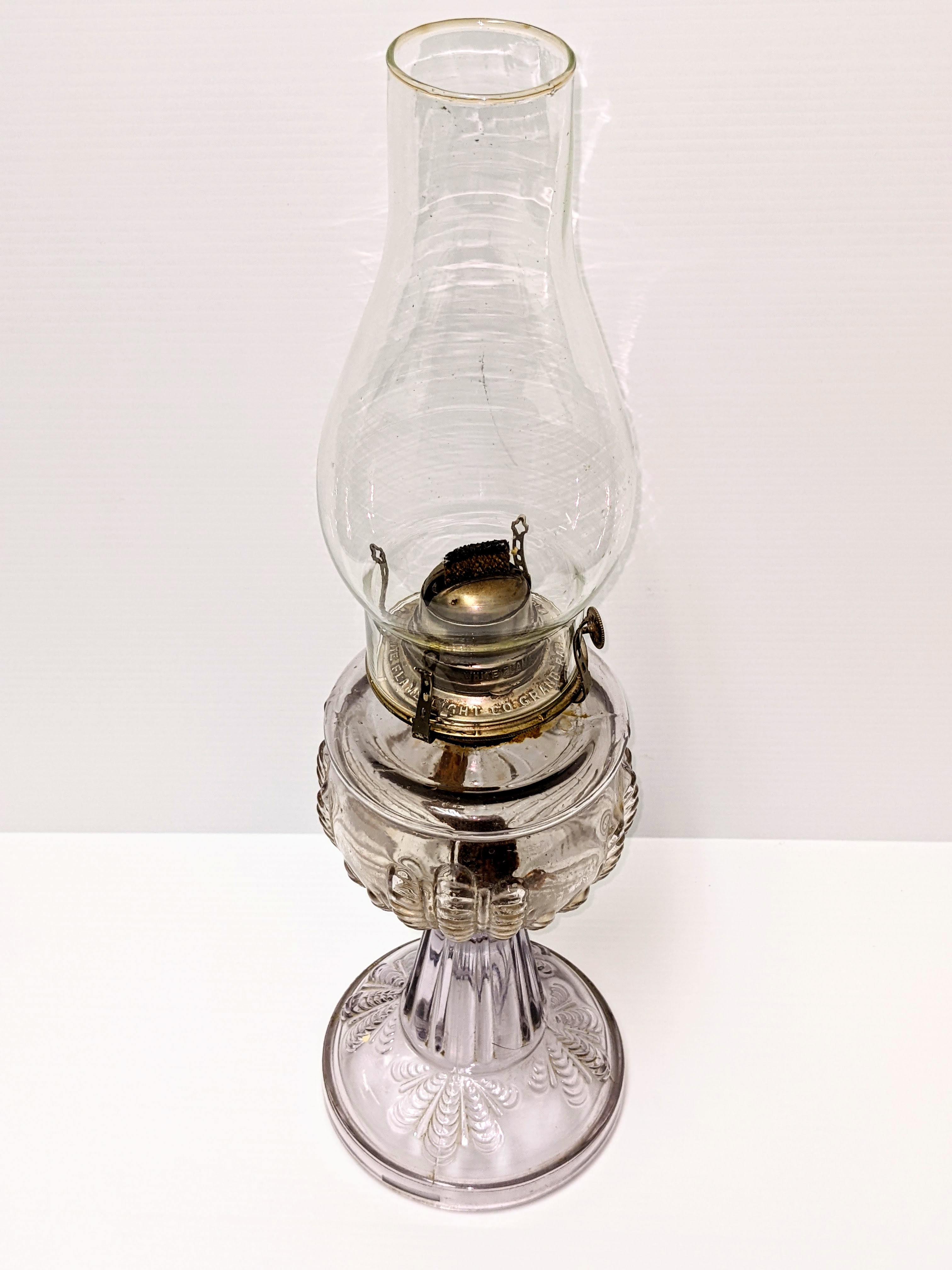
Today is International Day of Light! In recognition of this we have picked a oil lamp as our artifact of the week! This particular lamp was made by the "White Light company" and its decorative design is known as "Turkey Foot". It is difficult to see in the picture but the lamp does have a purple hue to its glass base. We have come a long way with our use of light making devices; from this simple lantern used only as a light source to laser light which contributes to medical, industrial, and research fields.
16/05/2022
995.2.50 / Bell, Lorna

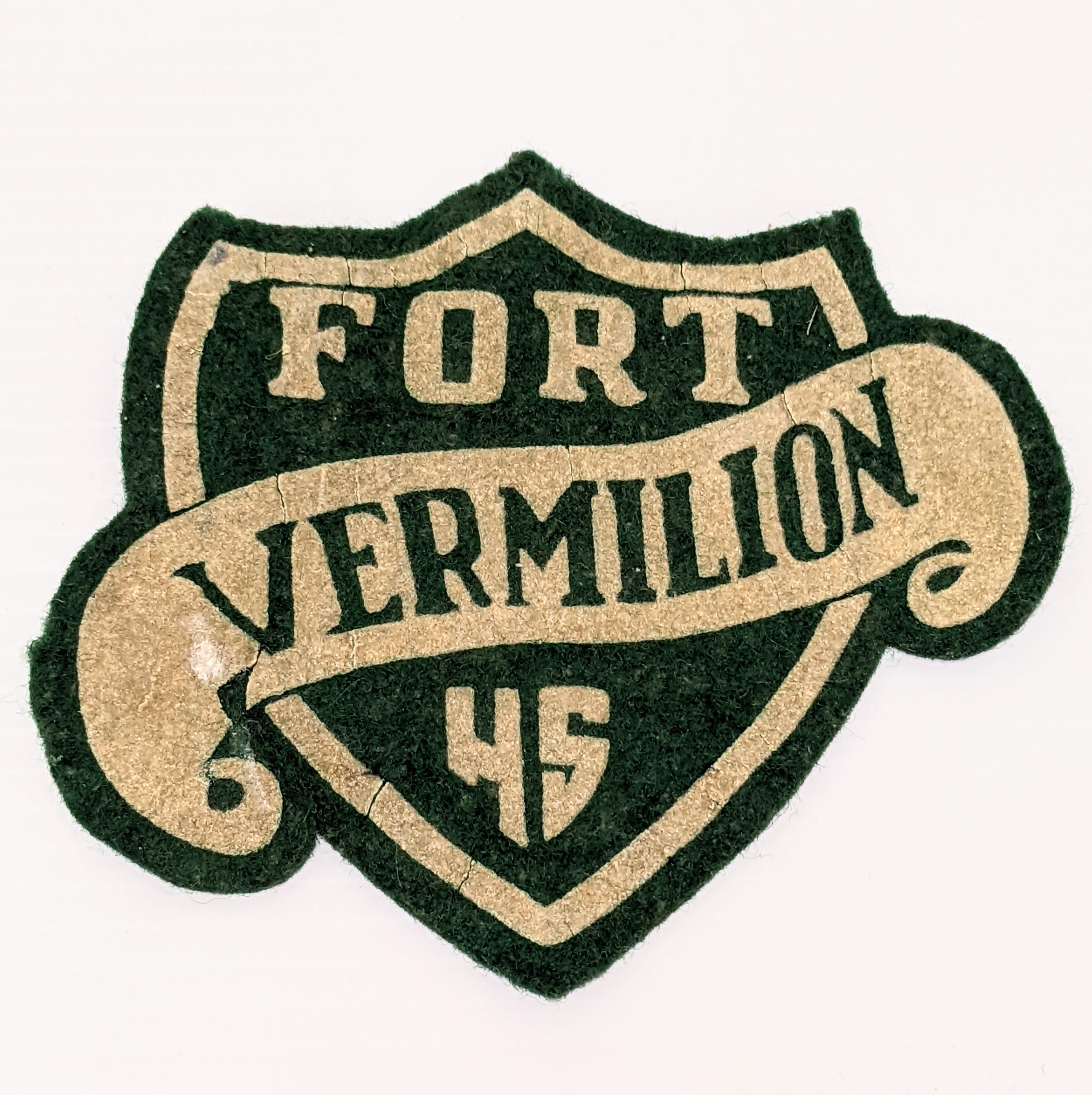
This Crest comes from the Fort Vermilion Public school in 1952! It is made of felt and would be stitched to a jacket / garment. The first public school for Fort Vermilion was established in the 30's. At this time there was also the residential school and separate school - which both belonged to the catholic school system. Though we are not sure where the original public school was located, the one previous todays modern facility was located at the top of the hill behind what is now an FVSD maintenance building.
23/05/2022
2009.70.04 / Ward, Hazel

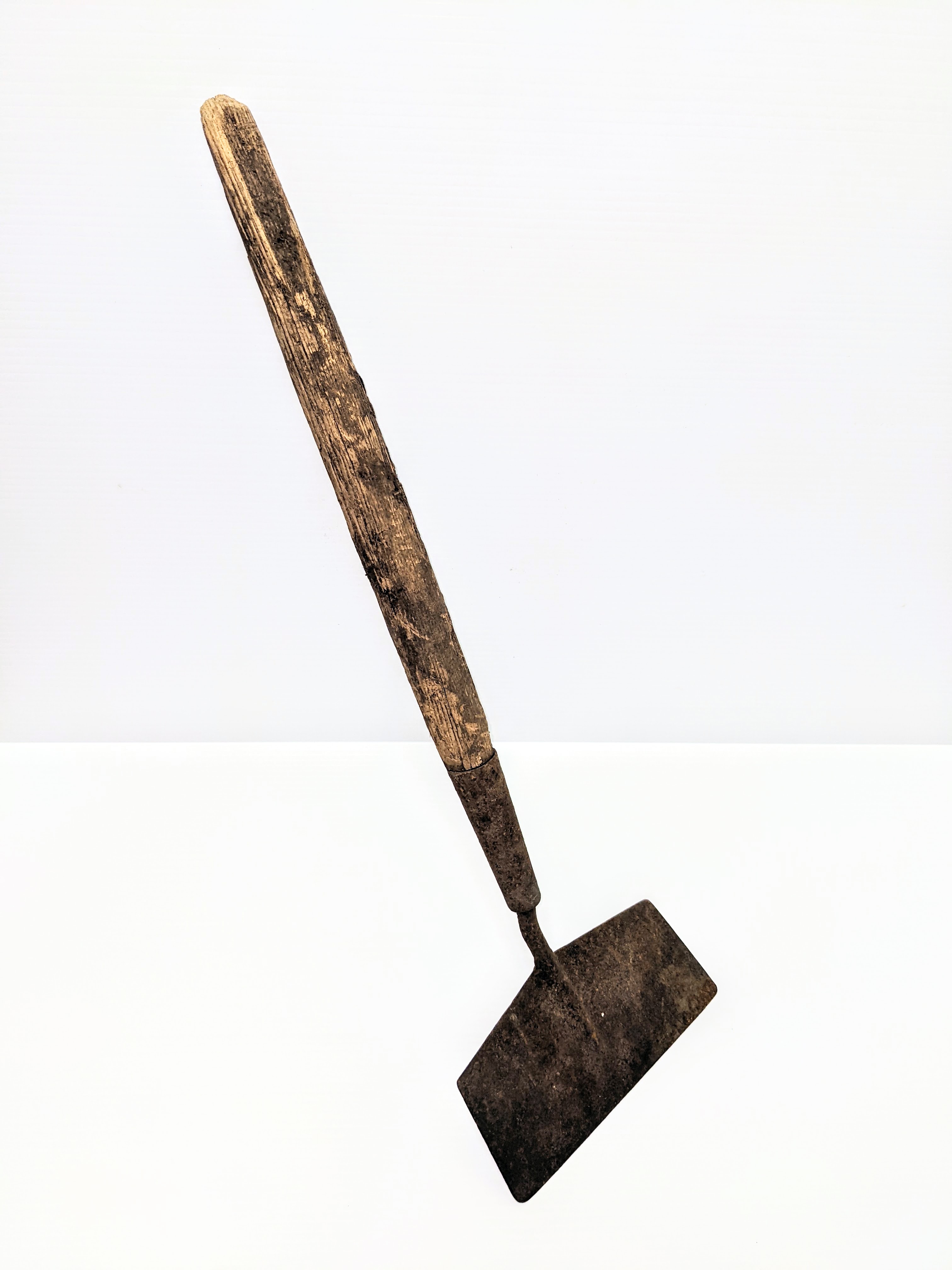
Check out this garden Hoe! It has a solid steel blade and wooden handle. The handle is short and appears to be a result of the wood breaking - perhaps due to aggressive weeding. You'll also notice that the angle of the blade is quite shallow which is likely for a specific purpose - what that purpose might be we do not know!
In any case, it saw good use during it's time at the experimental Farm.
996.39.5 / Clayton, George

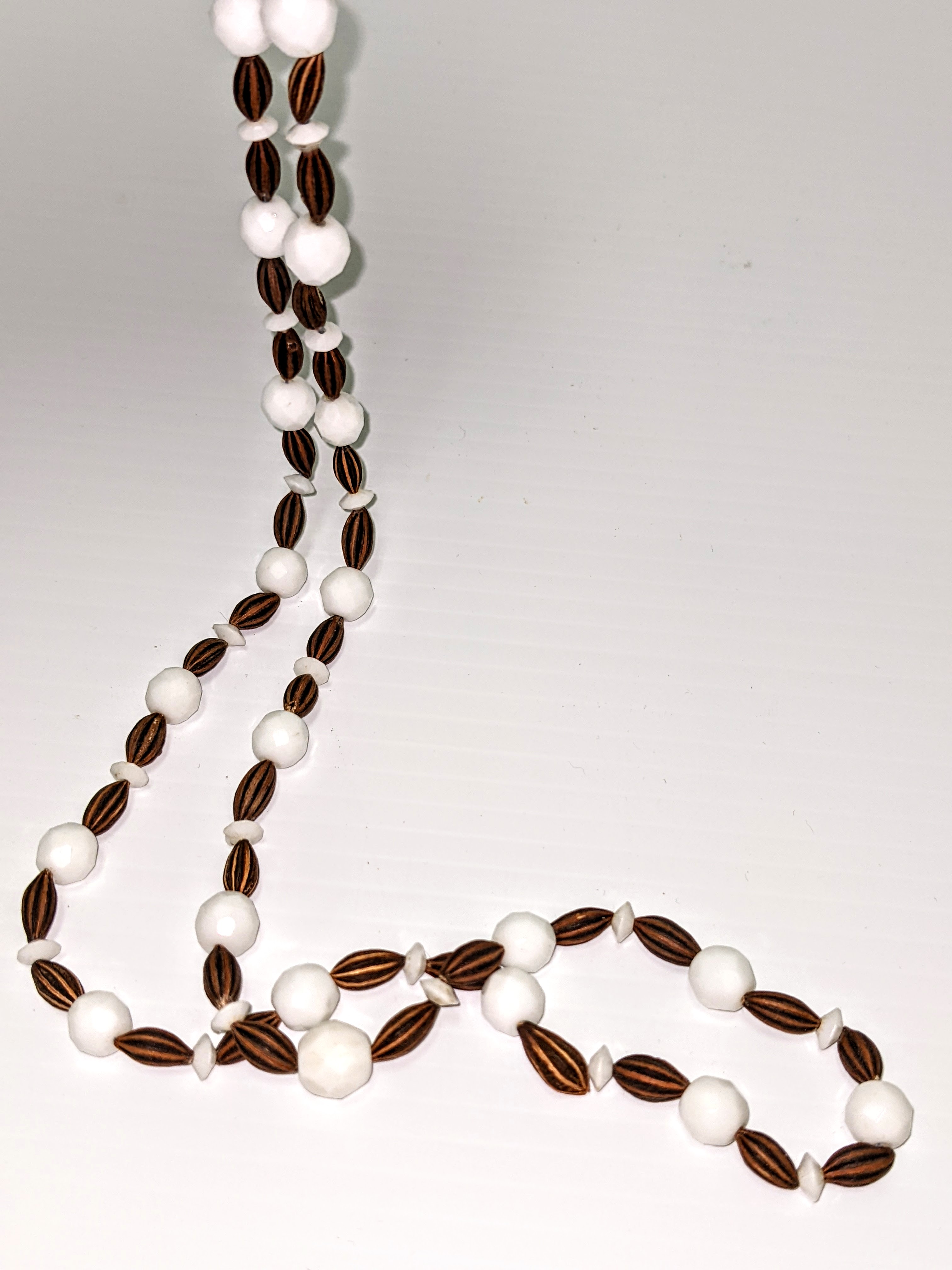
Not a particularly old artifact, but in honor of National Indigenous Day tomorrow we chose this beautiful wolf willow necklace. The brown serrated beads on the necklace are Wolf Willow seeds - a resource loved by Metis and indigenous people because of it's beauty and medicinal properties. The seeds have to be extracted from their outer shell then soaked in warm water. This will soften them enough to puncture a needle through for threading a necklace. This particular necklace was made by Joe Fromhold.

997.113.26 / Toews, Al + Marilee

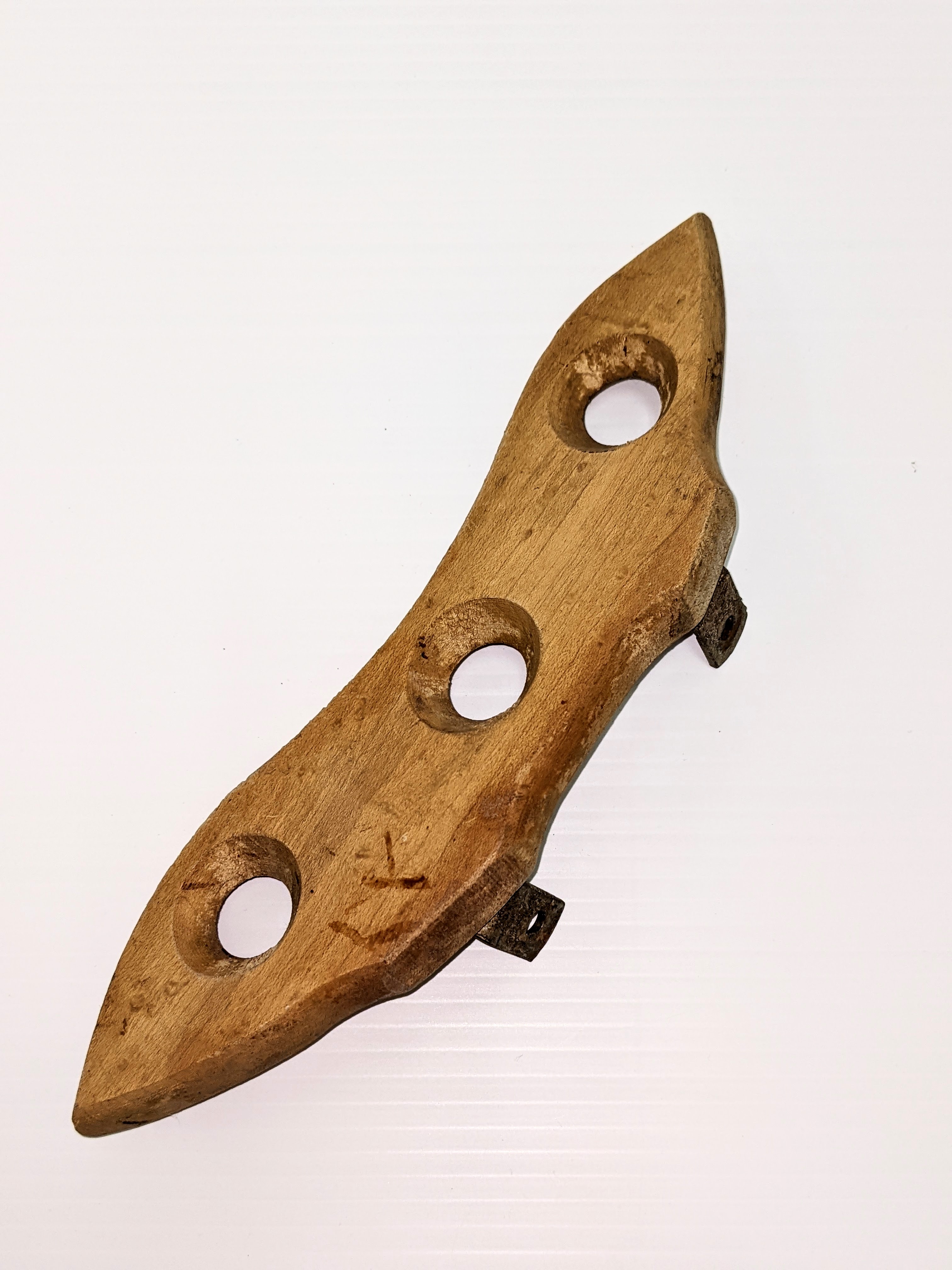
This oddly shaped wooden object is only part of a larger whole. The metal brackets on the back side allow this wing shaped piece to be fastened to a central pivot point. Upon cranking on a handle multiple of these wing shaped paddles would spin inside a bucket churning the contents within - eventually forming ice cream! The holes aid in agitating the contents and make spinning the paddles much easier!
2000.03.20.02 / Campbell, Jean
04/07/2022

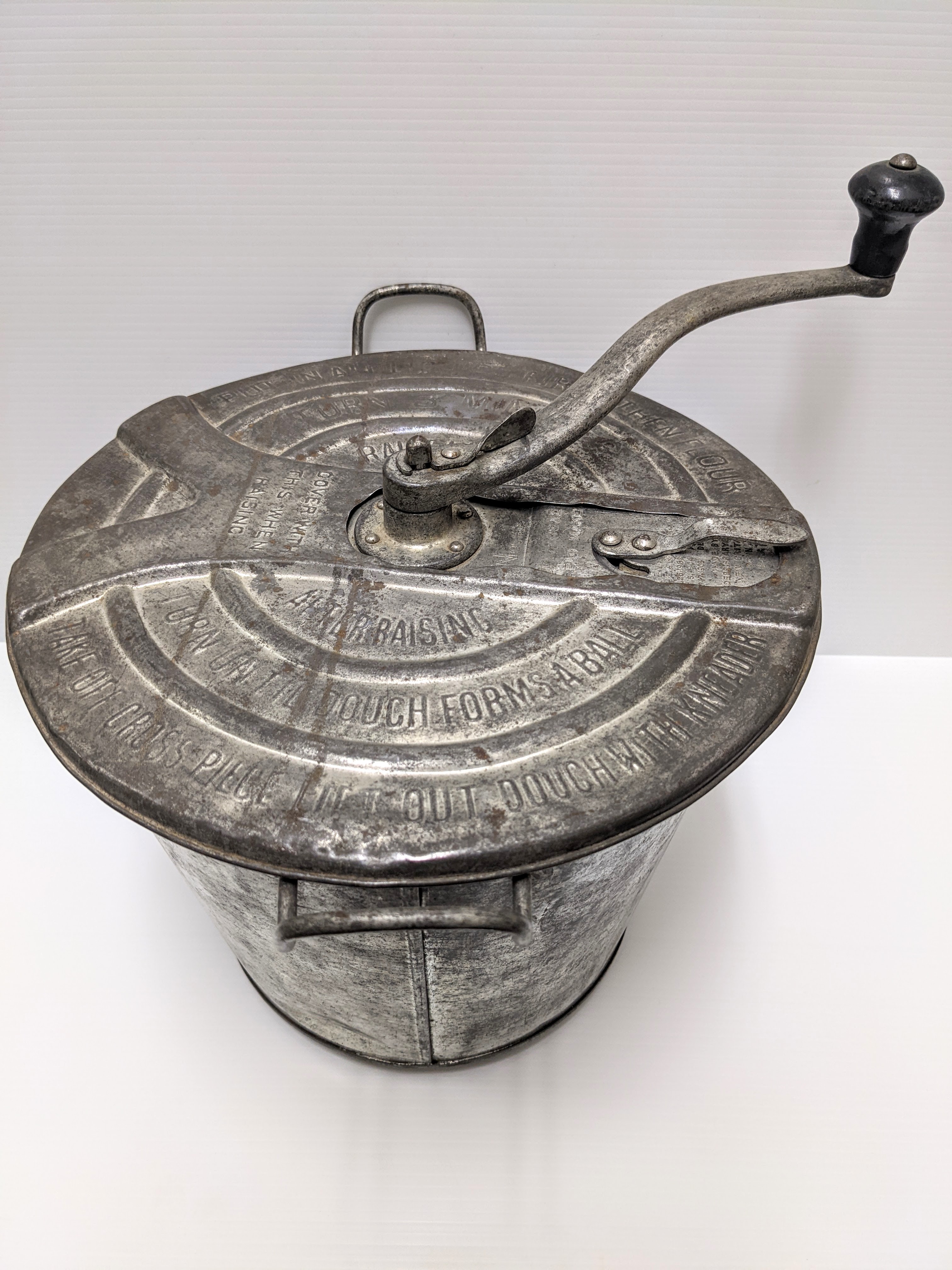
This odd shaped pail is actually a hand powered bread maker! Under the lid and attached to the crank handle is a dough hook - and if you look closely you can read the instructions for making bread using the device. The patent number on the lid states 1906 and was made in "Conn USA". It's history in Fort Vermilion is unknown. 
2013.17.1.1 / Unknown
11/07/2022

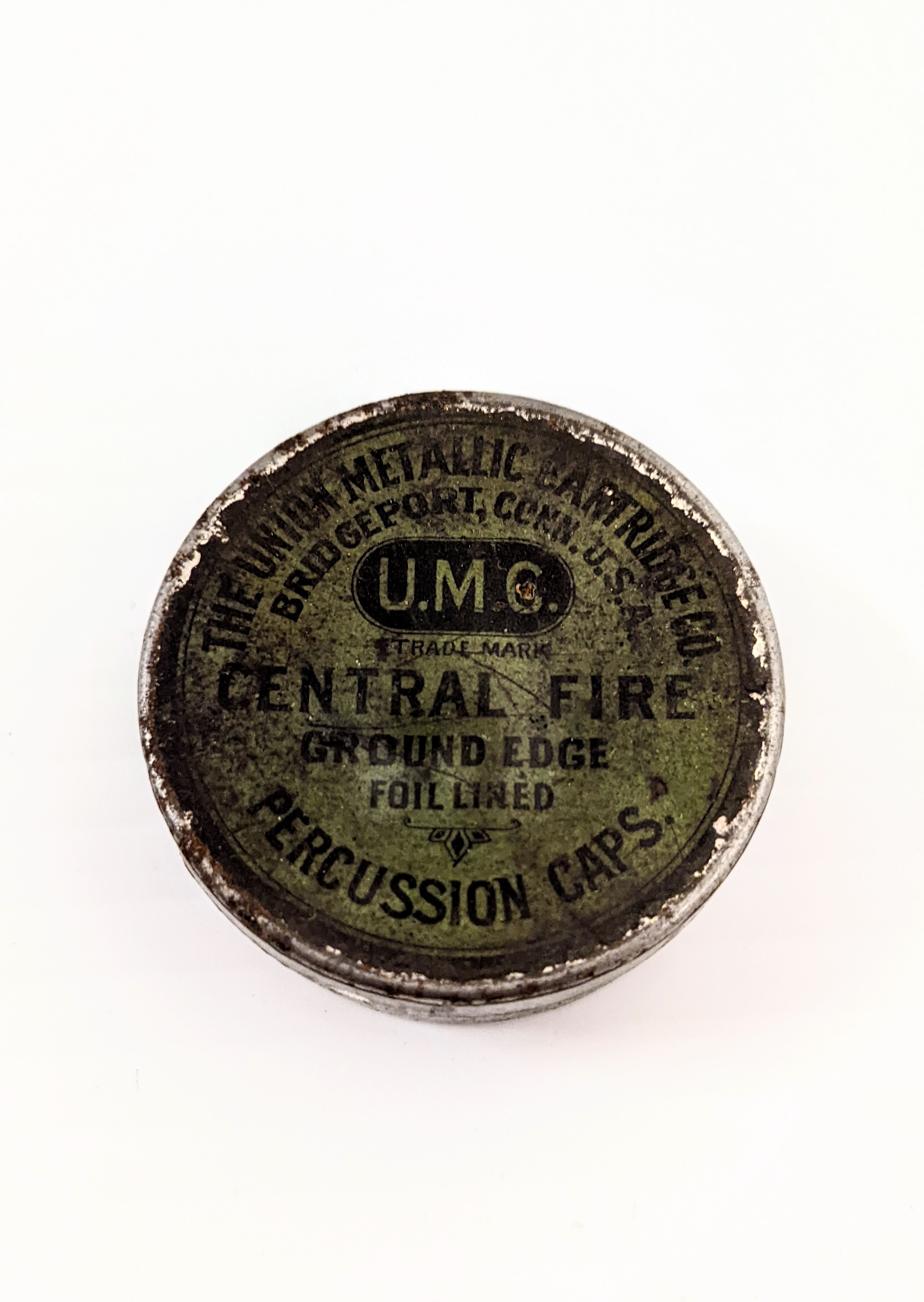
This small metal tin is a container for Blasting Caps. Made by the Union Metallic Cartridge Company of Conn. USA these caps were integral to the firing of a rifle. These small caps were integral to the cap lock mechanism of ignition for firearms. They contain a small about of fulminates which explode and create sparks upon impact of a hammer - these sparks would then ignite the main powder charge and fire the cartridge. The hammer of a modern firearm ignites the powder charge of a cartridge directly thus removing a step - and the need for blasting caps!
2007.61.01.22 / Tourangeau, Martha & Harvey
18/07/2022

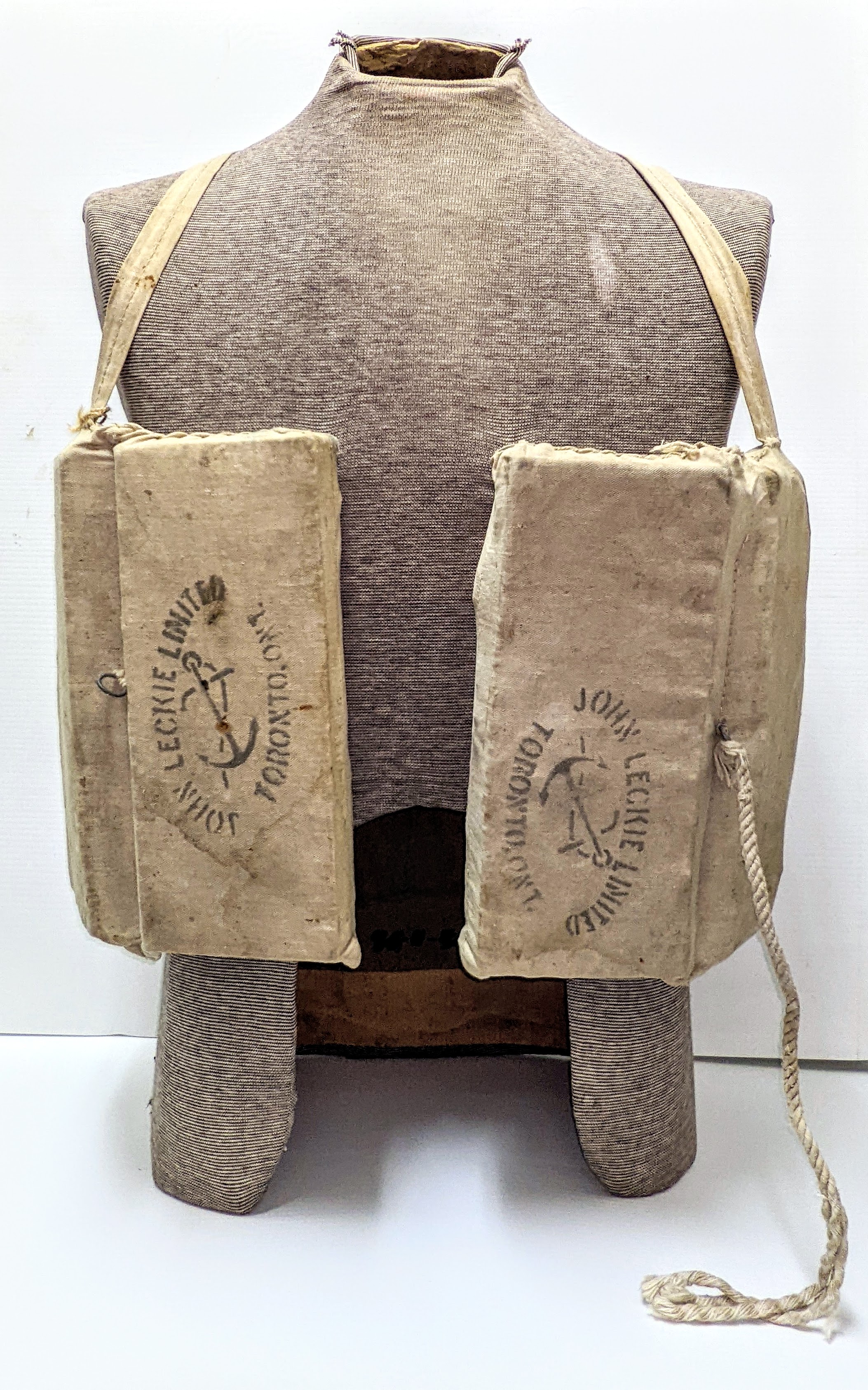
This bulky looking attire is a canvas and cork lifejacket. Made at the turn of the 20th century, this flotation device was used on the SS Peace River which was built in Fort Vermilion in 1905. The boat was operated by the Hudson's Bay company from 1905 - 1916 when it was dry docked and dismantled in Fort Vermilion. The two stamps on the front label the life jacket as a product of John Leckie LTD Toronto - a company specializing in fishing supplies! On the back side is a "Peace River" stamp.
2002.247.01 / Fort Vermilion Historical Society

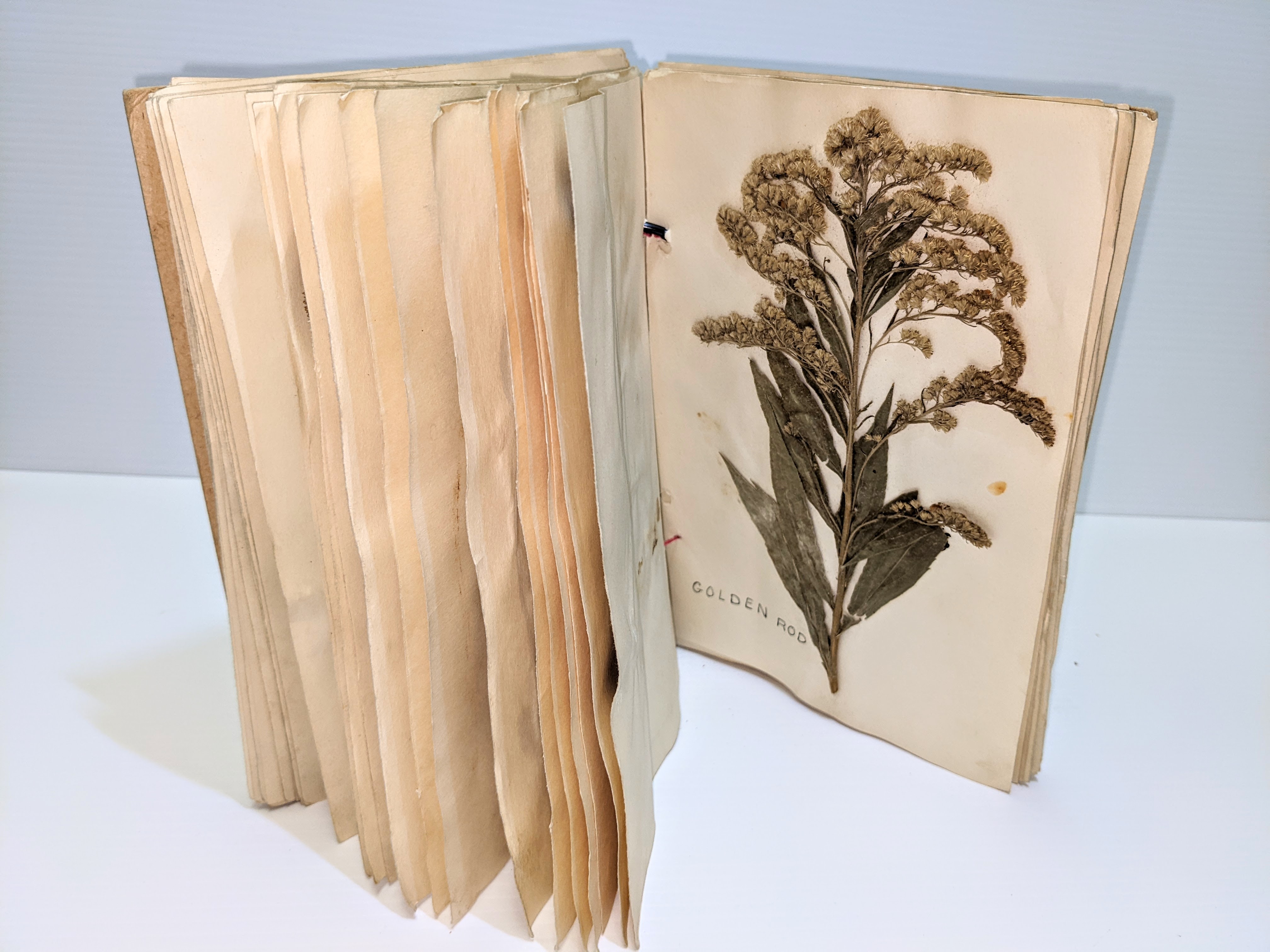
This is a book labelled "Wildflowers". It was a school project (encouraged by the Experimental Farm) in which youths would collect and compile various species of native plants from the area; drying and pressing them into a book as shown. This book was made by Jean Campbell at the end of the 30's and contains dried specimens of over 80 plants! It also won first prize at the Agriculture fair the year it was made!
2002.226.112 / Campbell, Jean
01/08/2022

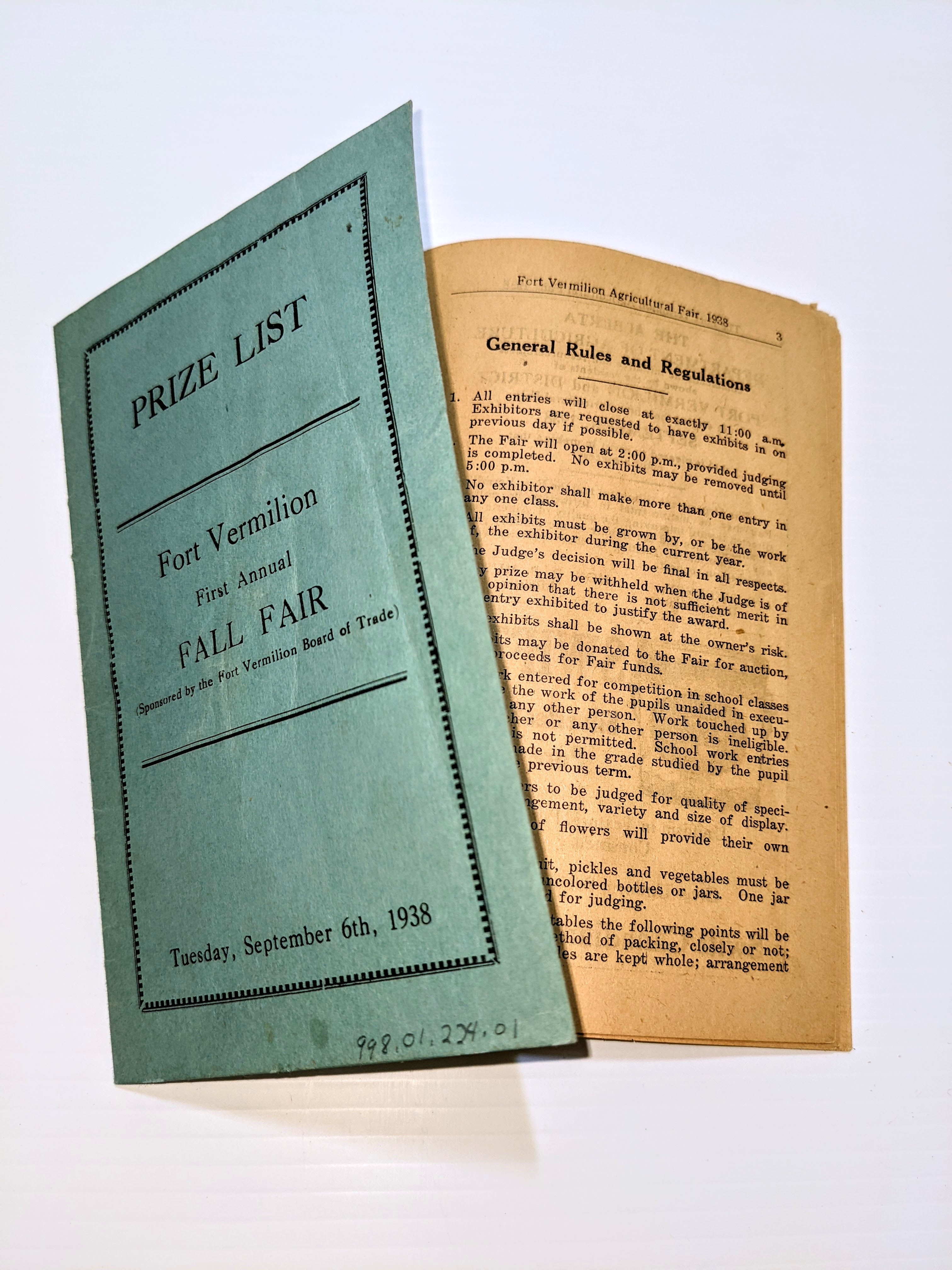
The Mackenzie County Ag. fair is happening this weekend! In keeping with that event we have chosen this Prize book from the first Fall Fair in Fort Vermilion as the artifact of the week. Started in 1938 this fair's main activity was a "bench show" - an event where individuals entered their best "works" to be graded and prized amongst the entrants. We say "works' because the categories are various and range from crops grown in fields to sewing, baking, numerous others and class #125 which is labelled as "health poster". Categories for Men, women, and children made this event accessible and engaging for the whole family. The person with the most points from all the categories was awarded the "Grand Aggregate Prize" which included a free round trip to Peace River with expenses paid (stopover meal and hotel) courtesy of United Air Transport!
998.01.224.01 / Newman, Jack + Pearl
08/08/2022

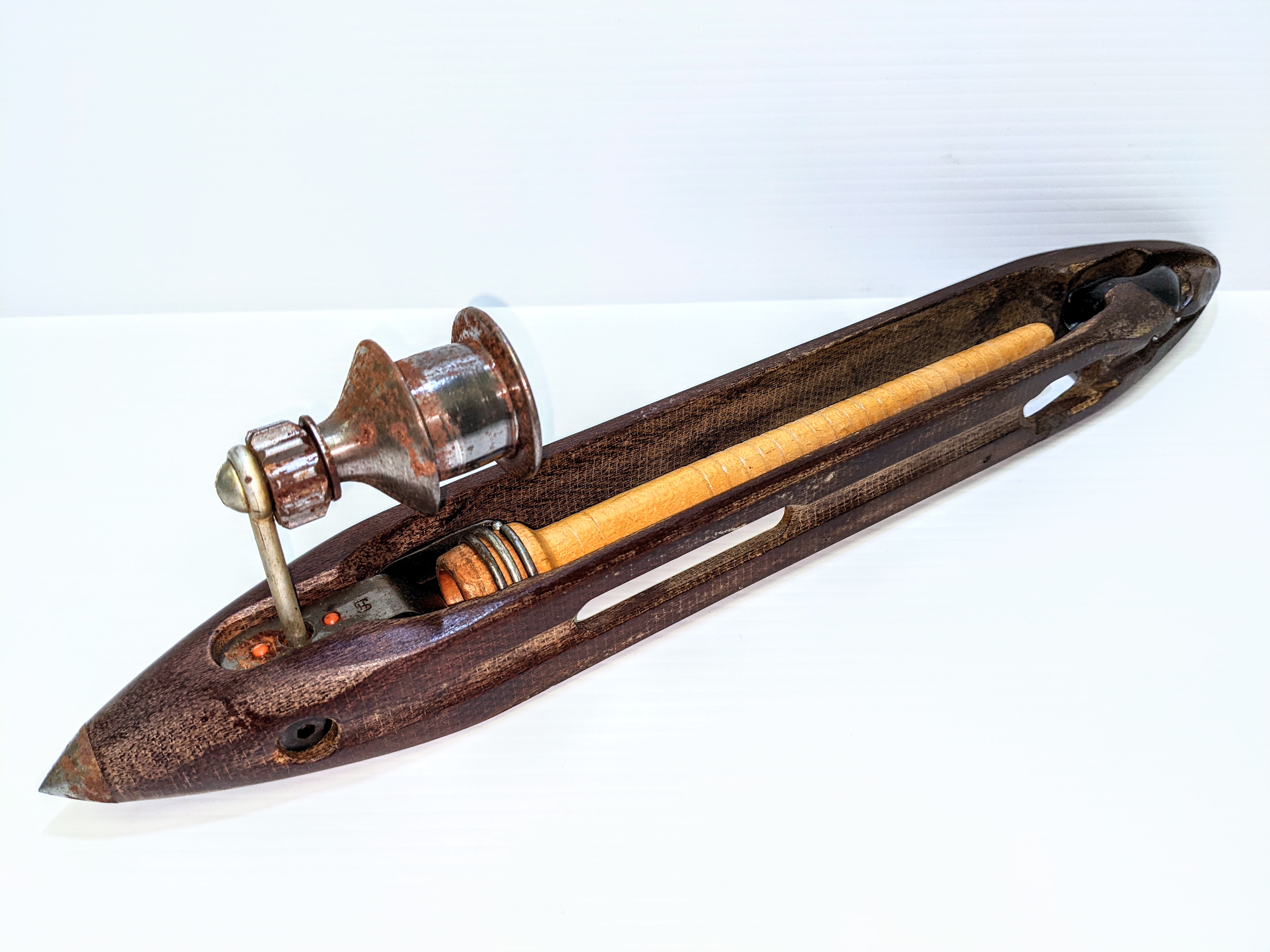
This is an upcycled candle holder! The original purpose of the pointy device was a weaving loom shuttle. Made and patented by the "Shambow" company in 1937


"The main object of the invention is to provide a reinforcing or supporting means for Shuttles adapted to be located at the point where breakage is most likely to occur for reinforcing one or both lateral portions of the shuttle body in such a manner as to distribute the strain caused by forcing a bobbin into the thread delivery end of the shuttle and thus prevent breakage of the shuttle."

which is quite a mouthful! The protrusion out the top is where the device has been upcycled to a candle holder - with remnants of wax inside!
2017.22.115 / Creighton, Harold + Evelyn
16/08/2022

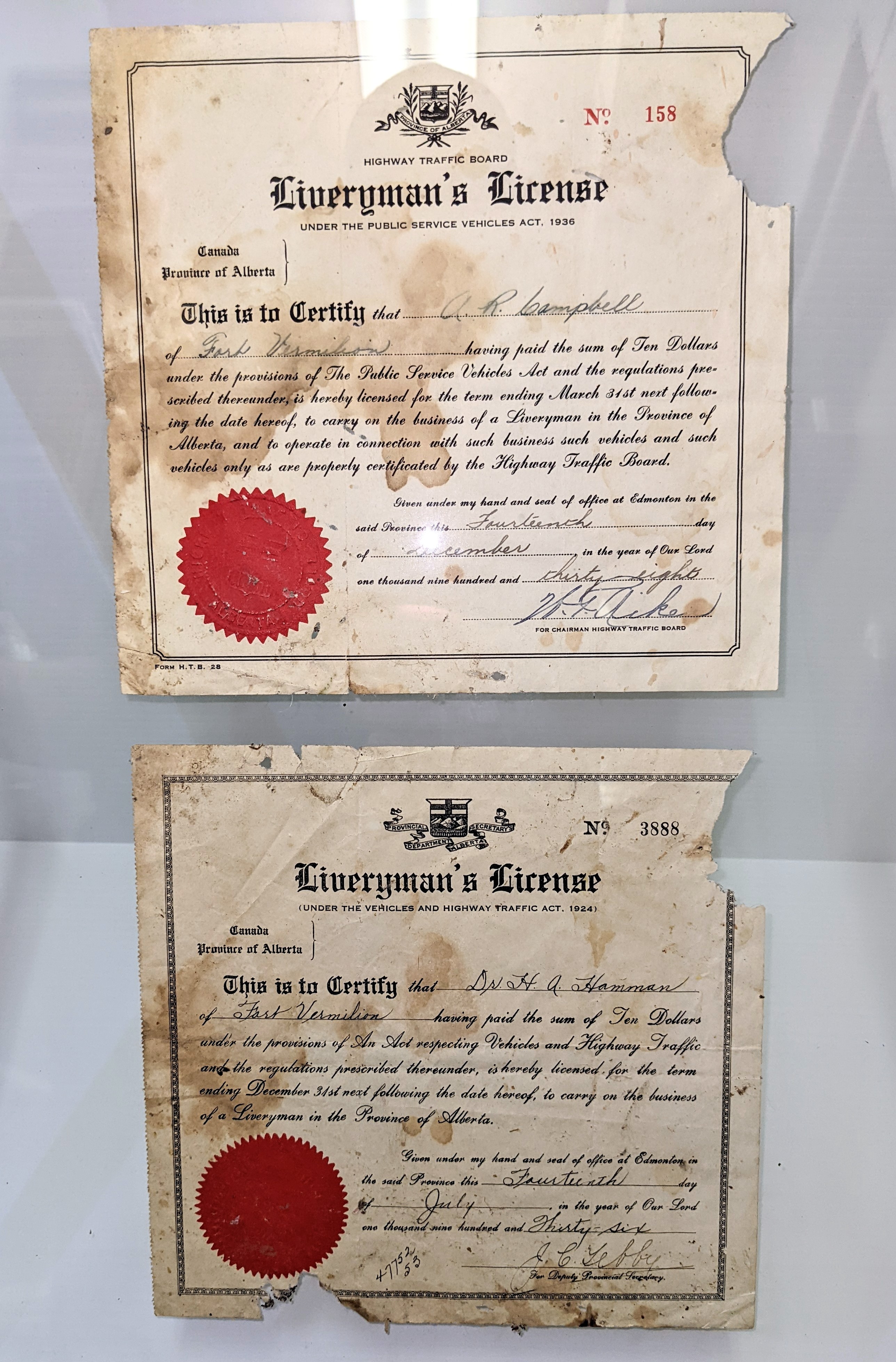
These Liveryman Licenses are granted to A.R. Campbell (issued 1938) and Dr. G.A Hamman (issued 1936). Liverymen could rent animals and agriculture implements, host auctions, organize โ€œbusโ€ tours and deliver milk and wood. This license also applied to operating motor vehicles and is considered an early drivers license. One could be fined up to $100 or 6 months in jail for providing chauffeur services without a license. In the 30's Alex Campbell converted a truck into a snow machine which Dr. Hamman used to transport patients and provide easier access to remote cases - a leap forward from snowshoeing or Dog sledding in the cold winter. These licenses likely were acquired for the operation of said snow machine!
993.2.1 / Fort Vermilion Heritage Centre
23/08/2022

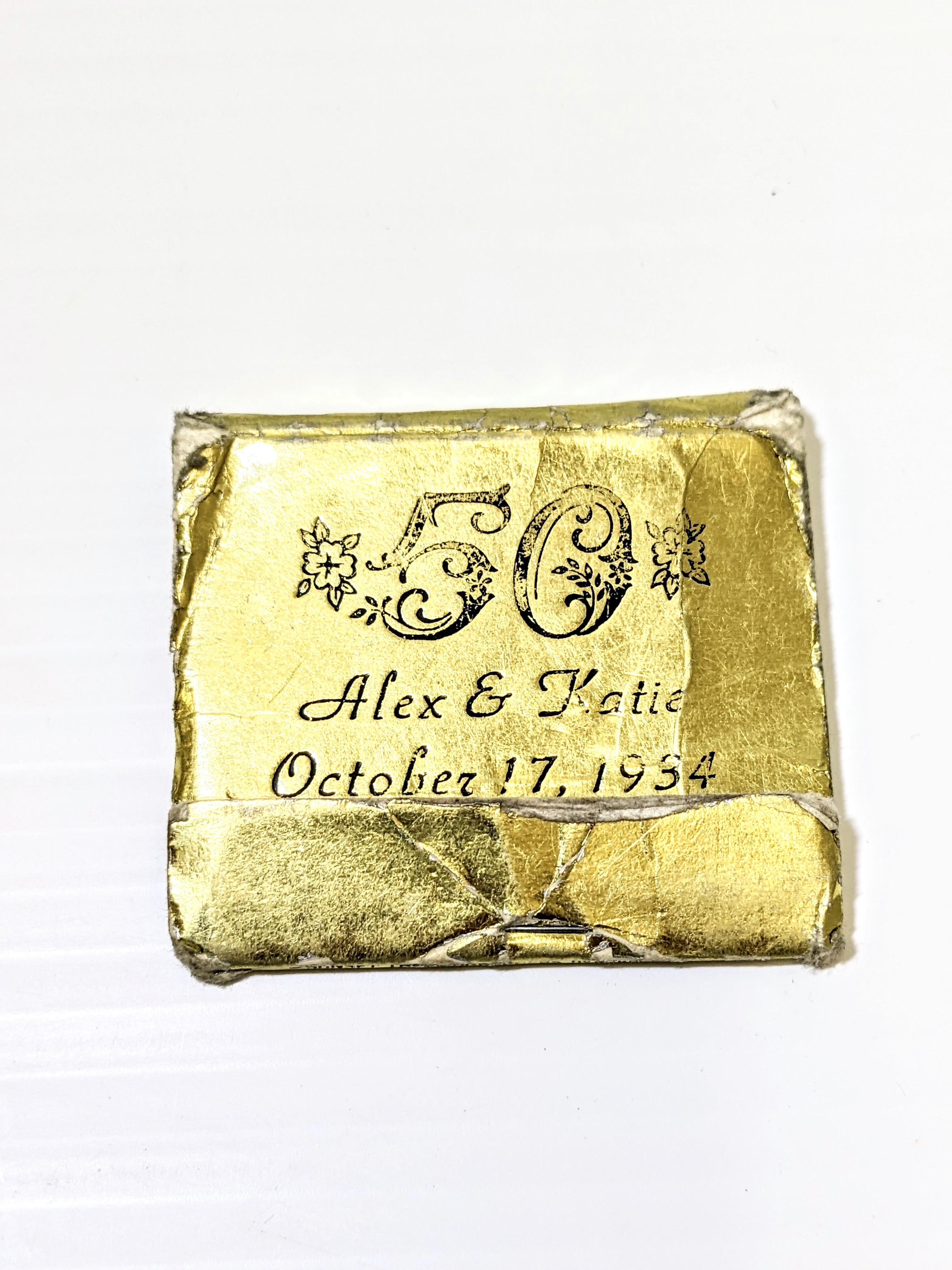
This matchbook is not very old (1984) - but celebrates the 50th wedding anniversary of Alex and Katie Batt. Alex Batt married Katie Bancarz on October 17, 1934 in Saskatchewan - promptly moving to Fort Vermilion after. They lived in the Rocky Lane area - farming and maintaining beautiful gardens. Commemorative matchbooks like this one were very popular for many years - the invention of the lighter (and decline in smoking) makes them increasingly rare.
2015.16.637 / Twidale, Alfa
30/08/2022

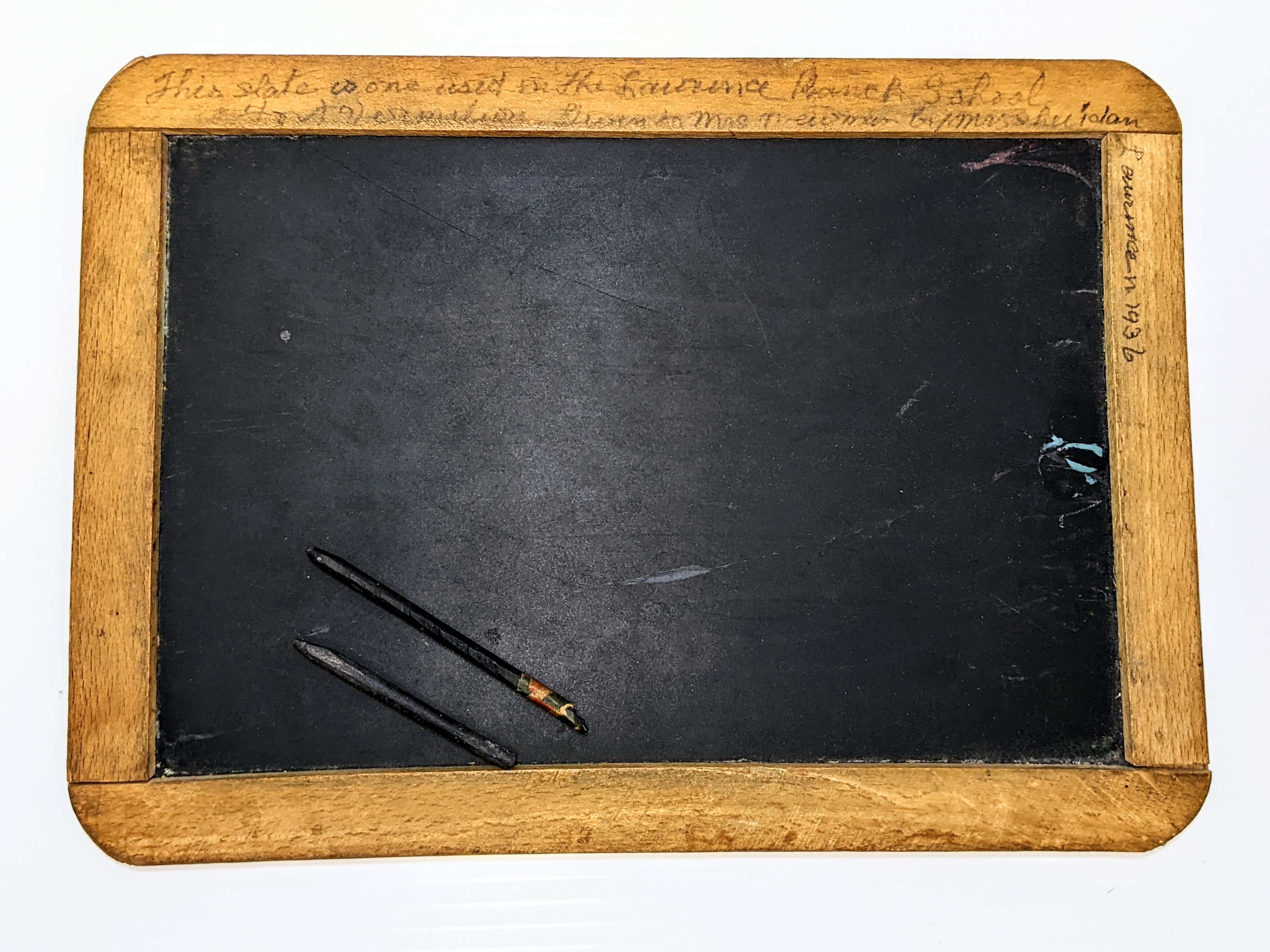
Today is the first day back to school! As such, we have chosen this slate board and pencils as the Artifact of the week! Once used at the Lawrence Ranch school - a slate like this would be used to practice writing, solving math problems- and no doubt- doodling. Paper was expensive and re-useable boards such as this one were much more economic and viable. They also required great memorization as one would have to wipe it clean to create more practice space as they continued through the lesson. Furthermore slateboards often stayed at school - meaning there was no opportunity to study at home and one had to have determined focus during the lesson! The lawrence Ranch school was established in 1913.
2007.67.08.01+02 / Lawrence Family 06/09/2022

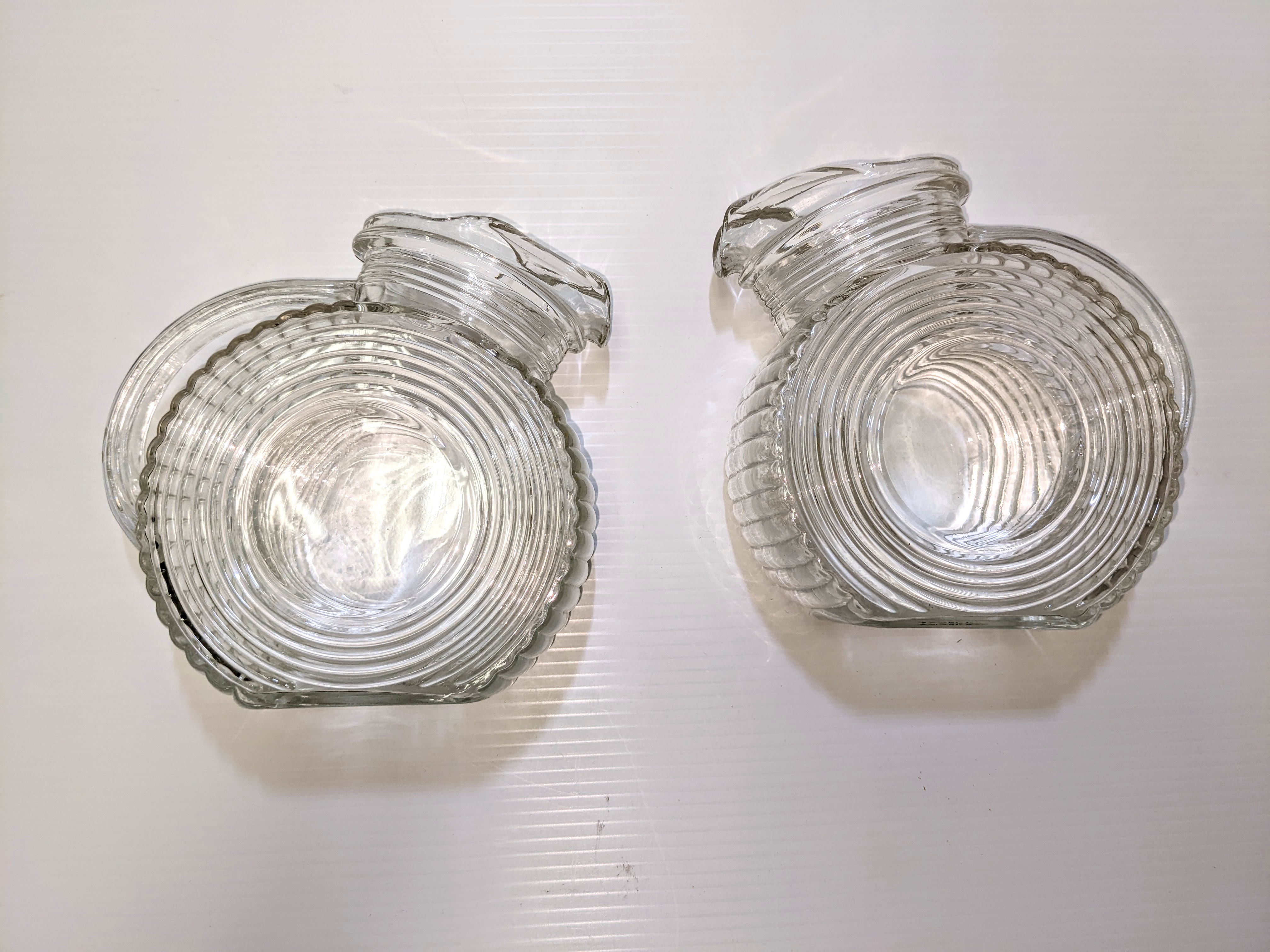
These two water pitchers were hard earned by Rachel (Boire) Erhman. She won them as an 11 year old in a spot dancing competition in 1938 at the Diamond P Hall. Spot Dancing requires one to dance within a boundary despite the music becoming faster and the boundry smaller. The Diamond P hall was located close to where the school Division office currently rests and was an important social gathering space for the community. The west hill leaving Fort Vermilion is historically known as Diamond P Hill -Diamond P being the slang name for the Peace River Trading Company which was operated in Fort Vermilion by Fred Lawrence.
2010.95.04+05 / Erhamn, Rachel (Boire) 13/09/2022

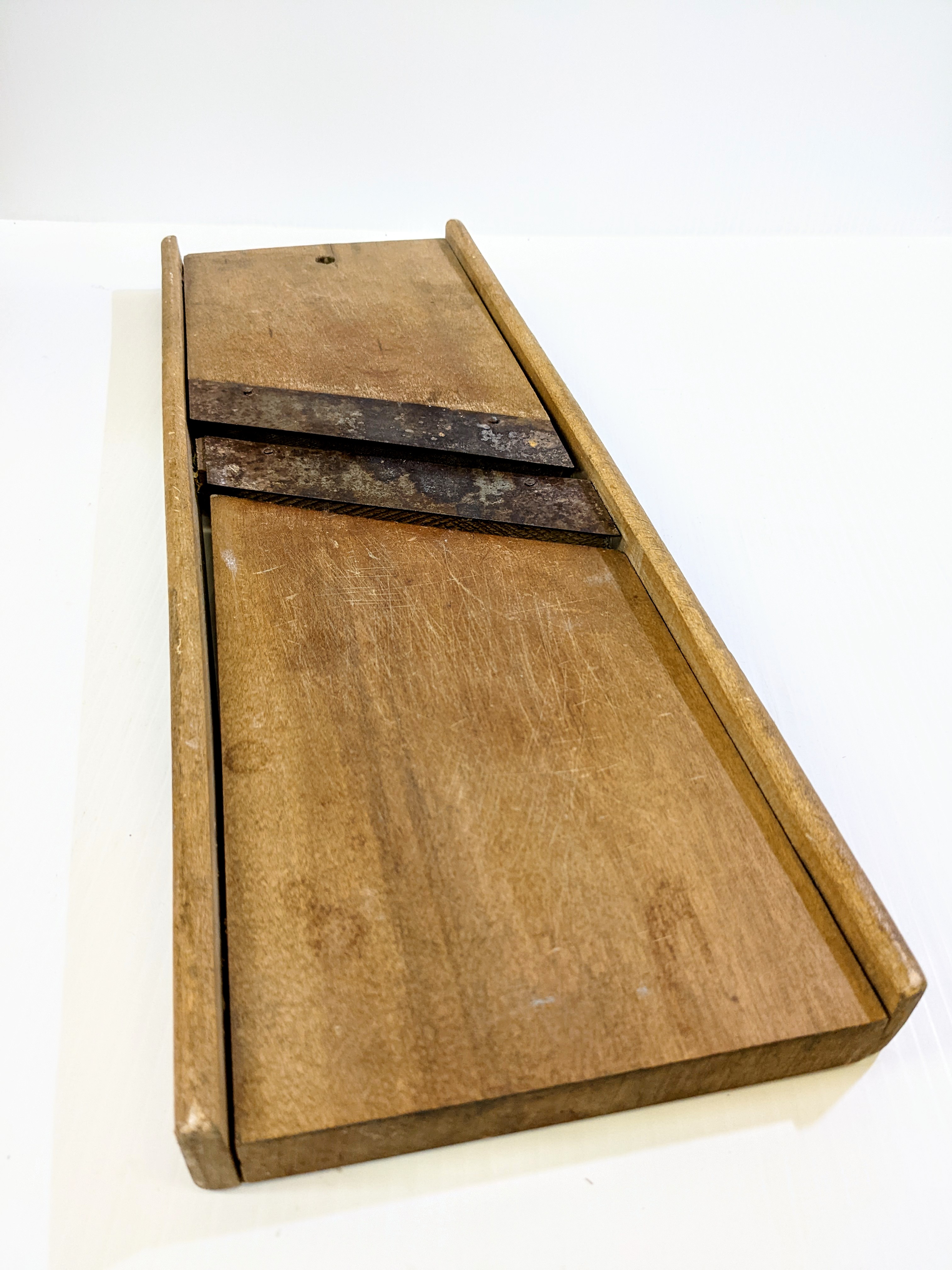
This long board with intimidating knives is a homemade food chopper. Commonly used in making sauerkraut the double blades shredded the cabbage easily and efficiently. Both panels of the board flip open for easy cleaning and maintenance. Found in the Anglican Rectory this chopper is believed to date back to the 1920's!
2001.04.01 / Dittrich, Melissa
19/09/2022

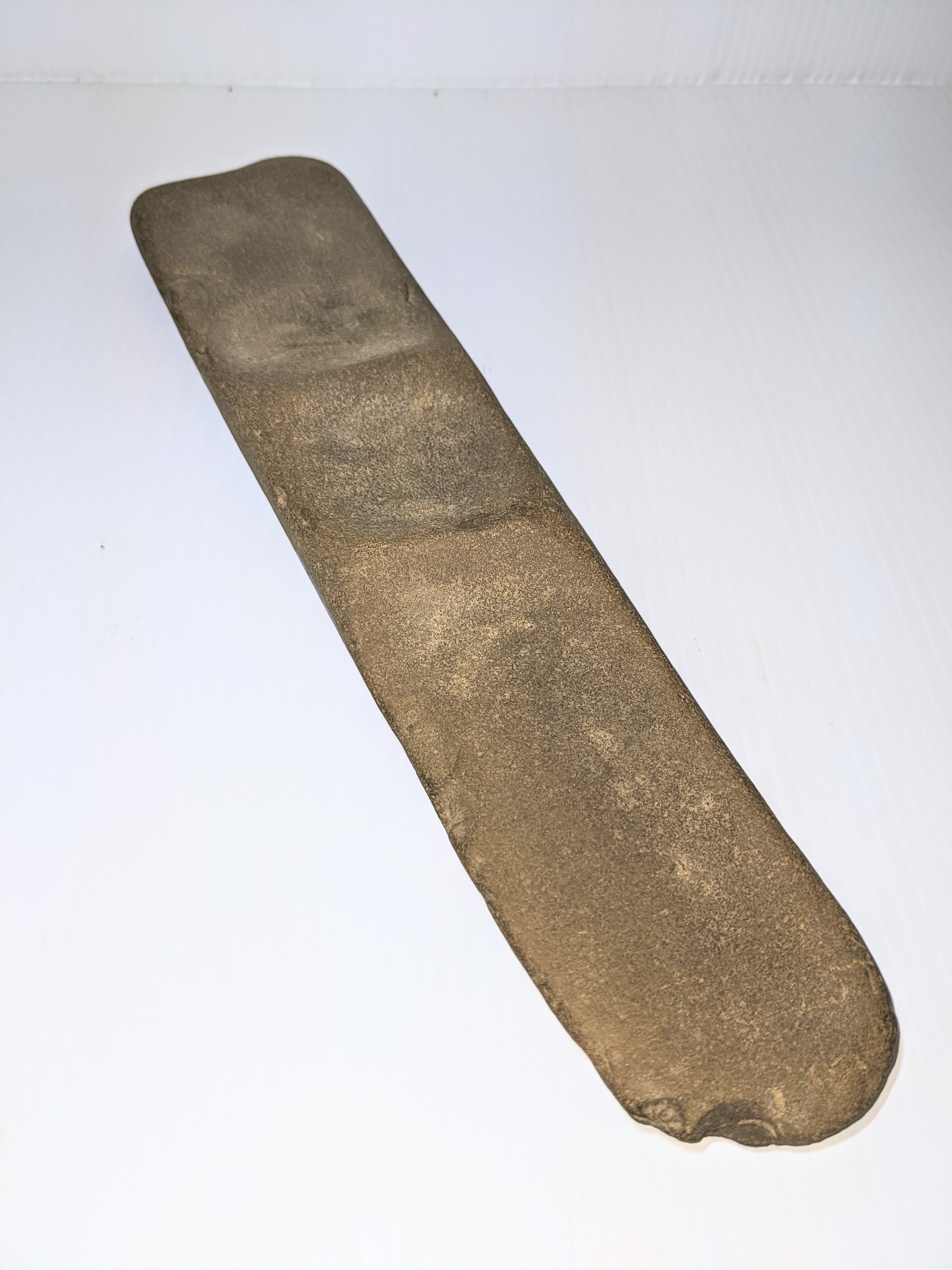
The artifact of the week is this unknown object. It is made of stone, has four depressions (3 visible on this side and one round one on the backside) and has the texture of fine sandpaper. Our best guess is a grindstone of some capacity - but we welcome your thoughts on what it's purpose may be!
PS. It was found in a gravel pit near Fort - which just adds to the mystery!
2003.18.01 / Lambert, Don
26/09/2022

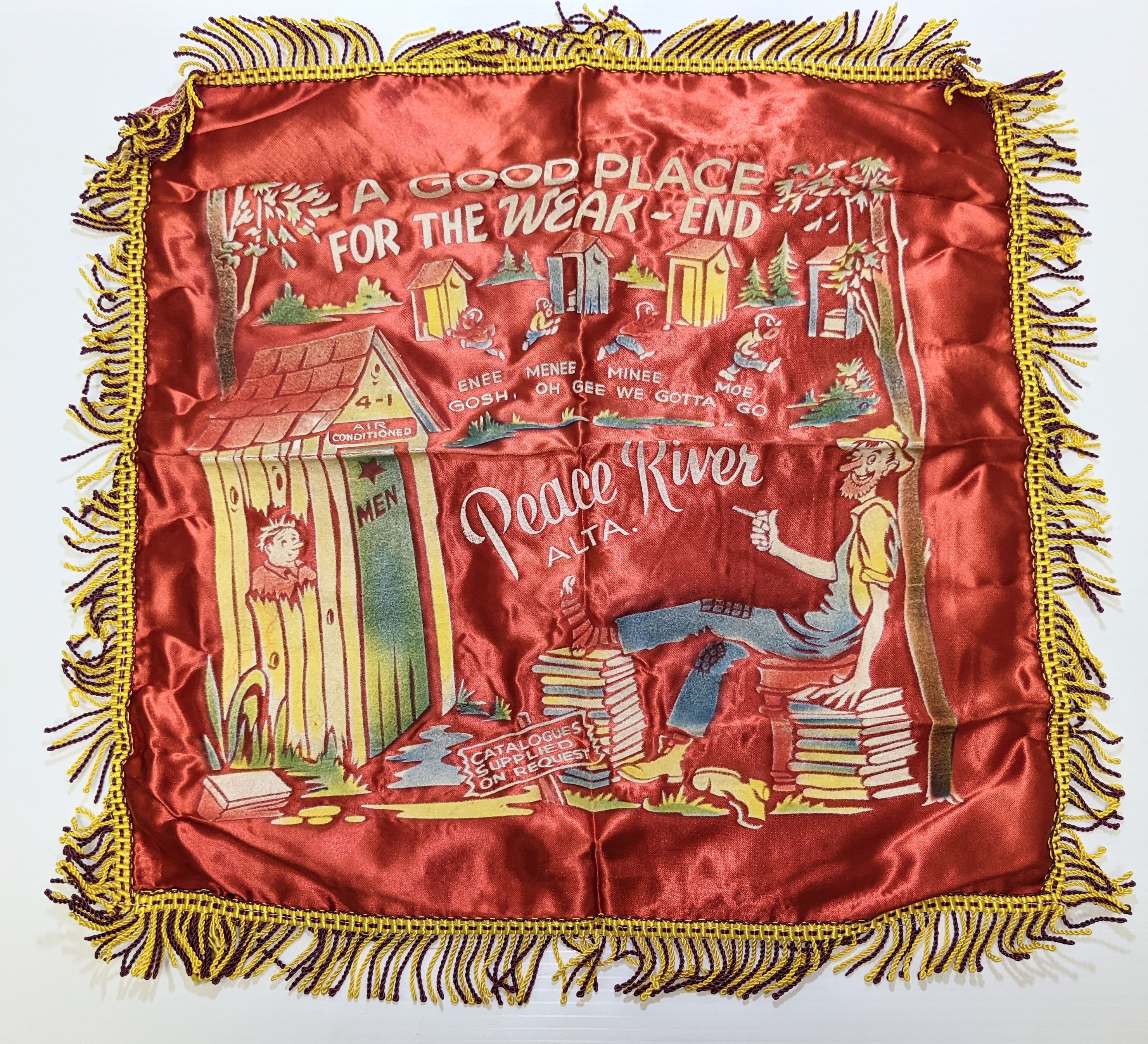
This is a souvenir pillow case from Peace River. It mimics a "Sweetheart pillow" which were pillow cases that soldiers would send home to loved ones with sentimental poems and rhymes embroidered on them - a practice that started as early as 1812 and continued through WWII. The rhyme on this one is hardly sentimental but definitely makes a unique souvenir. This pillowcase likely dates back to 1950's.
2002.210 / Campbell, Jean

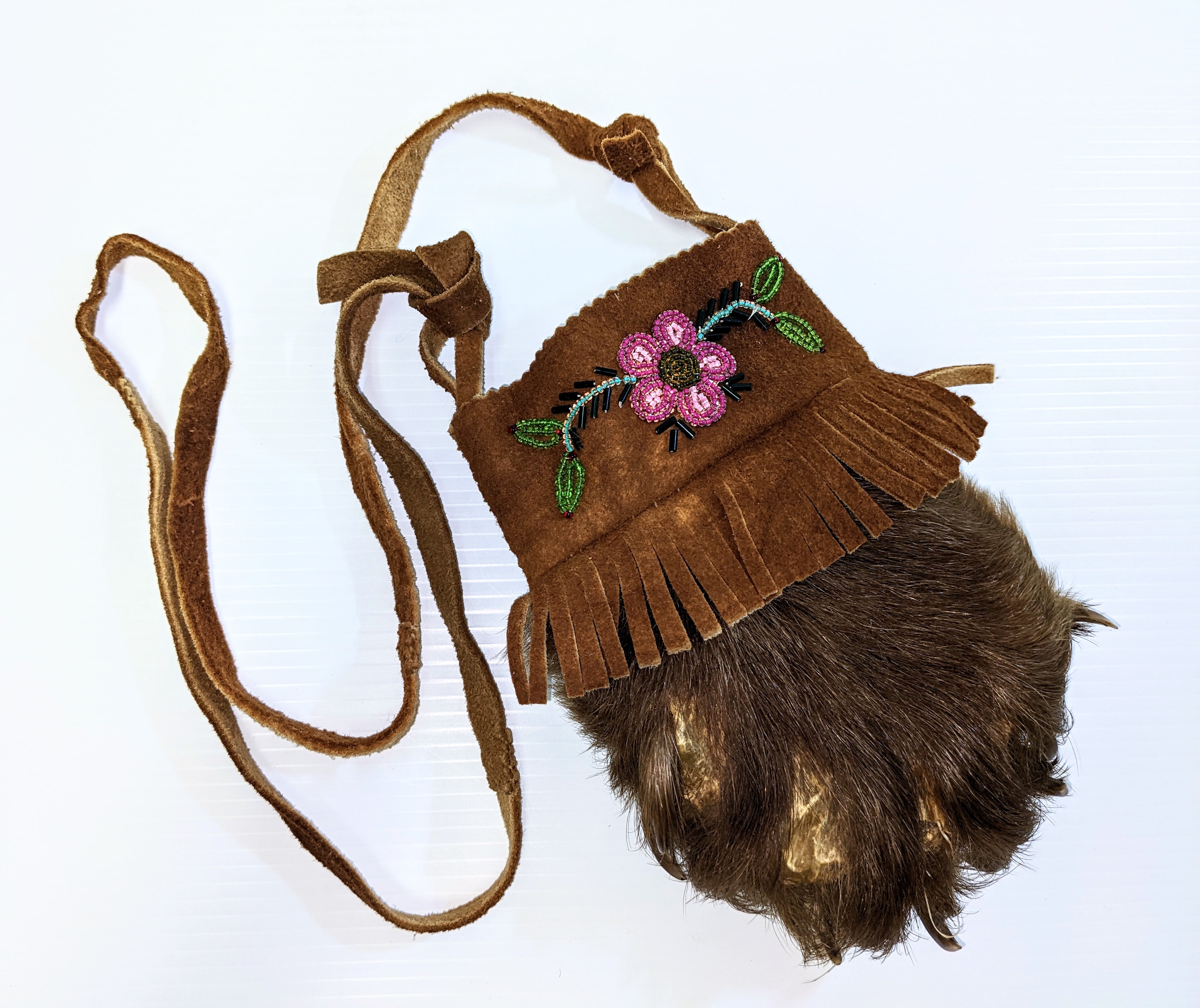
This is a cartridge Pouch made by Sarah (Cardinal) Smith and daughter Iola (Smith) Ducharme. Sarah stitched two bear paws together to create the pouch (look close to see the claws still attached) and Iola did the bead work along with finishing touches. A unique item for sure!
999.38.01 / Ducharme, Iola
10/10/2022

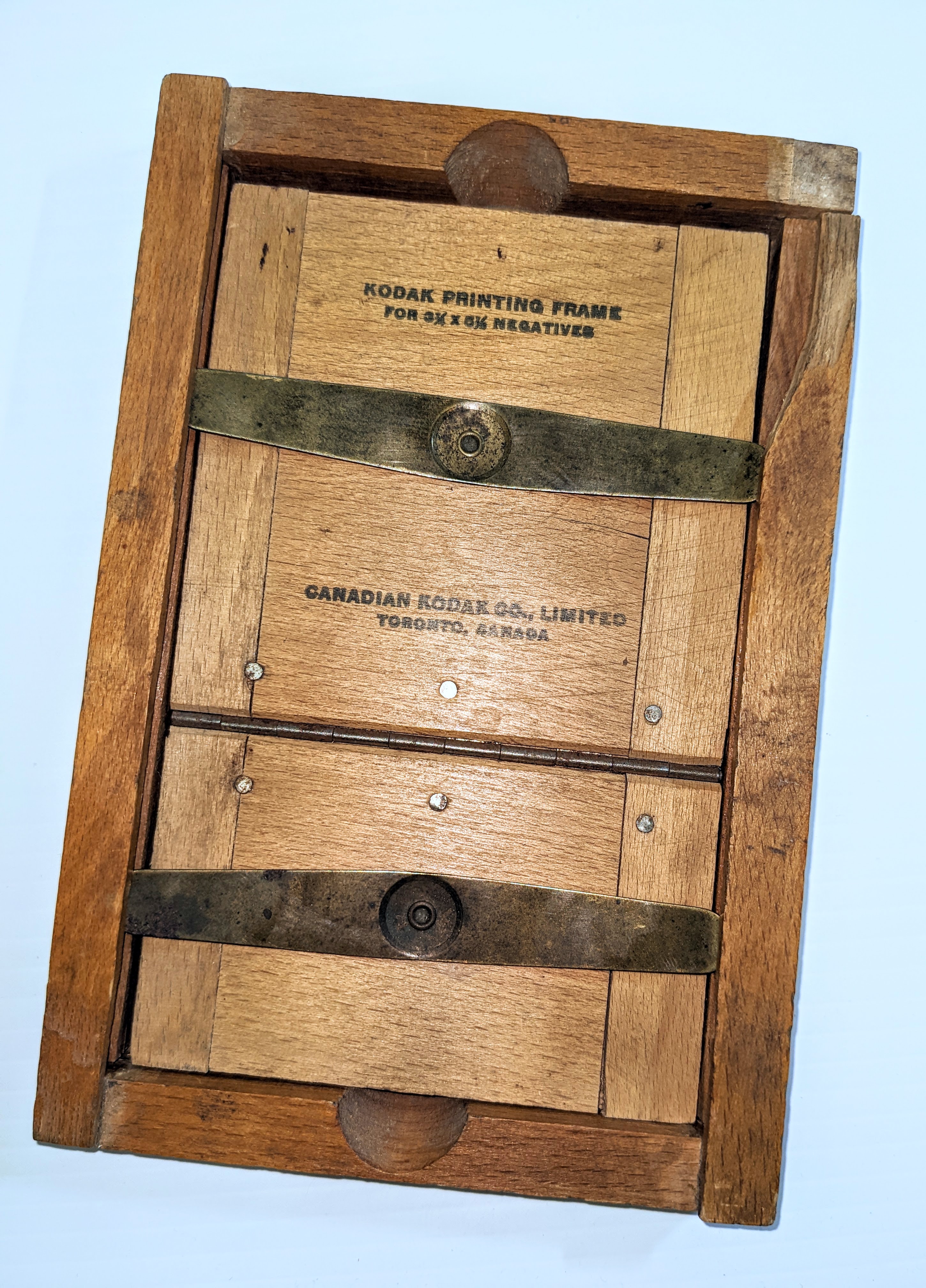
This is a Kodak Printing frame. Such a device was used to make copies of images from a negative - this particular one being used by Alex Campbell. Mr Campbell was a handy man and mechanic (he had a garage beside the Trapper Shack for many years) who also dabbled in photography - developing his own photos and prints. In 1953 Alex received a medal from Queen Elizabeth II in recognition of his service to the north and her coronation.
2002.93 / Campbell, Jean
17/10/2022

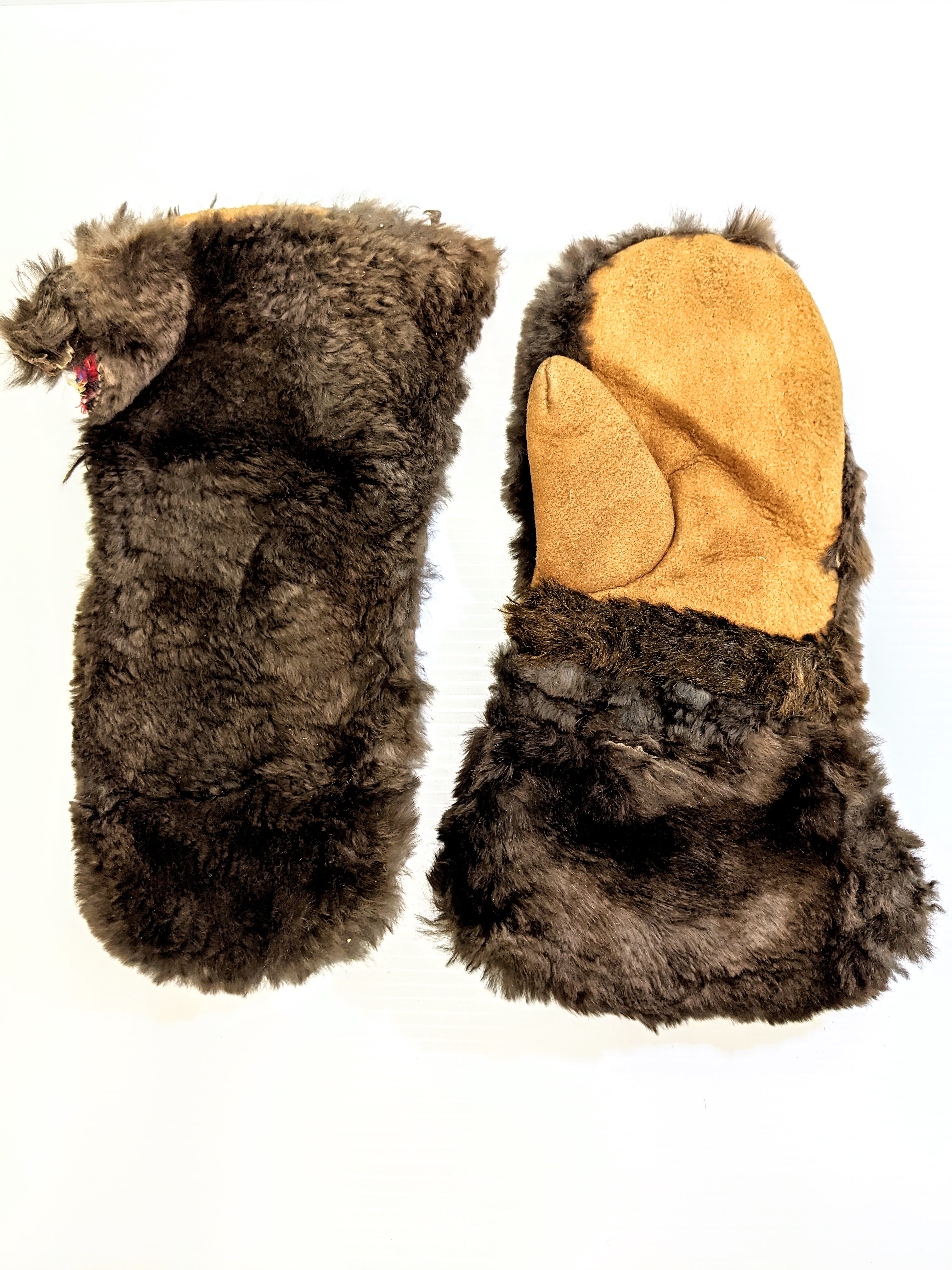
With the arrival of large fluffy snowflakes we thought these mittens were fitting for this week! They are handmade leather mitts with what we believe is beaver fur on the exterior. They were worn by Jessie Slade McGrew who came from England to Fort Vermilion as a teacher in 1909 to teach at the Stoney Point school. She held the position for 15 years. Jessie was active in the Anglican Church and helped develop the first library collection in Fort Vermilion!
998.1.202 / Newman Jack + Pearl
24/10/2022

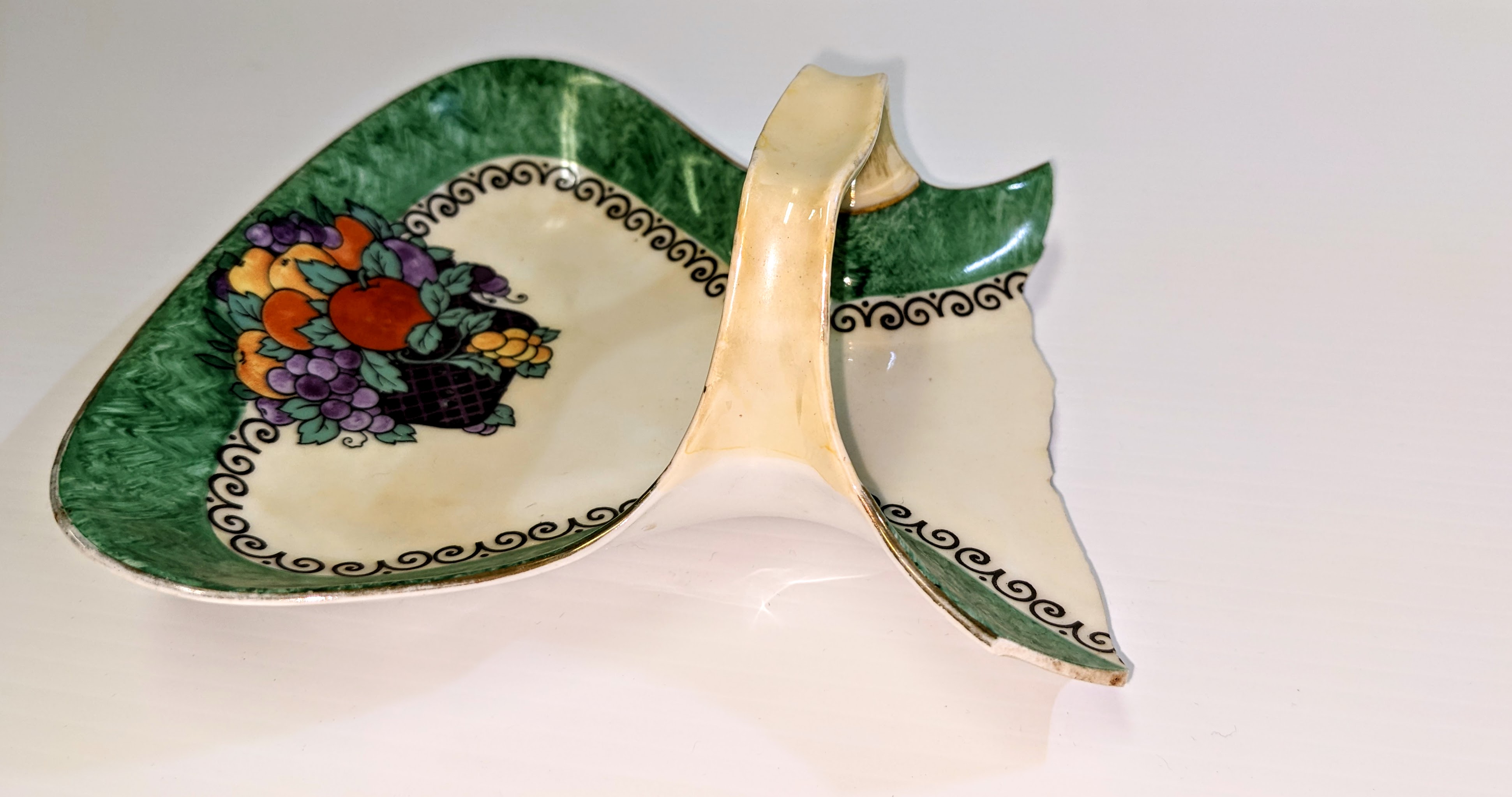
This is a candy dish (well 3/4 of it any way) that was found in the Rose house at Prairie Point. Charles and Hilda Rose moved to Prairie Point from Idaho in 1926 where they lived in a tent until mid November when Sheridan Lawrence and a crew of 4 men built them a cabin in 6 days. This dish is hand painted with hints of Art Deco style and is made by Royal Silesia - a German company that produced china from 1920-1940.
2002.253.12.39 / Toews, Al + Marilee
31/10/2022

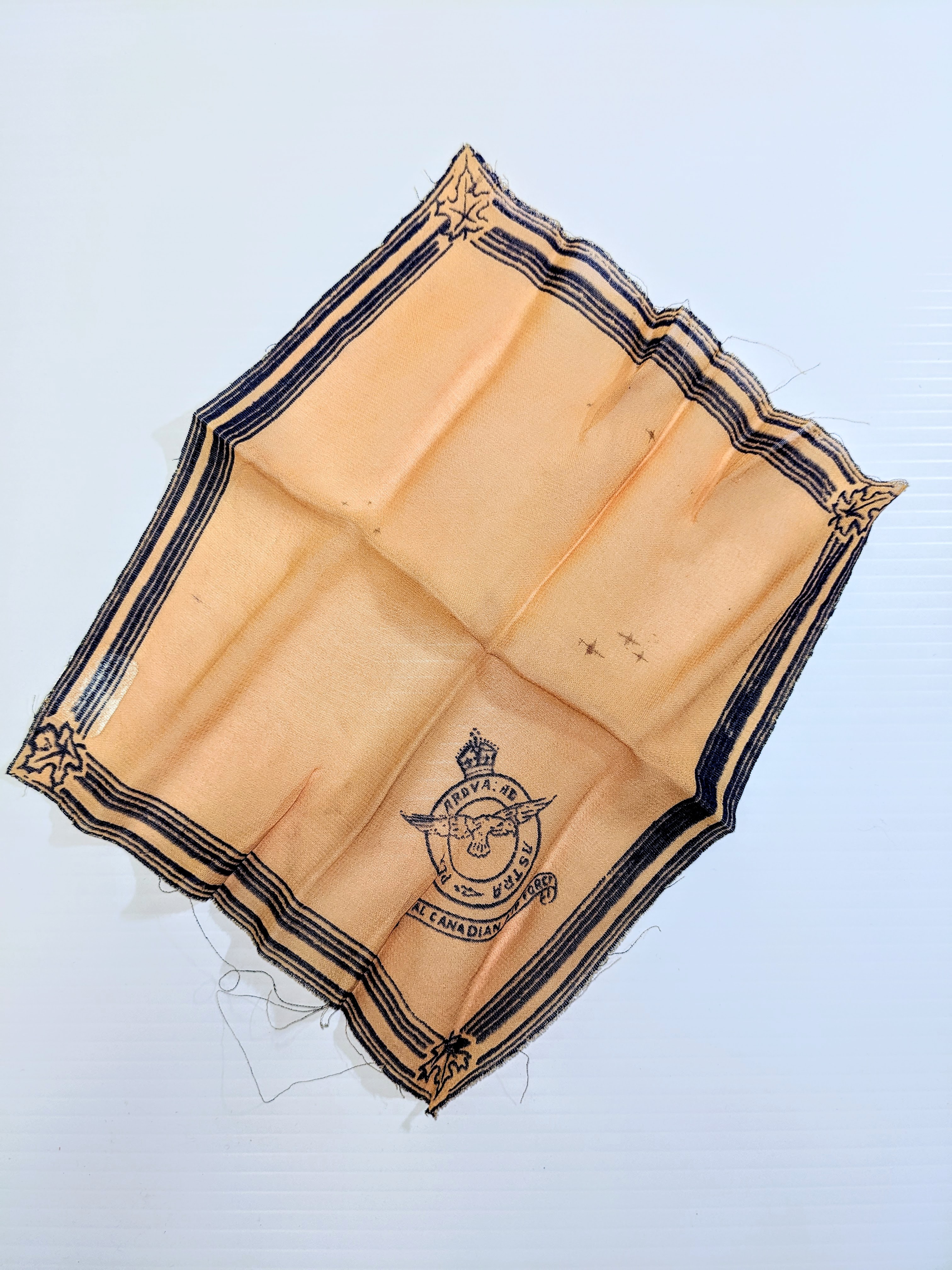
This is a handkerchief that Gordon Campbell sent back to his mother Edith while he was stationed overseas during WWII. Gordon enlisted to the Canadian Air Force in 1942 and was stationed in England - this handkerchief being sent back sometime during that service. This Friday (the 11th) we honor those who serve during Remembrance Day ceremonies taking place nation wide.
2001.02.48 / Campbell, Jean
7/11/2022

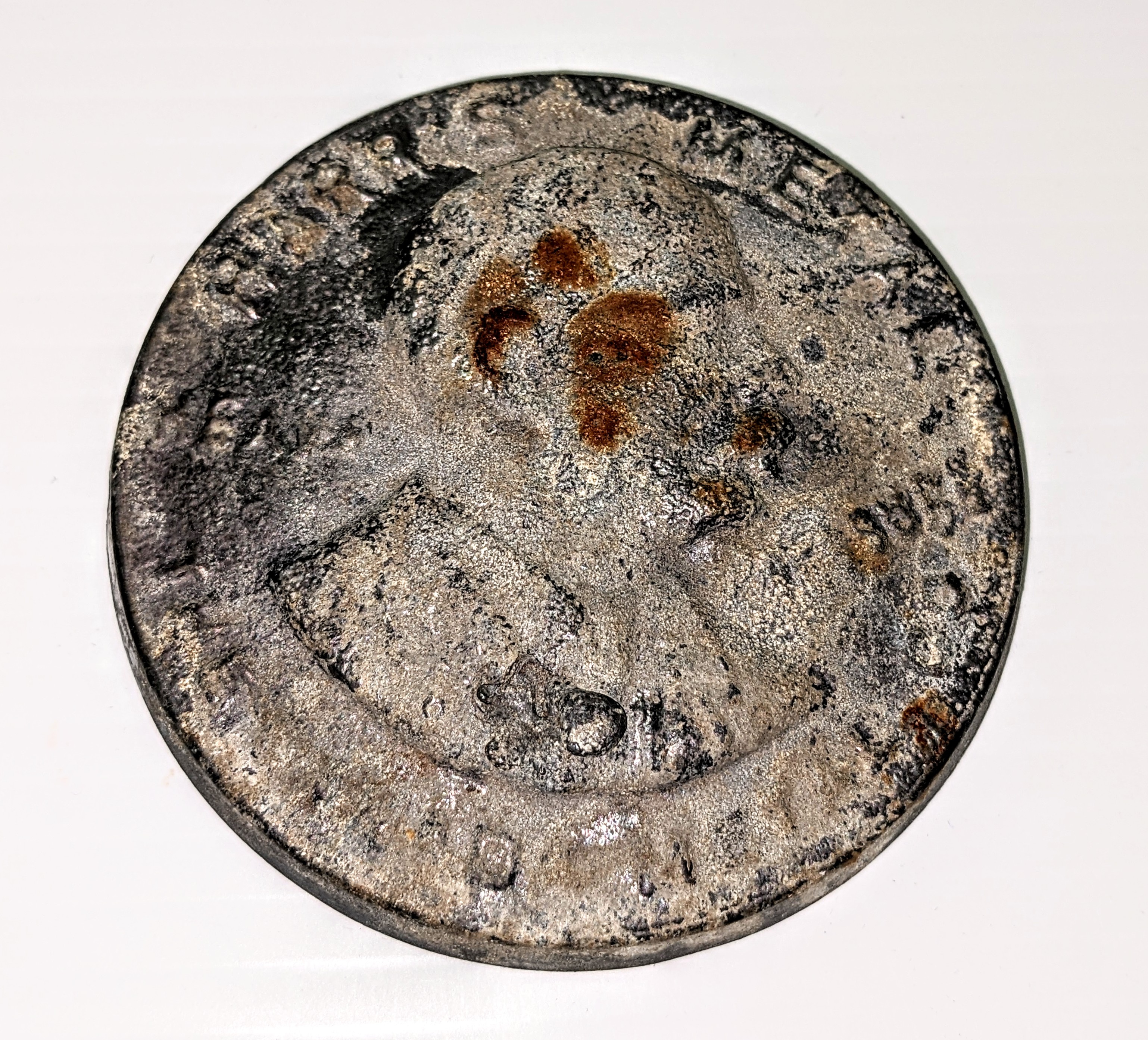
This large looking dollar is actually a paper weight from the "Canada Metal Co." The company was started by 17 year old W. G, Harris in 1893 as a scrap metal business in the heart of Toronto. It has since grown to become an international company under the name "Canada Metal North America" This paper weight was likely sold as promotion of the company pre 1929 when Canada Metal Company was sold to the National Lead Company of New York. It is assumed the figure on the paper weight is founder W.G. Harris.
2015.12.471 / Nugent, Mike
14/11/2022

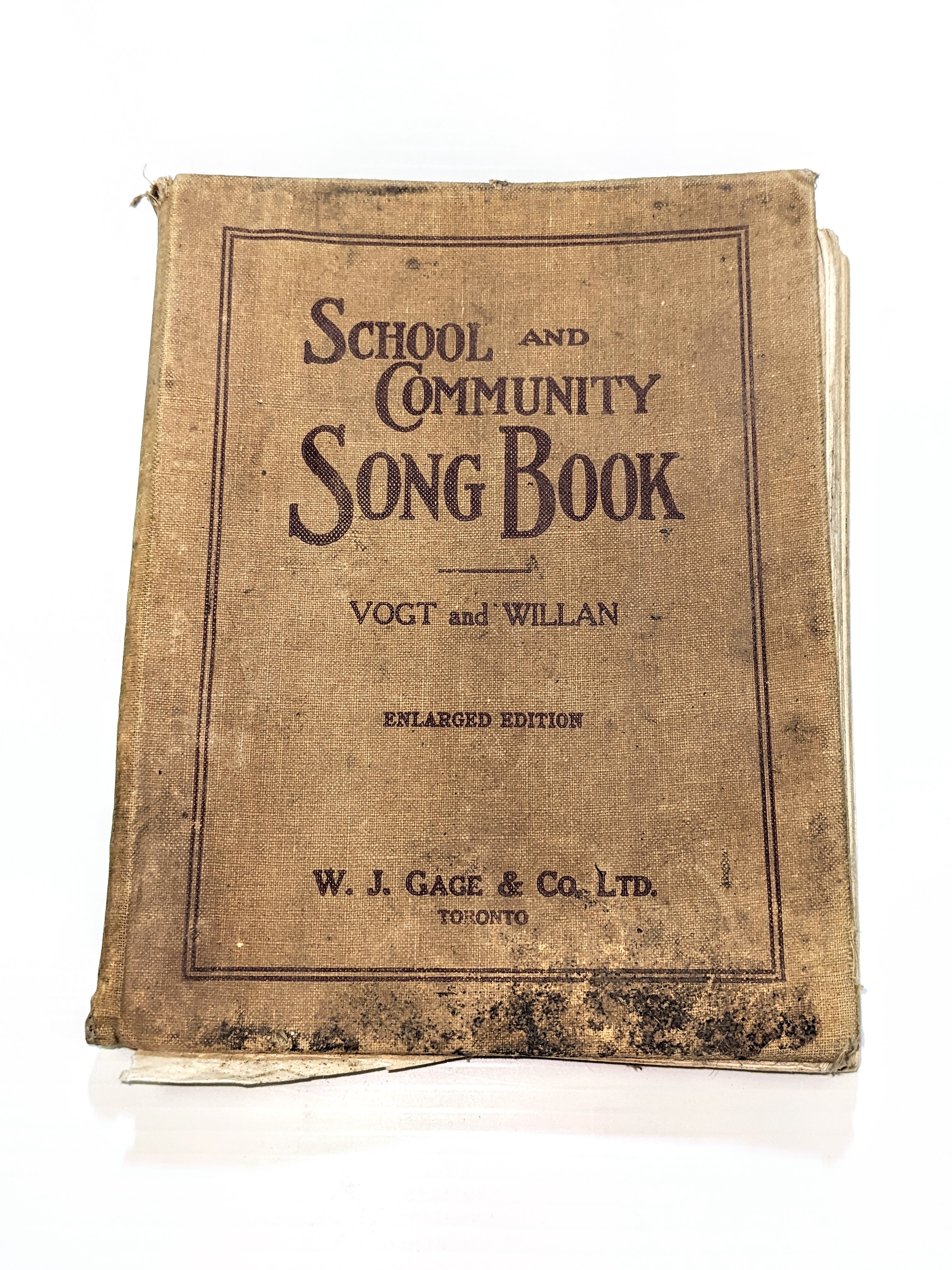
This songbook comes from 1927 and contains numerous familiar songs such as "O Canada" "God Save the King" and "The first Nowell". Such songbooks were important sources of learning and entertainment - kids learning to sing in school and groups performing during special events, or just gathered around the home fire. For a taste of this type of music attend the Old Bay House open house Dec 3rd from 7-7:45pm where the Hilltop Choir will be singing Christmas Carols.
997.108 / Fort Vermilion Heritage Centre.
20/11/2022

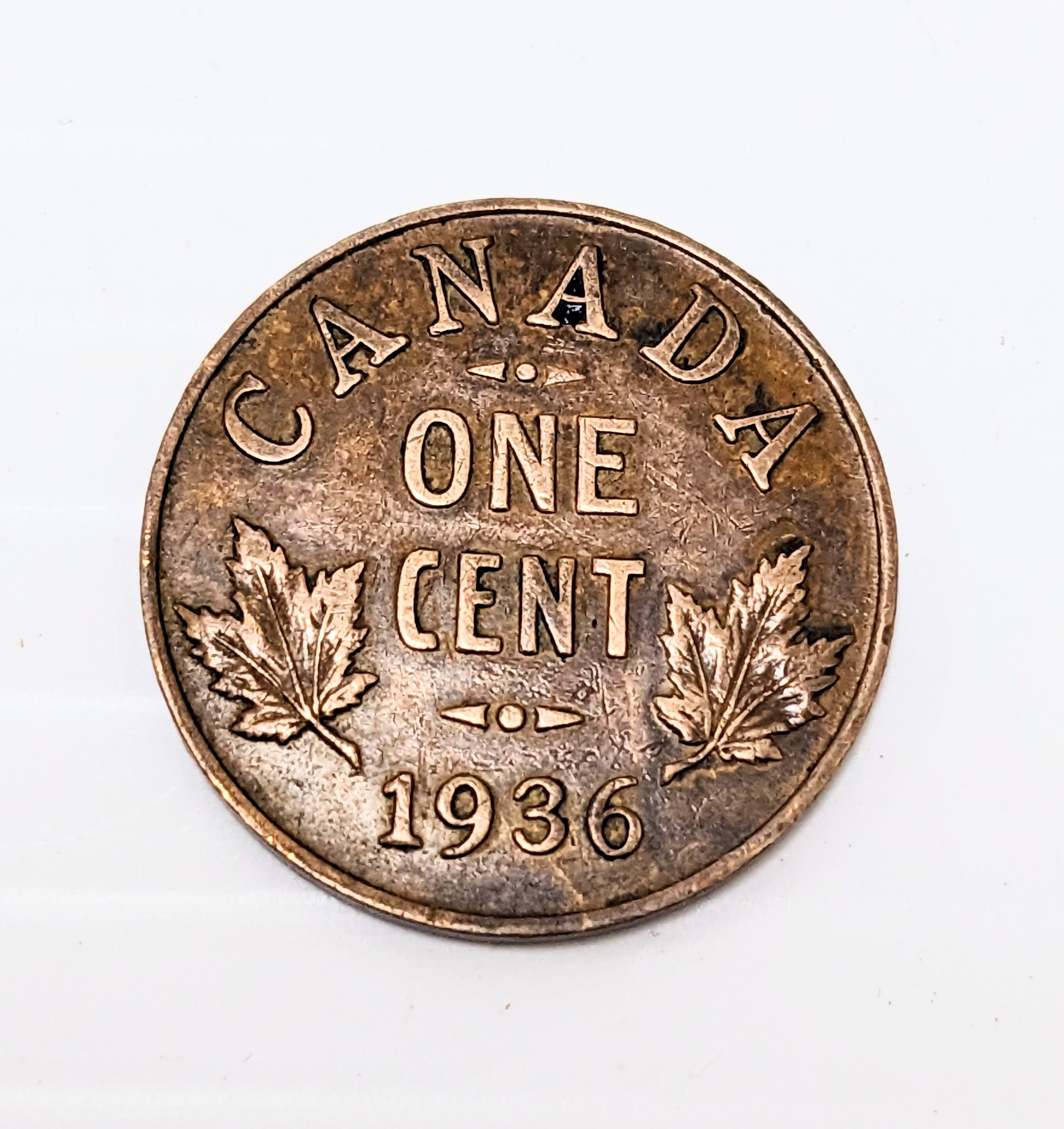
On this day in 1858 the nation of Canada introduced for the first time official 1ยข 5ยข 10ยข and 20ยข coins. This coin isn't quite as old but does date from 1936 when it held the equivalent buying power of todays 20ยข coin. Though made in 1936, this coin is not one of the exceedingly rare "Canadian Dot Cent", but, if you would like to learn more about that drama - follow this link
https://www.pcgs.com/news/rare-canadian-1936-dot-cent
The penny was phased out of canadian circulation February 4, 2013 - 155 years after it's creation. This particular one was found during restorations of the Old Bay House.
2008.32.13 / Friends of the Old Bay House Society.
12/12/2022

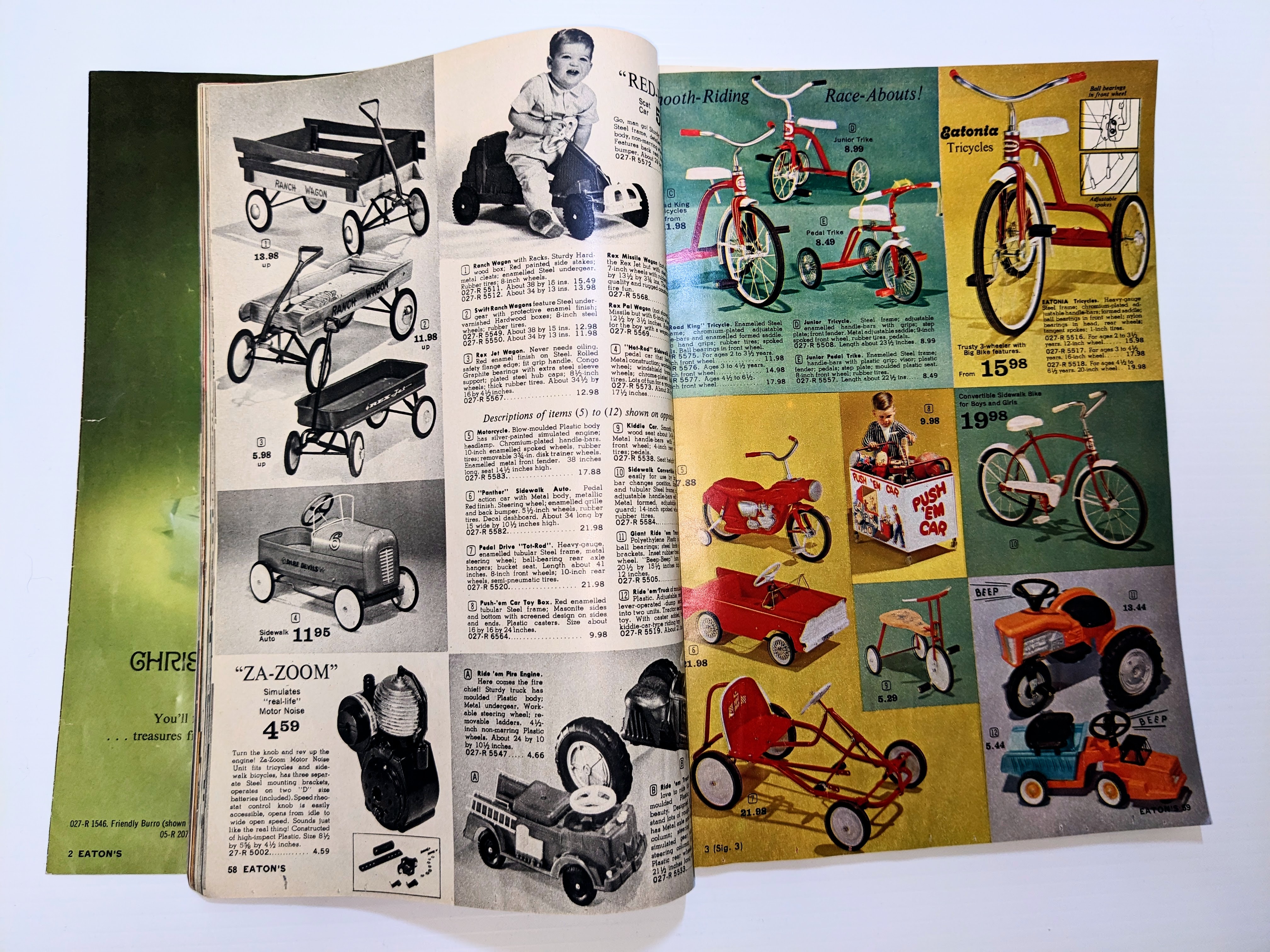
This is the Eatons Christmas Catalogue from 1964. Though this page only shows bicycles and the like, the catalogue contains anything from food and chocolates to chainsaws, furniture, clothing and jewelry. Such catalogues were integral to Christmas shopping as many of these items could not be purchased locally. Often when the season passed - such catalogues met their demise in "the little shack out back".
2020.06.14 / Smith, Louise
19/12/2022
0

In honor of the ground scanning of St Henri Residential school that is happening today and tomorrow - we chose this snippet of video footage from 1966 of students at St Mary's Separate school. The footage was taken by Tony O'Carrol who came from England to teach at the school and shows the students having a fire and dance. The footage has no original audio as Tony's camera only recorded on film we added some generic instrumental music.
2016.08.04.01 / O'carroll, Tony
13/06/2022


2021 Artifacts of the week

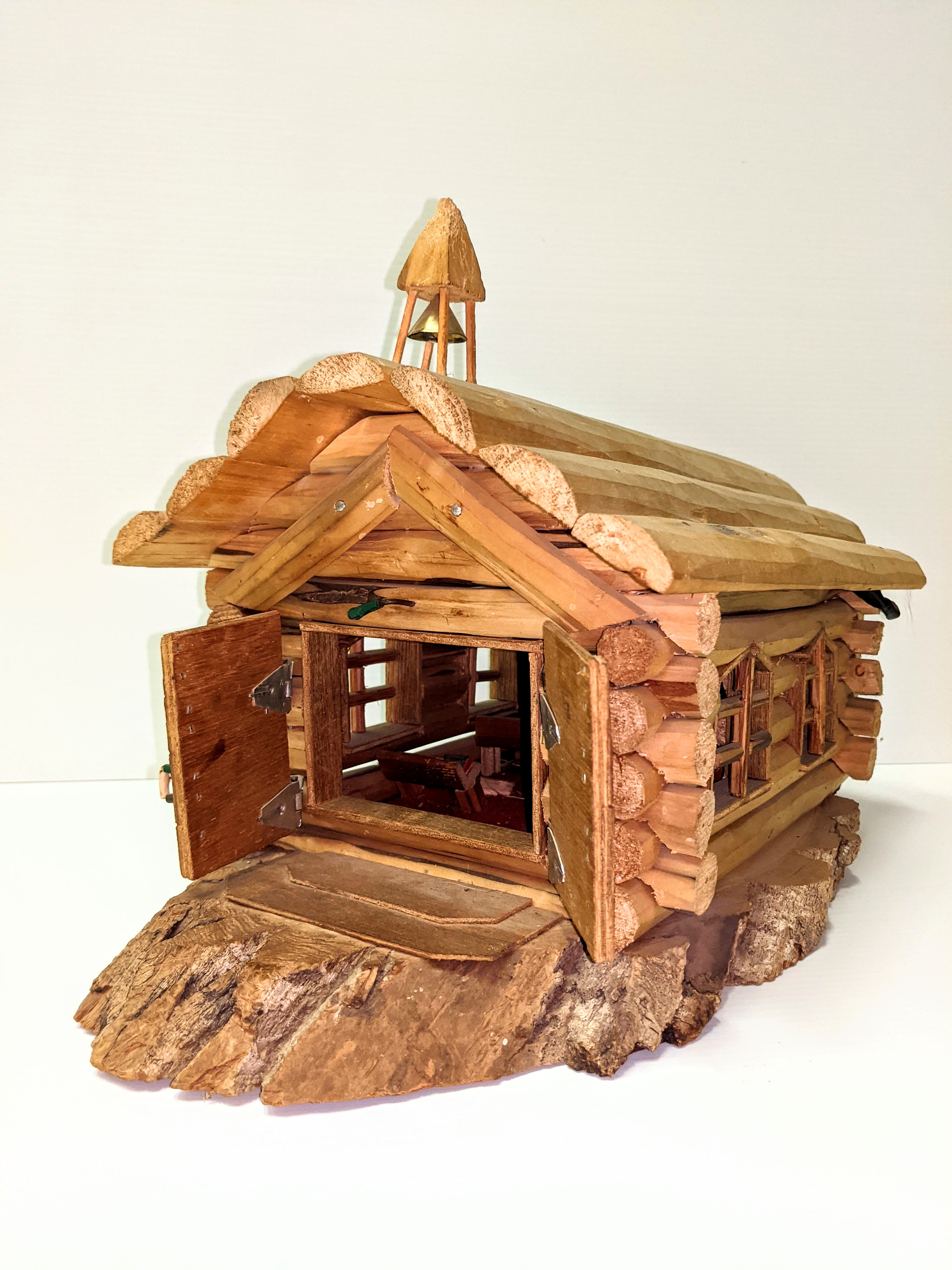
Built by local Marcel Fournier - this model church is a testament of his craftmanship, skill, and even doubles as a lamp!

It was donated to the FVHC by Marcels son Lester Fournier.  
8/02/2021
2017.48.01 / Fournier, Lester

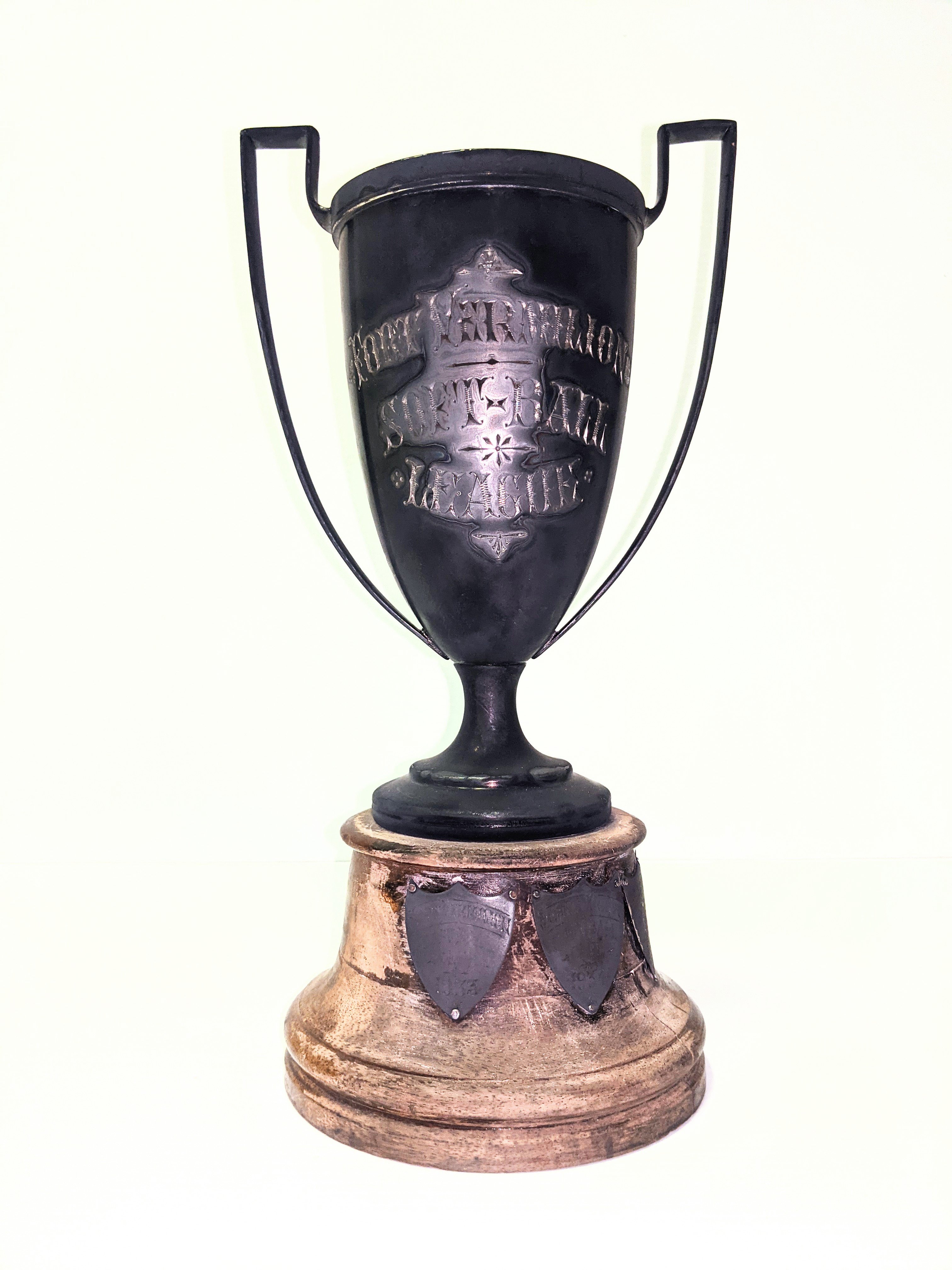
This is a sterling silver trophy (that badly needs polishing) for the "Fort Vermilion Soft Ball League". The 3 crests at the bottom detail "Fort Vermilion Softball Club" as champions in 1933 and "Stoney Point Softball Club" as champions in 1934 + 1935. The original price of the trophy is noted on the bottom as $15.25

15/02/2021
2000.18.09 / Jones, Art

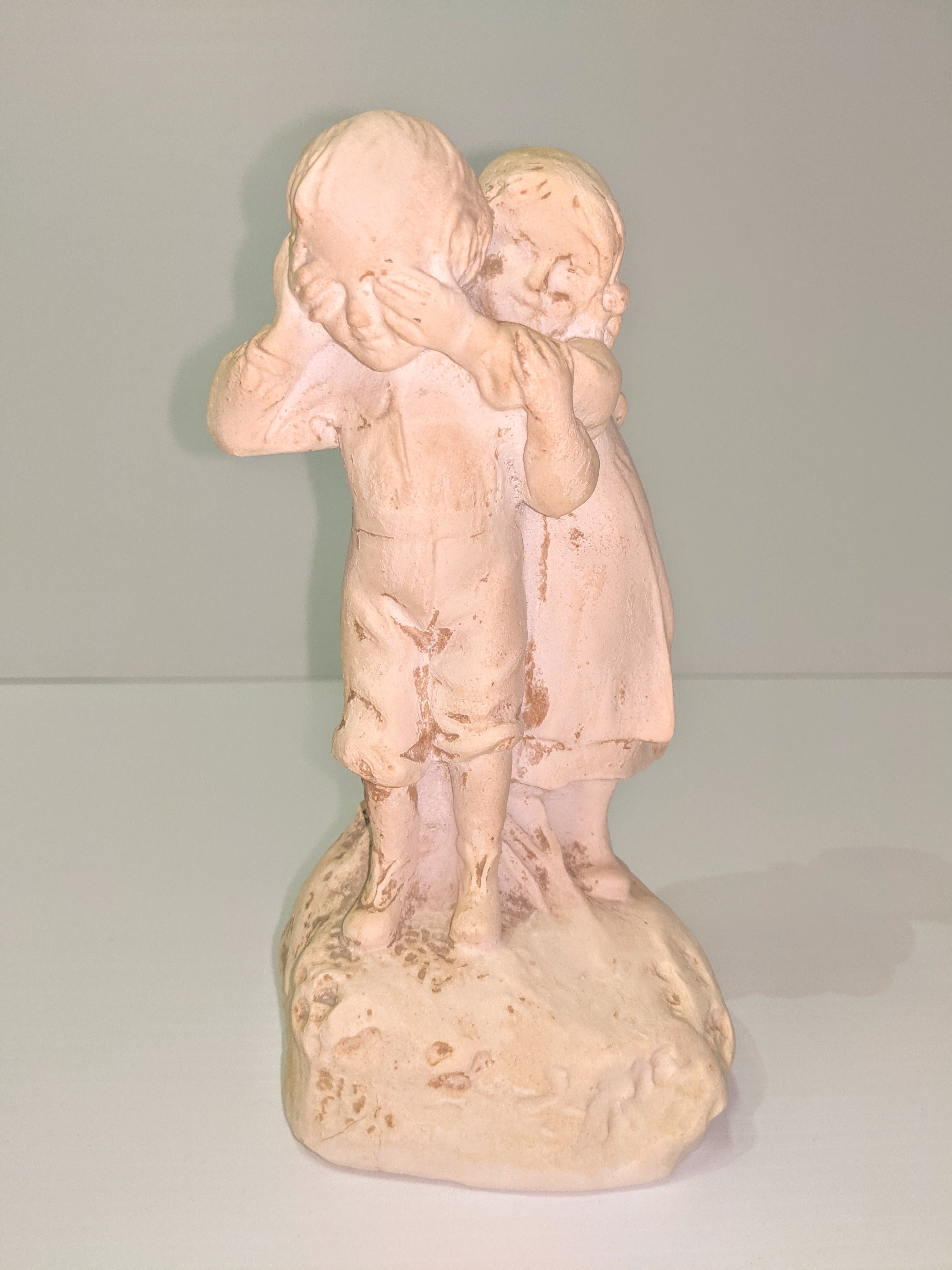
This adorable statue of 2 kids playing was donated to the FVHC by Eunice Hitchcock - who was a teacher in Fort Vermilion for many years. The statues main unique feature is its medium - it's made of salt! We would love to know how that process works, please contact us if you have more information on it - or have connections to Eunice!

22/2/2021
1999.03.98 / Hitchcock, Eunice

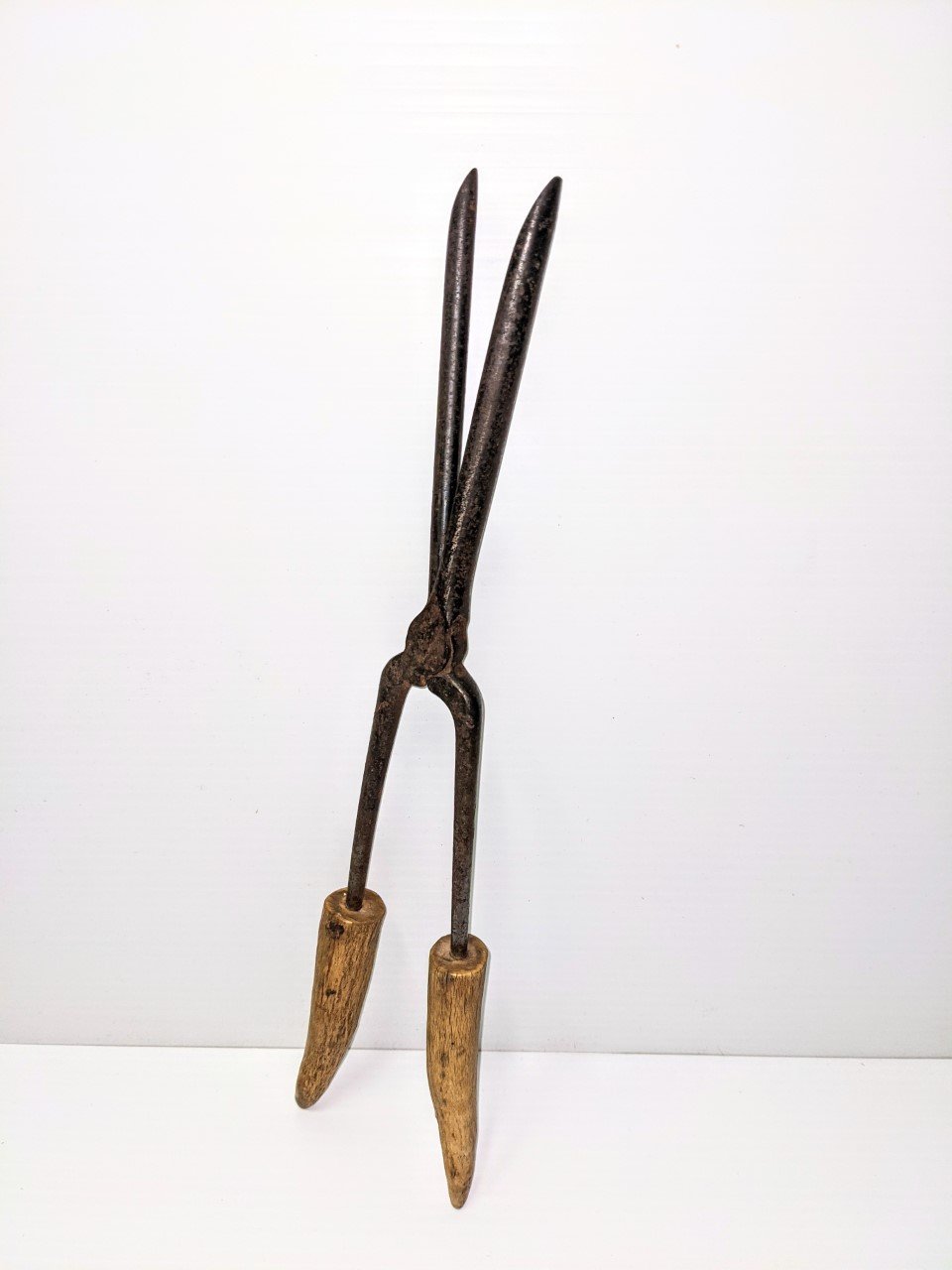
This unique looking object is a Curling Iron. It has a very small barrel for making tight curls and the handles are made from tips of antler. To heat the curling iron, one would place it near the fire or on a cook stove to heat the metal barrel up before rolling it in the hair. This curler was found in one of the trunks that was inside the "Clarke house" when the structure was purchased from Vera and Currie Ward!

01/03/2021
994.3.14 / Ward, Currie and Vera

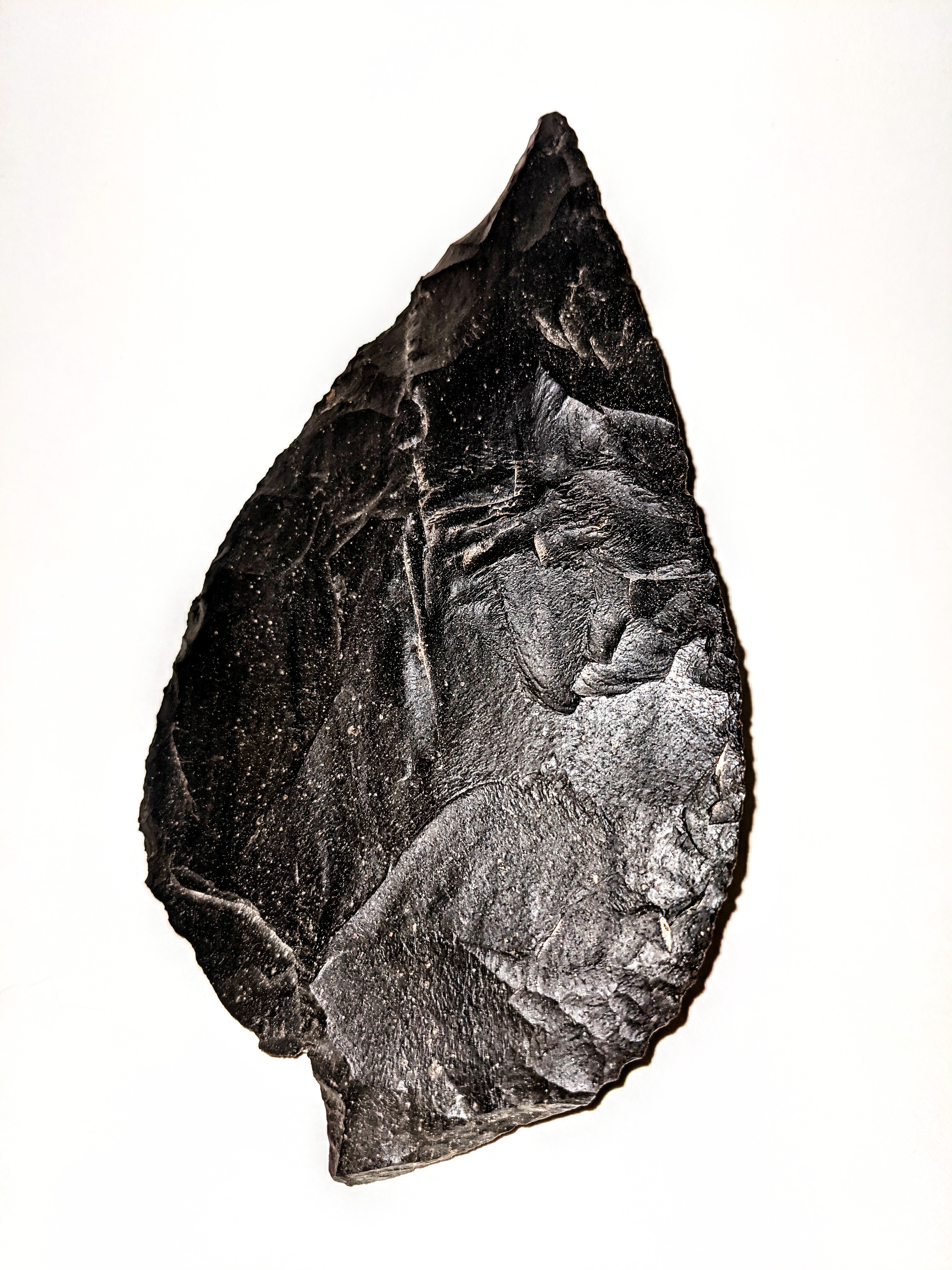
This Stone knife was discovered near Fort Vermilion by Gerry Rosenberger in 1984.
The knife has not been dated nor analyzed to determine its composition.

08/03/2021
997.75 / Lorna Bell

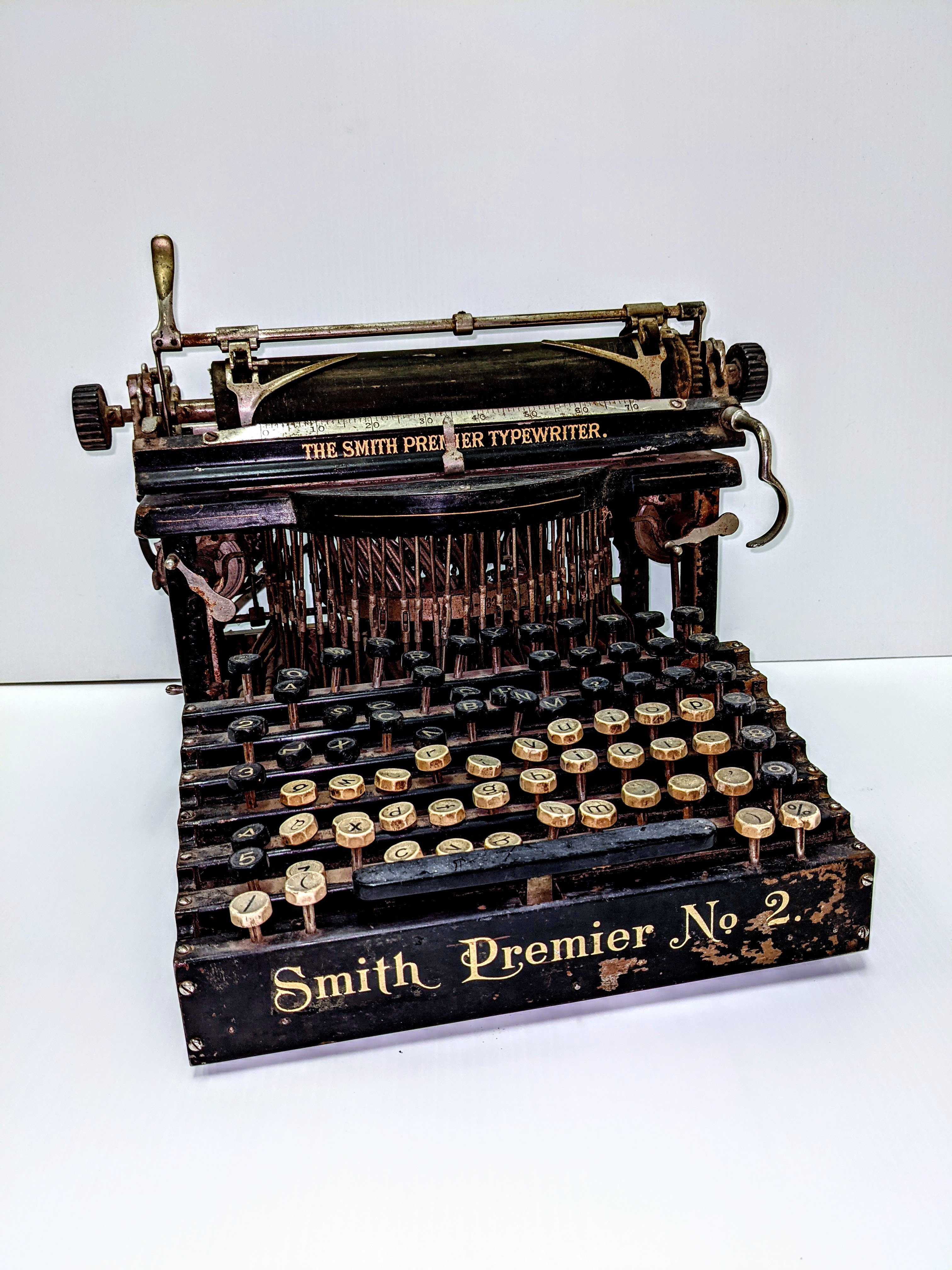
This Smith Premier No 2. Typewriter dates from 1904.  This typewriter has 2 full keyboard sets (one of upper case and one of lowercase) and uses an upstrike mechanism which makes it a 'Blindwriter'. Using this machine the typist cannot see what they are typing until they flip up the page roller mechanism. This differs from the 'modern' or 'visible' typewriter in which the typists sees what they are typing.

Another unique feature is the hand cranked cleaning brush for cleaning the typebars. 

15/03/2021
2004.03.04 / Twidale, John & Alfa

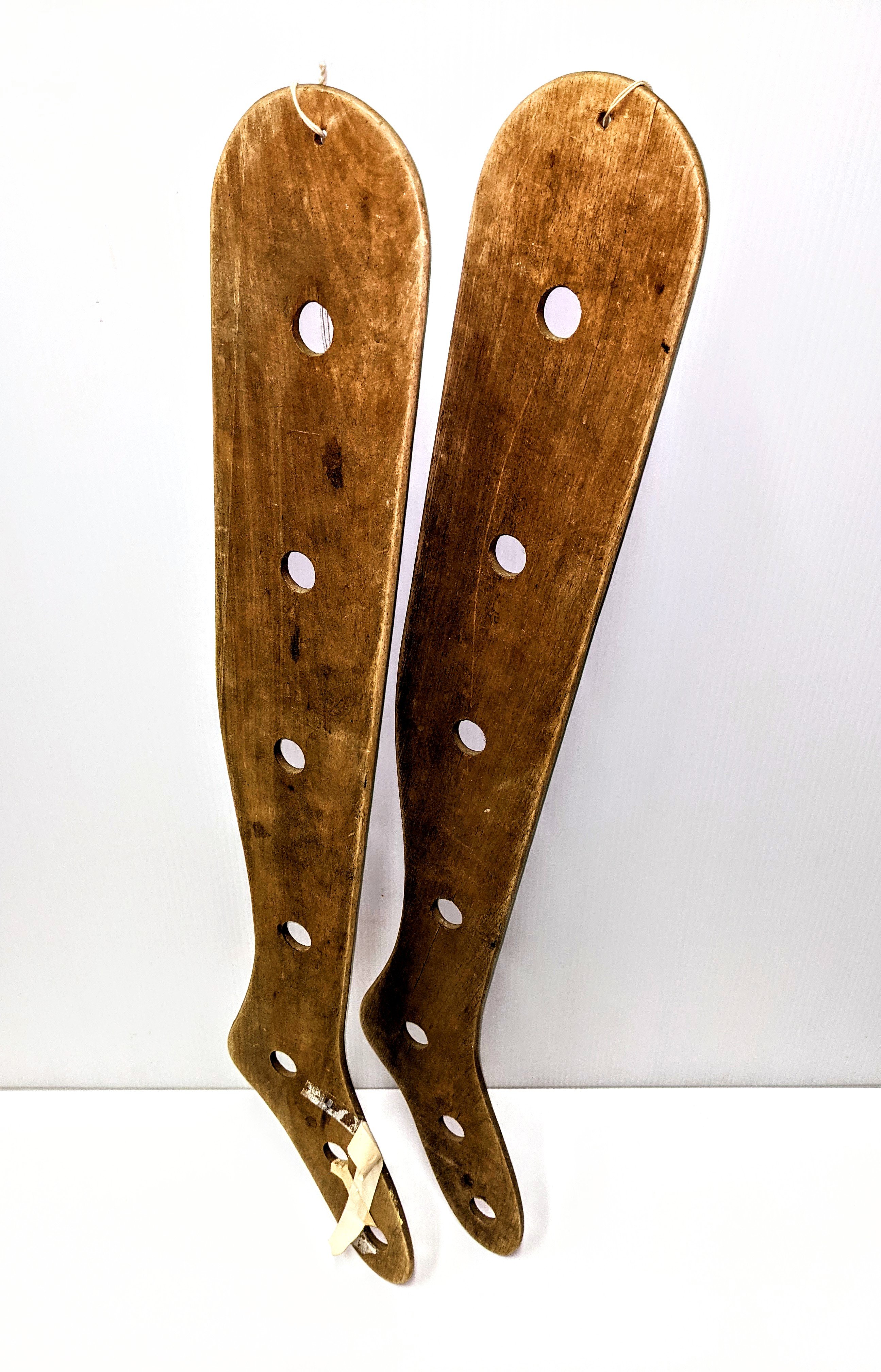
An uncommon sight in todays world of 'fast fashion', these sock stretchers were a household item in the early 20th century. Standing at 3ft tall, these particular stretchers would prevent knee high wool socks and stockings from shrinking after washing. The holes in the middle allowed airflow for drying and the contoured shape ensured the socks would maintain an excellent fit.

22/03/2021
998.01.01.1+2 / Newman, Jack & Pearl

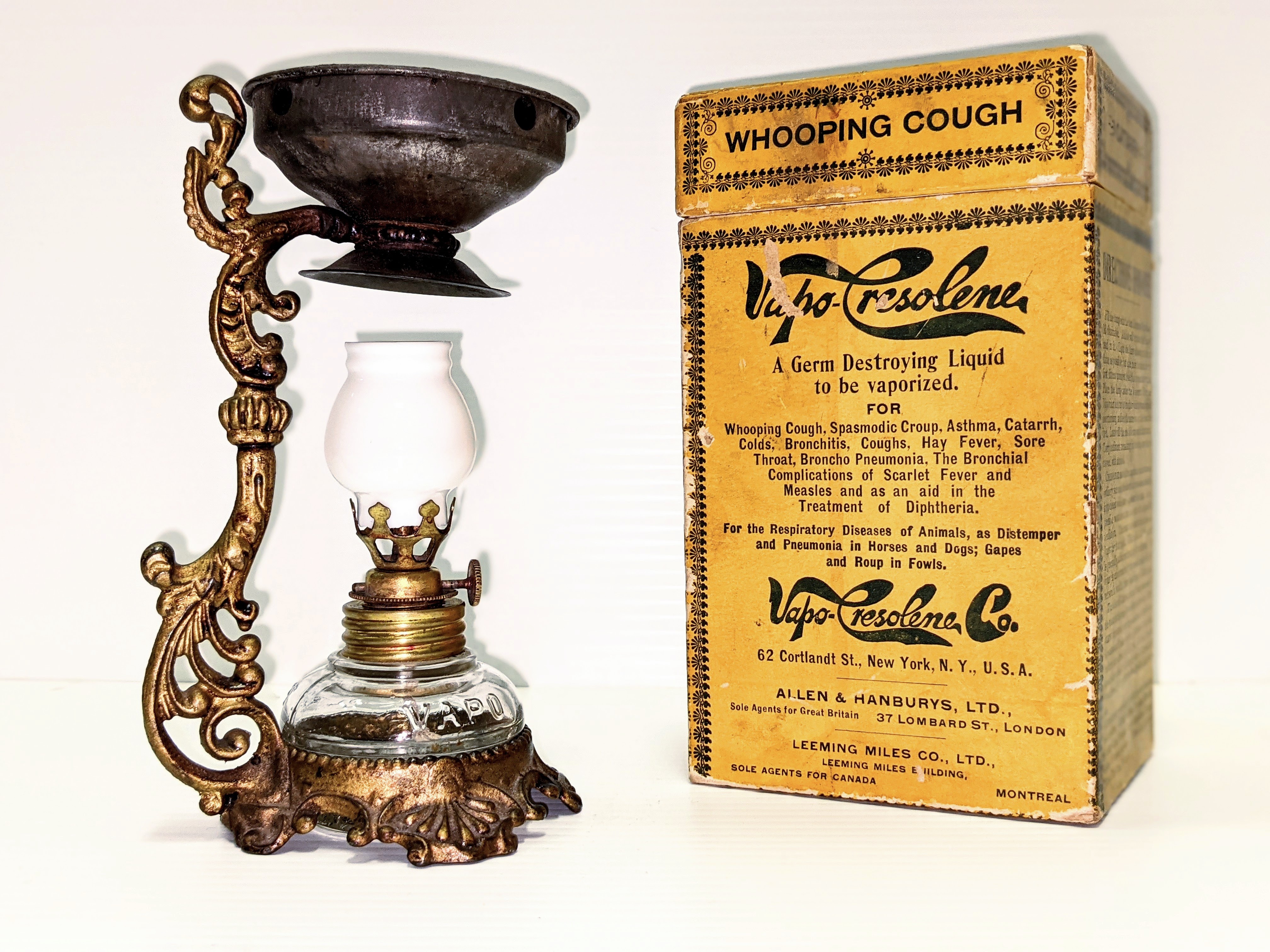
Jack Whitehouse gifted this Vapo-Cresolene Lamp to Magdaline (Smith) Lapp in 1921. The lamp was used to keep the family healthy while living in Hay lakes and Fort Vermilion. The small kerosene lamp at the base would heat the "Germ destroying liquid" Cresolene placed in the dish above. Used to treat causes such as Diptheria, Scarlett Fever, Asthma, Whooping Cough and a host of others - it is also noted as effective treatment for respiratory diseases of animals.

29/03/2021
2020.87.1-3 / Ward, Mina

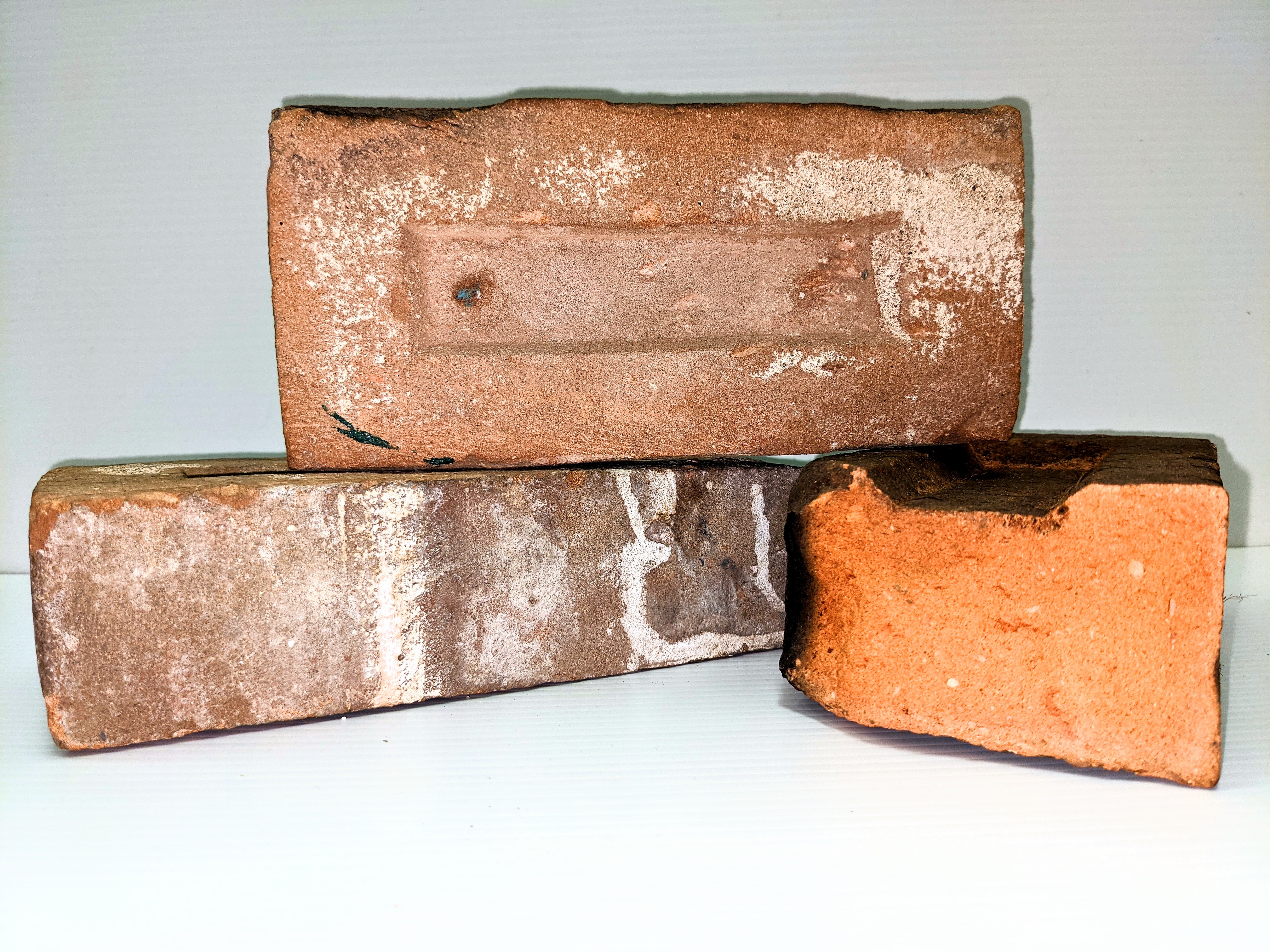
These bricks were made locally in Fort Vermilion! The Carruthers family owned and operated a brickyard on the outskirts of Fort Vermilion. Operational from 1903-1905, it was the most northern brickyard in Alberta and produced bricks for local construction and settlements further north such as Hay River. The Old Bay House and Clarke House chimneys are made with bricks from this yard.

05/04/2021
2009.5.1 / Toews, Marilee
986.2 / Bell, Lorna

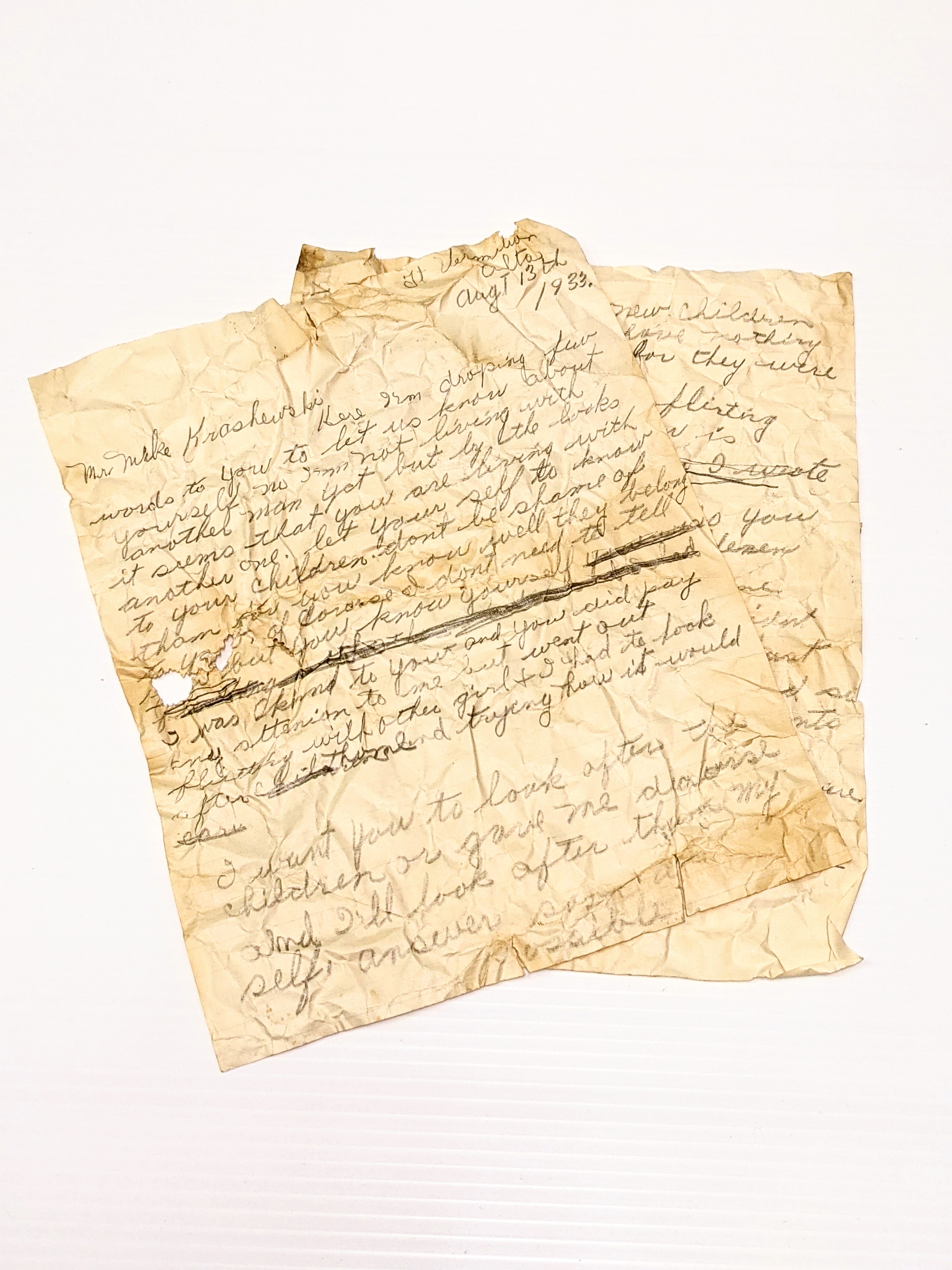
Dated Aug 13, 1933 this letter tells of a spurned lover. The contents are addressed to a "Mr. Mike Krasheuski" whom the writer notes as being the father of her children. The writer notes "I herd you said im living with another man but don't (i'm not?) like you to flirt for I need not tell you just think it over yourself how easy you were taking ladies to the restaurant buying nice things to eat + drink + I was starving at home". The letter is started three different times giving the impression the writer struggled to accurately convey their thoughts and feelings. It was found in a wall of the Old Bay House During Restorations - likely scrunched up and pushed through a knot hole of the wall for safe keeping.

12/04/2021
2008.32.03 / Friends of the Old Bay House Society

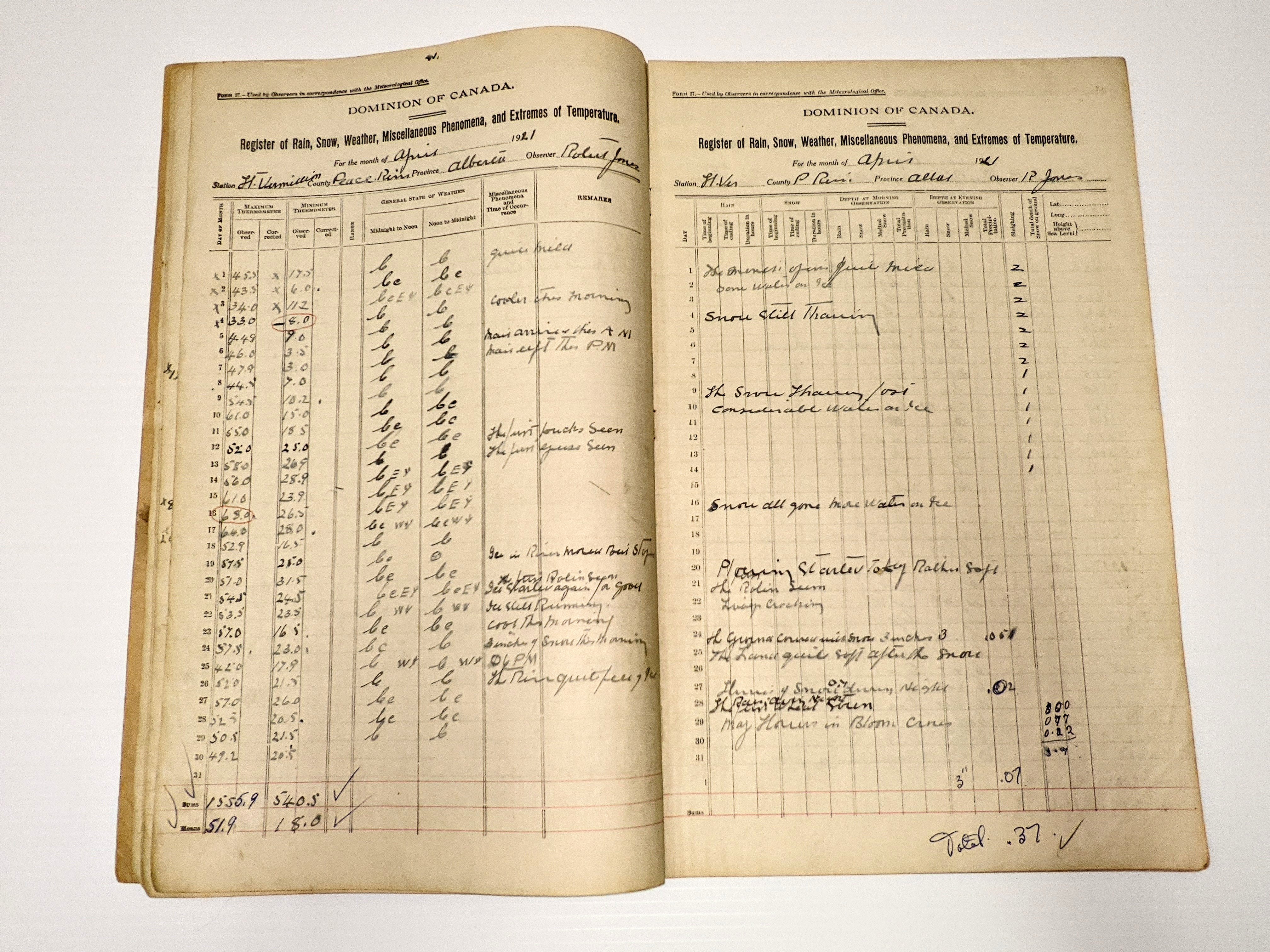
This week we have the Experimental Farm Meteorological Register from 1921! This booklet contains the entire year of records but we opened up to April to compare the temperatures today with those 100 years ago! The temperature is quite similar to today (April 19th) with highs of 57.5 (13ยฐC) and lows of  25 (-3ยฐC). You'll notice on April 16th it is noted "Snow all gone more water on ice", however on the 24th 3 inches of snow fell - lets hope it is not the same this year!

19/04/2021
Fort Vermilion Experimental Farm

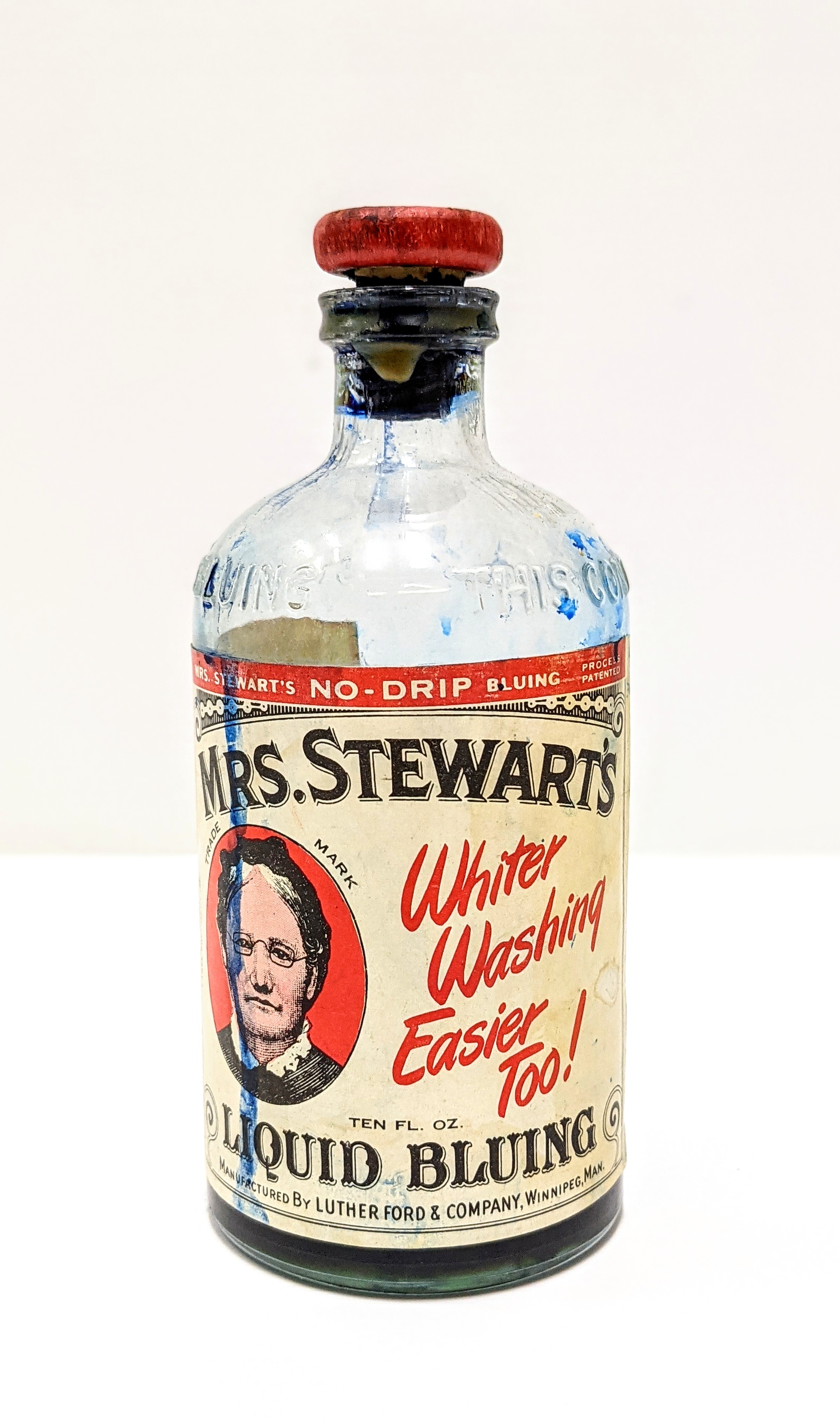
This rich blue liquid was used to help brighten white fabrics from yellow and grey hues brought on by age and repeated washings. The instructions read "Add enough Mrs. Stewart's Bluing to the last rinse to make water light sky-blue". According to color theory, the light-blue water counteracts the warm tones of yellowing fabric- this balances the color at a crisp bright white. The bottle dates back to 1950 and is made at the MSB Winnipeg factory. Mrs. Stewarts Bluing dates back to the 1880's and is still available today.

26/04/2021
998.2.7 / Cranna Toews, Marilee

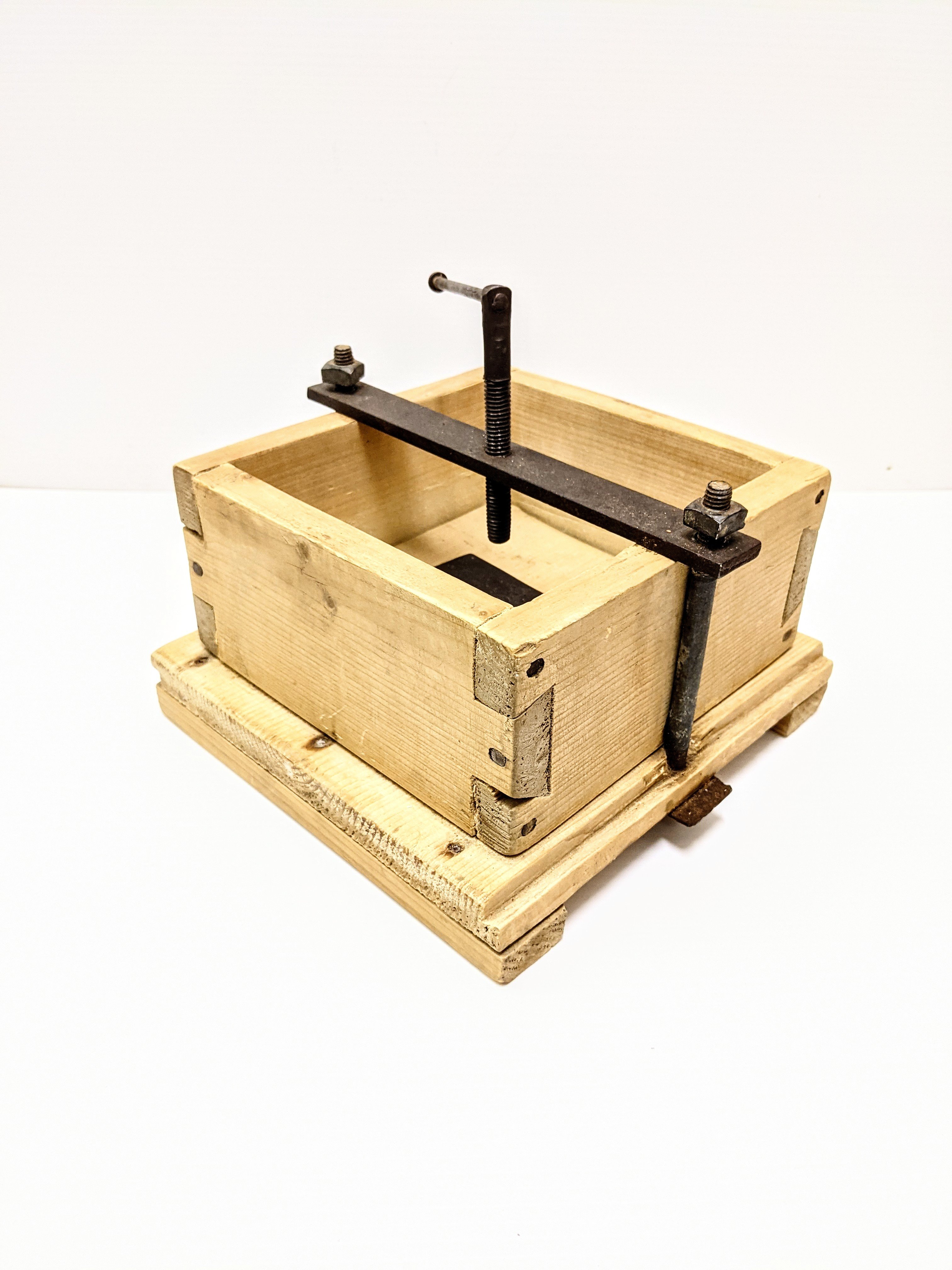
This artifact of the week is a food press from the Trapper Shack. A homemade affair, this large block likely was used to press cheese or butter. Upon close inspection one can see the remains of such food products pressed into the wood base and sides. Holes are drilled in the base to allow for drainage of the inserted food item. Notice the expertly carved dove tail notching holding the box together - an important feature for this box that would be under pressure/ stress for extended periods of time!
10/05/2021
2007.47.11.1 / Trapper Shack
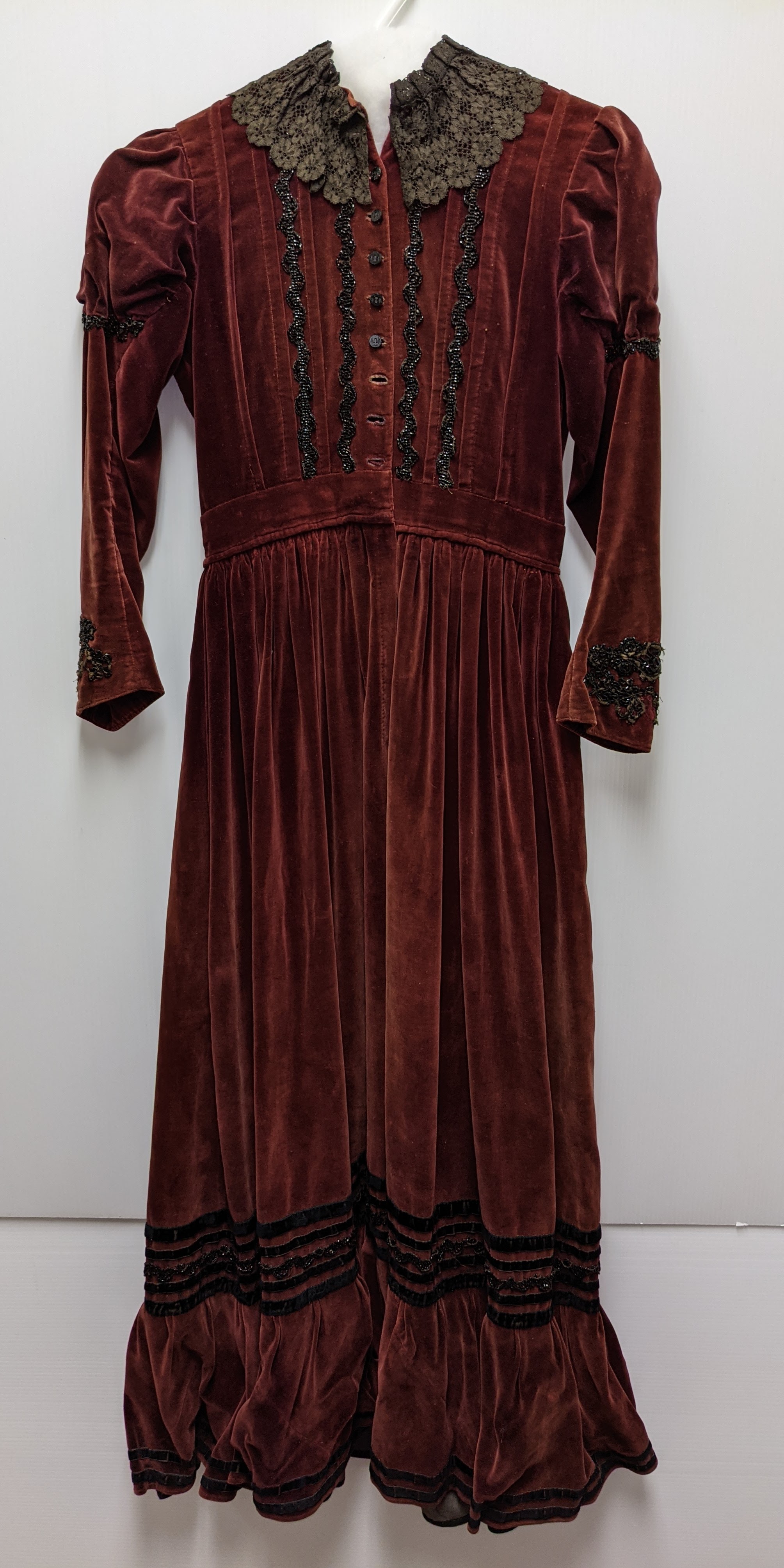
This incredible dress was hand made by Adeline Lizotte in the late 1800's. With intricate bead work and tailored bodice  cuffs it is a testament of Adelines skill. The dress cost ~ $60 when made, considering inflation that $60 had approximately  the same buying power as $600 has today! A beautiful piece well preserved and cherished by family - it was last worn by Rose Sanderson at the Bi-Centennial celebrations in 1988. 

03/05/2021
997.126.2

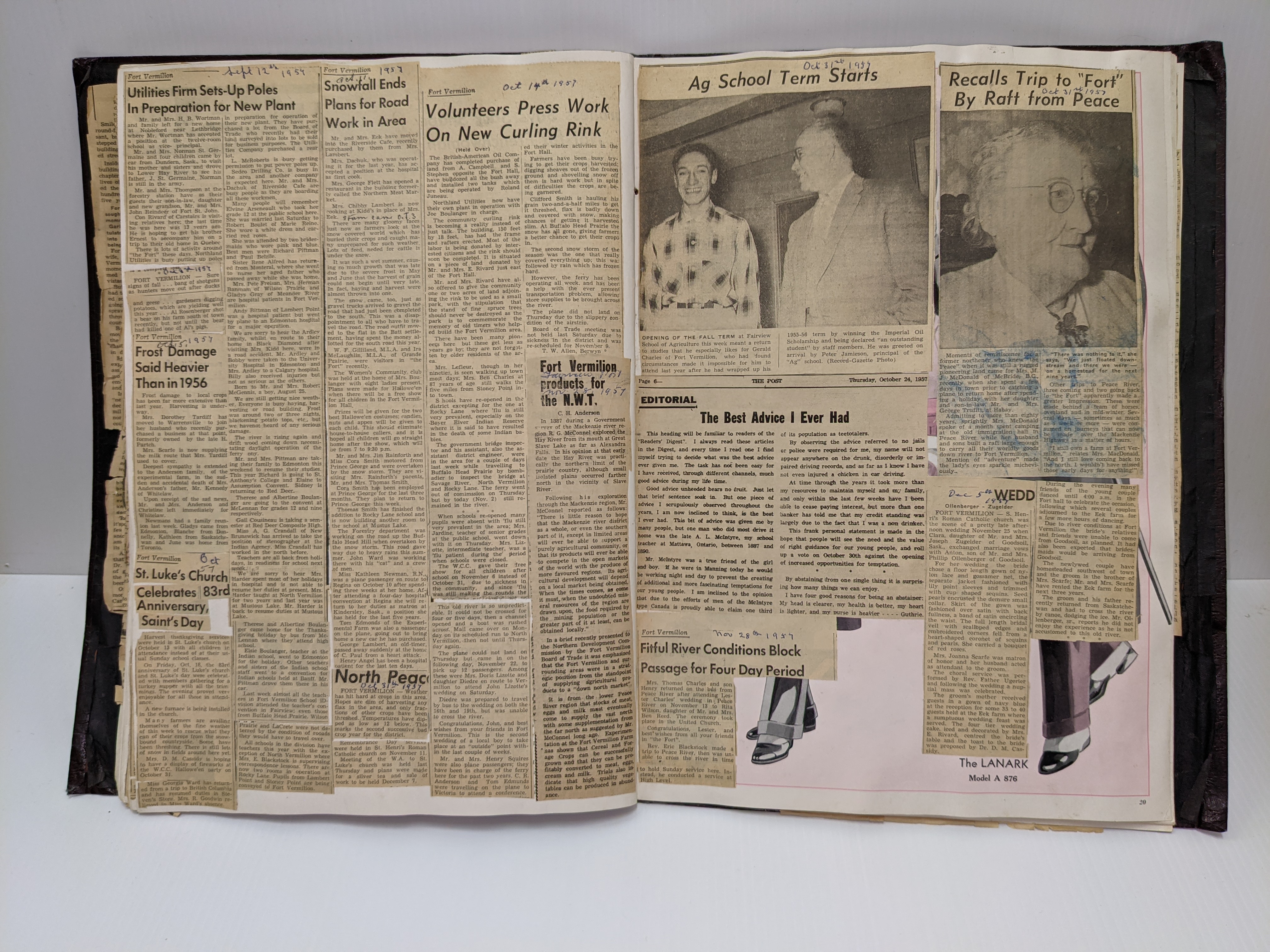
Dorothea Newman pieced together clippings regarding Fort Vermilion from the Peace River Record Gazette to create this wonderful scrap book. The book contains news from 1952- 1957 documenting everything from major events (Rabies Epidemic in Upper Peace Country 1950's) to personal news ("Henry Angel has been a hospital patient for the past 10 days"). The news clippings are pasted on the pages of a fashion book which is noted via shoes stepping out of the bottom right corner. Some pages have so many clippings they are layered overtop each other -requiring the reader to flip them up to read all the stories. If you are one for anecdotal history - or have strong ties to Fort Vermilion - this sure is an entertaining read!

17/05/2021
2021.18.02 / Newman Dorothea
 
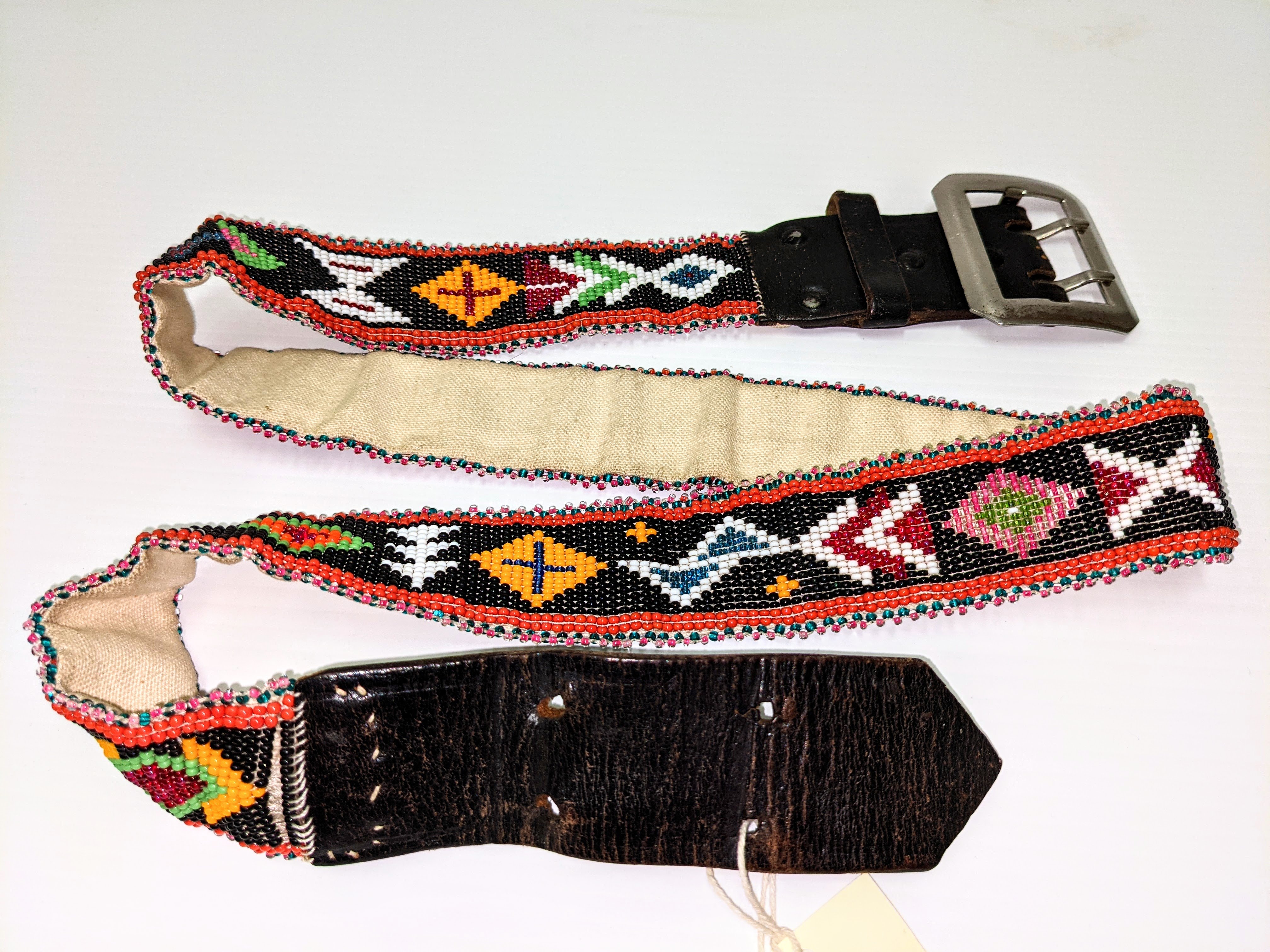
Although we do not have information on the artisan or the age of this beautiful artifact, the composition of the piece make it very interesting. First you will notice the incredibly uniform and intricate beadwork - typical of many indigenous artists. Upon further inspection you can see that the belt itself is not made of leather but rather canvas. This was likely done for ease of beading - though it is possible that the artist recycled a broken belt using the hardware and leather of either end. Recycling and reusing everything from building materials, to beads has long been practiced in Fort Vermilion and is part of what has allowed the settlement to prosper since 1788!

24/05/2021
2005.44.08 / Randolph, Helen

This small artifact is a piece of a stone pipe bowl. Though not officially an artifact of the FVHC (it is on loan to us) it was discovered during an archeological dig in the area. This style of pipe is more commonly found in eastern Canada and its discovery here indicates it was likely a traded item in the early years of the fur trade.

31/05/2021

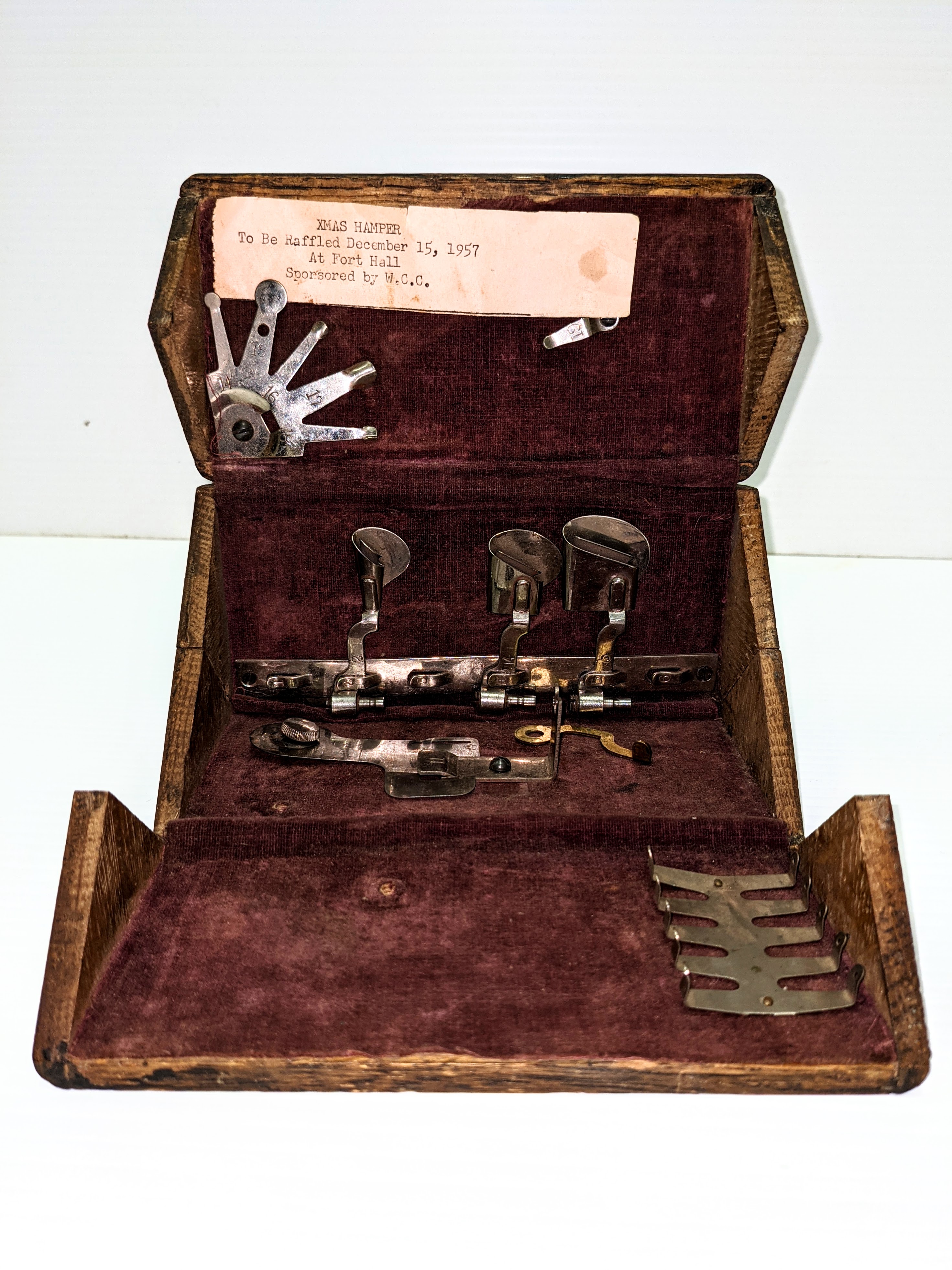
Known as a "Puzzle Box" by modern collectors, this foldable, velvet lined, wooden box is a storage device for various adapters and parts of a Singer sewing machine. First invented in 1889, each box had specific parts for one of 14 models of Singer sewing machine. This box is not complete with it's arrangement of parts and one of the pieces appears to be homemade. Perhaps more interesting is the caption included in the box noting that the unit was donated by the W.C.C (Womens Community Club) to be raffled for a "Xmas Hamper" at the Fort Hall on December 15, 1957.

07/06/2021
2004.11.23.03 / MacRoberts, Estella + Lewis

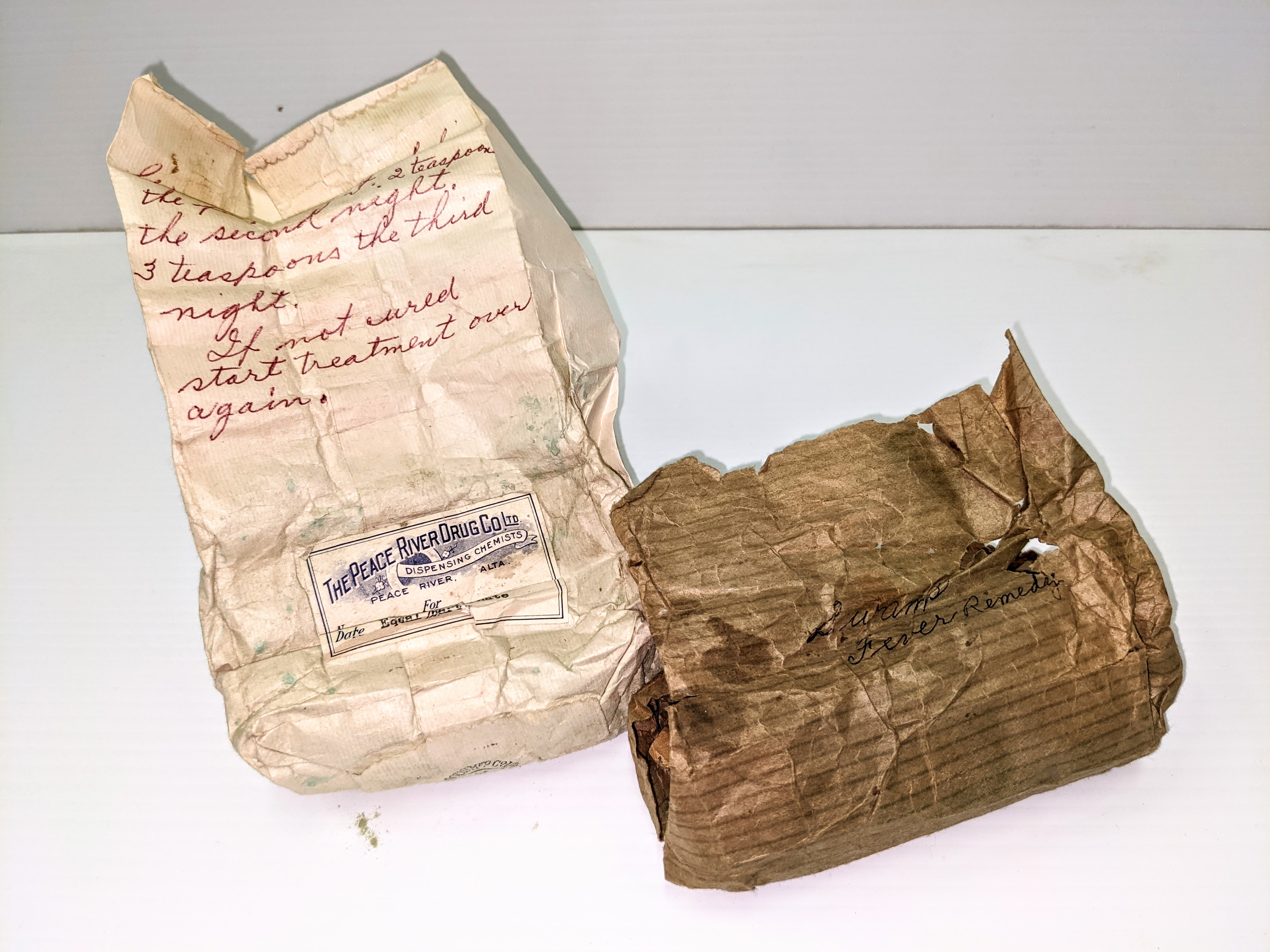
A product of the Peace River Drug Co. This bag contains a fine green powder labelled as "Saltpetre, resin, Borax, and copper sulfate". Scribbled on the brown packaging its use is labelled as "For Swamp Fever" while the red pen dictates the correct dosage. "1 teaspoon the first night, 2 teaspoon the second night, 3 teaspoon the third night. If not cured start treatment over again". Swamp fever is an ailment in horses that causes lethargy, muscle atrophy and anemia - not ideal for indigenous folks and pioneers who relied on horses for transport and heavy work!

14/06/2021
2000.03.54 / Cambell, Jean

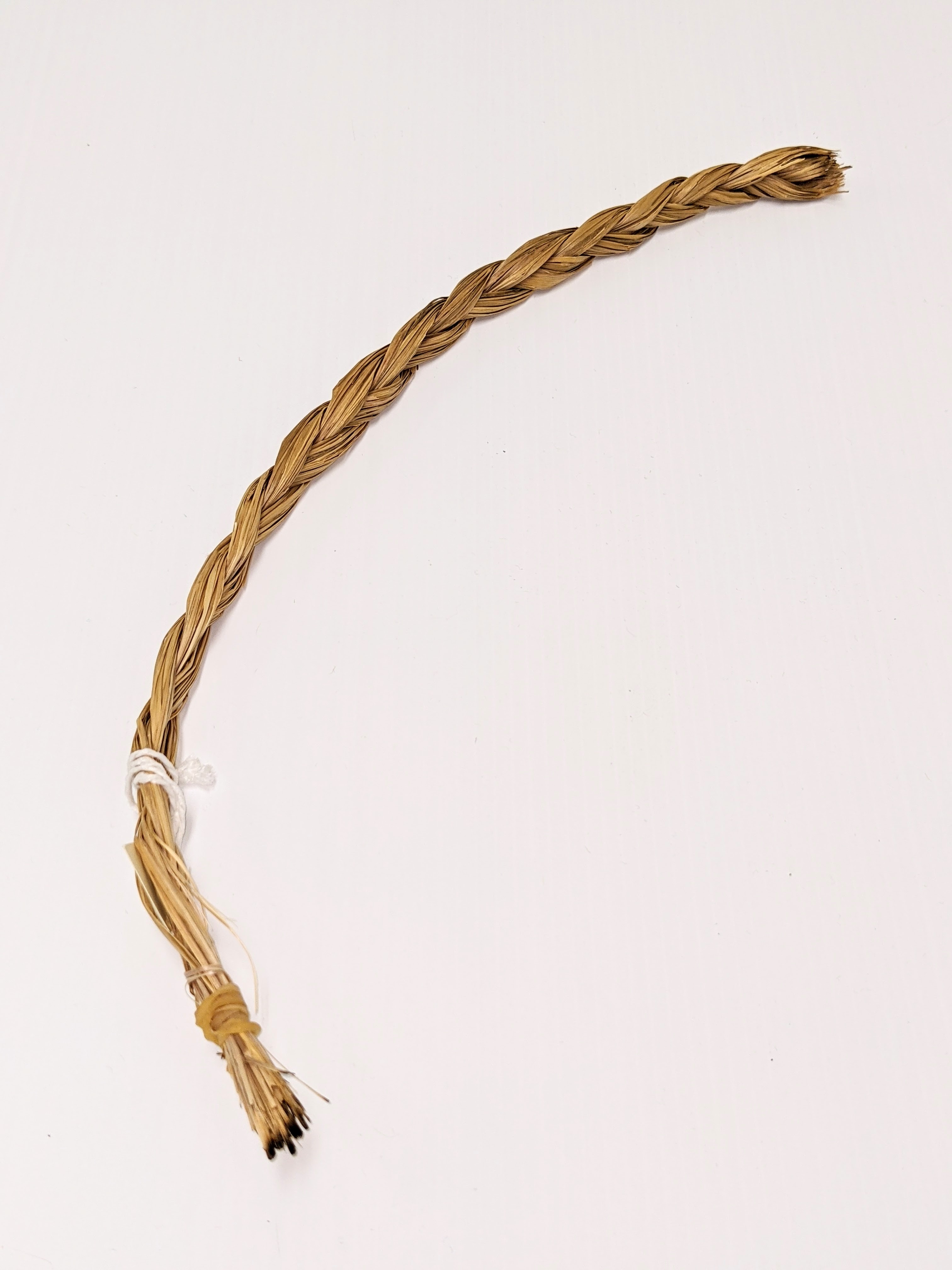
In honor of National Indigenous Peoples day on June 21, we have a braid of sweet grass for artifact of the week! Sweet grass is deemed as one of the 4 sacred medicines by Indigenous nations throughout North America and is used in Ceremony - specifically a Smudge Ceremony. Ceremonies are an integral part of Indigenous culture and way of life, the smudging ceremony is used to cleanse the spirits of individuals, the ceremonial space and attract positive spirits. Sweetgrass is braided (as shown in the image), lit on one end (see burn marks on bottom) and waved about the room to cleanse the space with the fragrant smoke that attracts positive spirits.

21/06/2021
1999.03.93 / Hitchcock, Eunice

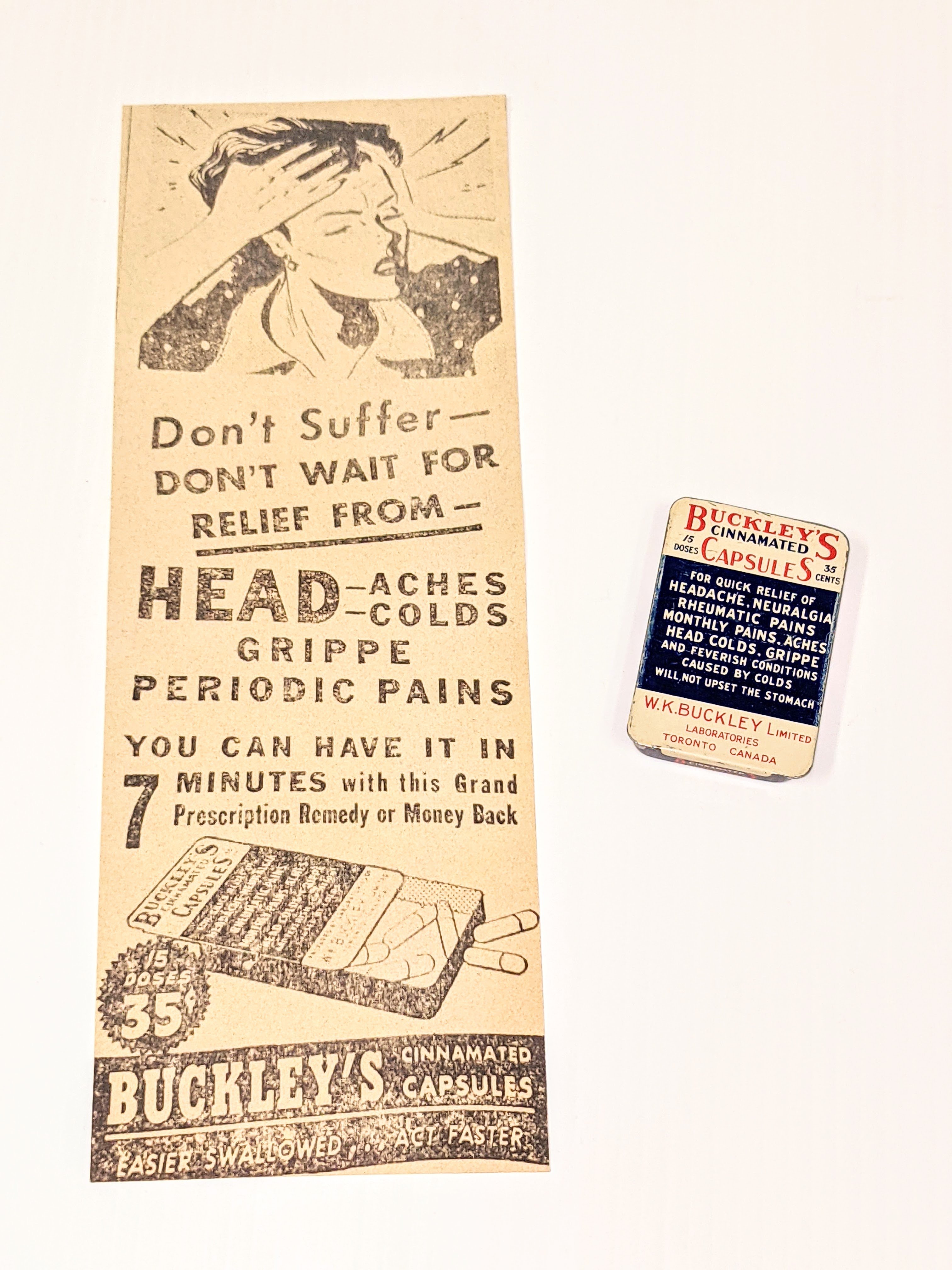
In response to the flu Pandemic, W.K Buckley Ltd. was established on March 20th of 1920 by a certified pharmacist from Nova Scotia named William Knapp Buckley. This 15 dose tin of Buckely's Cinnamated  Capsules sold for 35cents  during it's prime in the 40's and 50's - claiming to provide relief for: headache, neuralgia, rheumatic pains, monthly pains, aches, head colds, grippe and feverish conditions caused by colds. Buckleys Cinnamated Capsules were comprised of a mixture of Acetylsalicylic acid (Aspirin) and Phenacetin - both pain and fever reducers. Acetylsalicylic acid is still used widely today however Phenacetin was declared dangerous and with drawn from medical use in Canada in 1973.

28/06/2021
2016.36.56 / Swalm, Mary

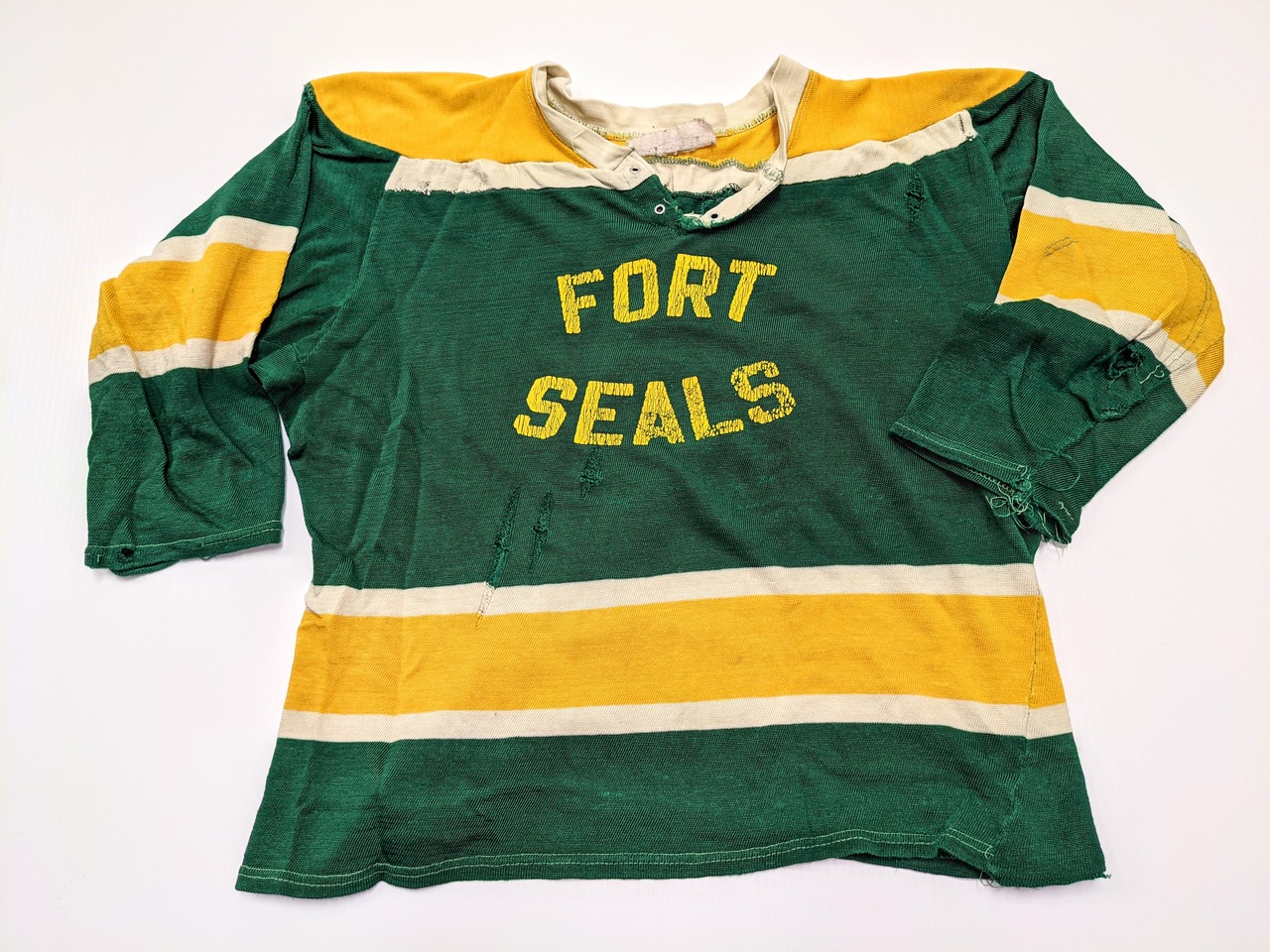
This hockey Jersey comes from the oldest Hockey Team in Fort Vermilion - The Fort Seals. Sponsored by the S. Stephens store this team dates back to the 1940's. The Jersey is small in stature with short sleeves and  wide dimensions typical of a goalie jersey to accommodate extra padding. We do not have information on the significance of the name "Seals"

05/07/2021
2020.59.23/ Smith Louise

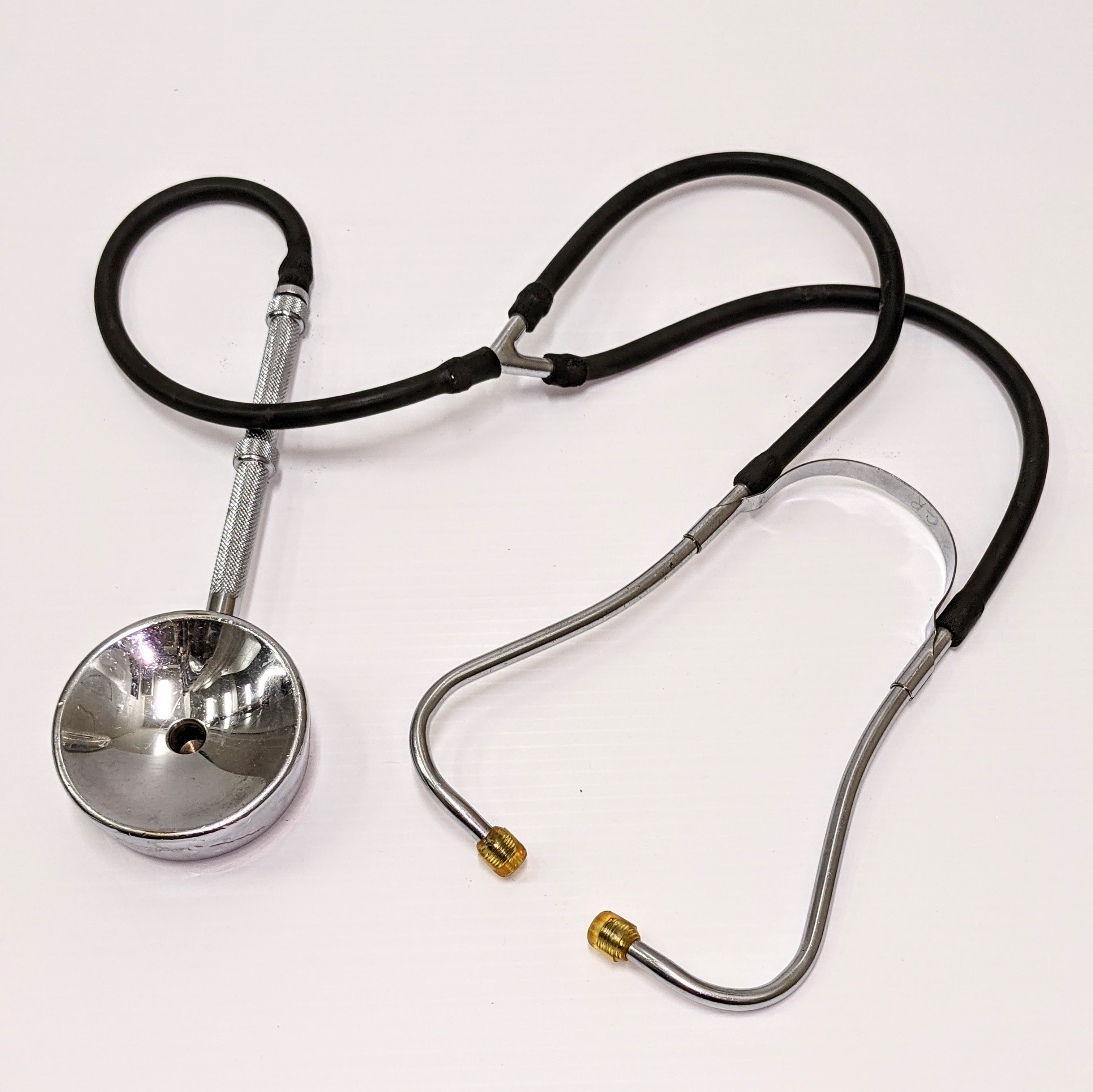
In honor of world population day (July 11) we have chosen this Fetoscope -or fetal scope- as the artifact of the week. With modern technology (such as ultrasound) fetal scopes are rarely used in the medical field. Much like a stethoscope, a fetal scope would aid a doctor in listening to a heart beat. The key difference between the two is the sensitivity of the fetal scope - with a larger diaphragm it was much more sensitive and could pickup a heart beat of a baby under 20 weeks old in the womb. Generally at 20 weeks a baby's heart beat can be heard by a standard stethoscope. 

12/07/2021
2012.15.1 / St Theresa Hospital

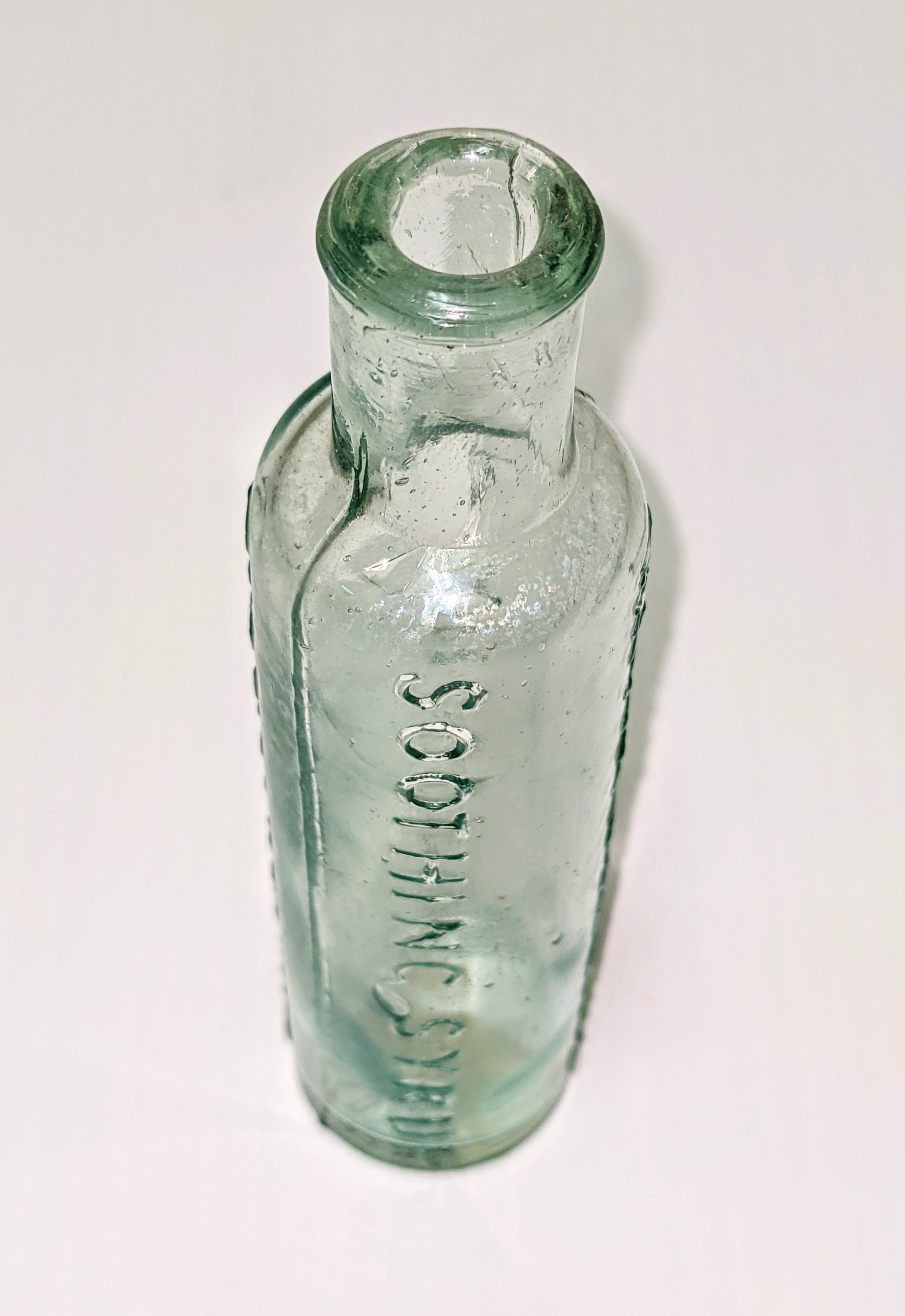
Mrs Winslow was a pediatric nurse who created this soothing syrup for fussy Babies in 1849. It was a patent medicine that claimed to relieve crying, teething, and dysentery - and was effective for all -  as the concoction had enough morphine in a tsp (20 drops laudanum) to kill the average child (recommended no more then 3 drops laudanum). It was this high concentration of morphine that would put babies to sleep never to wake up again. Due to engaging marketing and lack of labelling, caregivers often would not make the connection that the syrup was the cause of death. In 1920 the food and Drug Act was created in Canada and required standard labeling of ingredients which alerted some caregivers to the high concentration of Morphine. Even so, the product was still widely sold until 1930s all while this "Baby Killer" continued to claim thousands of lives. Noting different characteristics of this bottle it was likely produced between 1865 and 1875 - making it over 145 yrs old!

19/07/2021
2017.22.171 / Creighton Harold + Evelyn

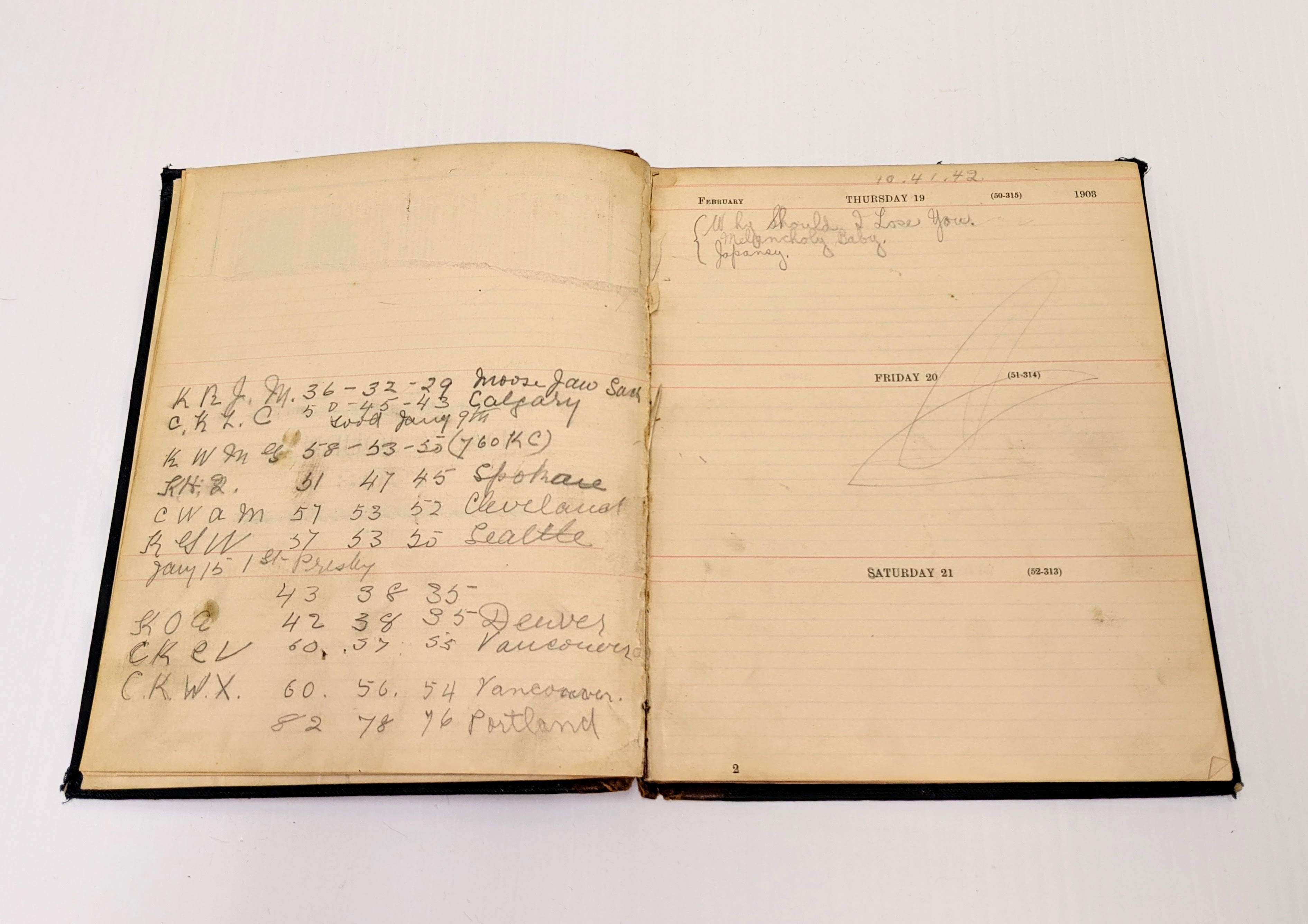
This is the Journal of Sheridan Lawrence. Started in 1903 it covers many years and contains notes from various aspects of life.  This is one of the first pages and we are unsure the details of the notations on the left  -our best guess is business dealings as Sheridan was a eager entrepreneur and the cities listed are major trading locations. These style of notations are the most prominent part of the journal and list different cities throughout. The scribble on the right is likely the work of a small child - not surprising as Sheridan raised 14 children.

26/07/2021
2007.67.05 / Lawrence Family

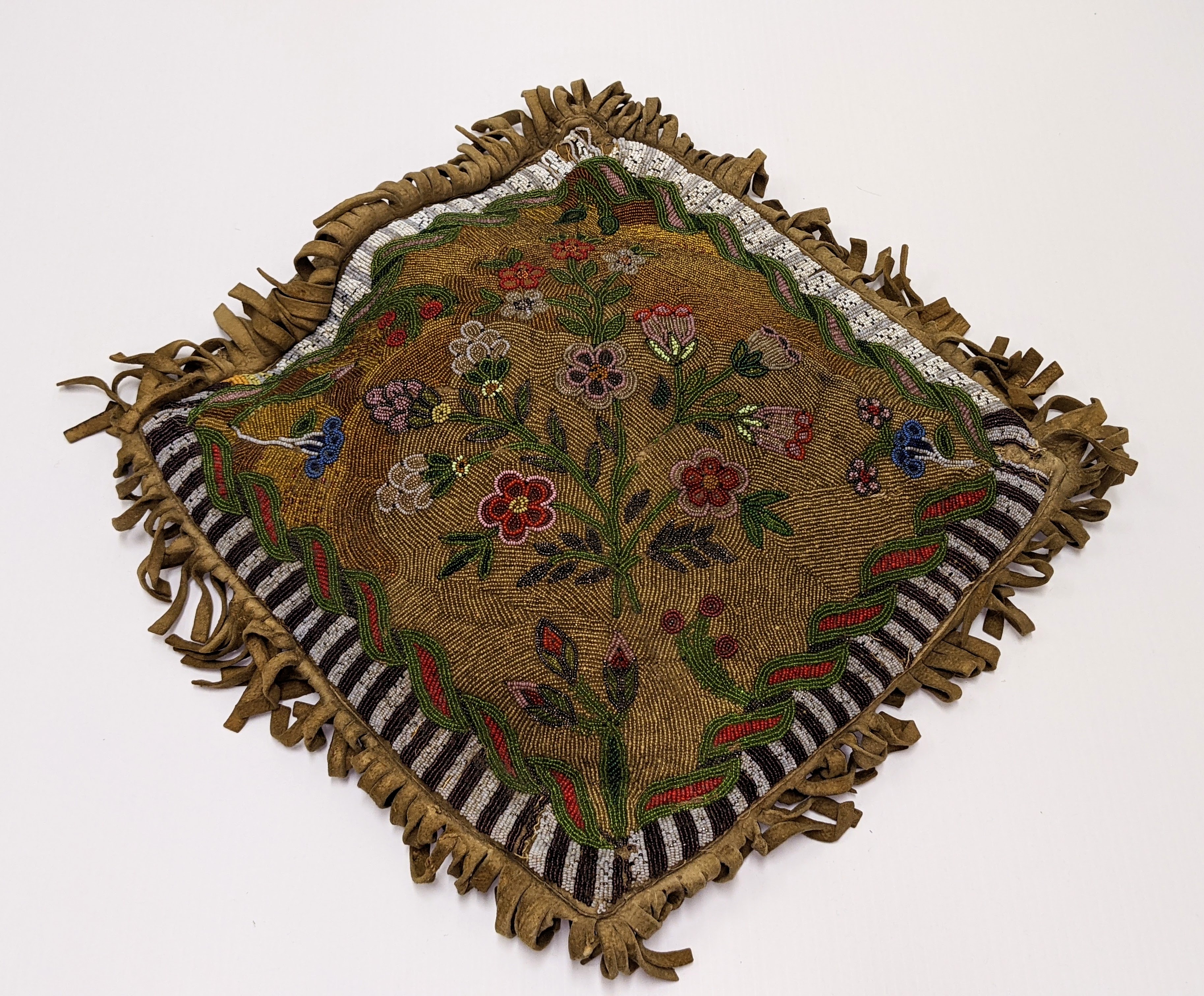
Chosen by a former staff and volunteer member (Sandra Single) this cushion is a testament of the incredible artistic abilities or its creator - Francoise Moberly. This cushion is made with traditionally tanned moose hide and is completely covered with glass beads. More colorful beads were chosen to create a stunning floral pattern with muted Earth tones selected to create the border and fill the spaces between. There are a few places where the stitching has let go and beads have been lost, though they are minimal, especially considering that age of the cushion - made in in the 1880's it is over 130 yrs old!

01/08/2021
2003.28.01 / Moberly, Henry John + Francoise (LaFleur)

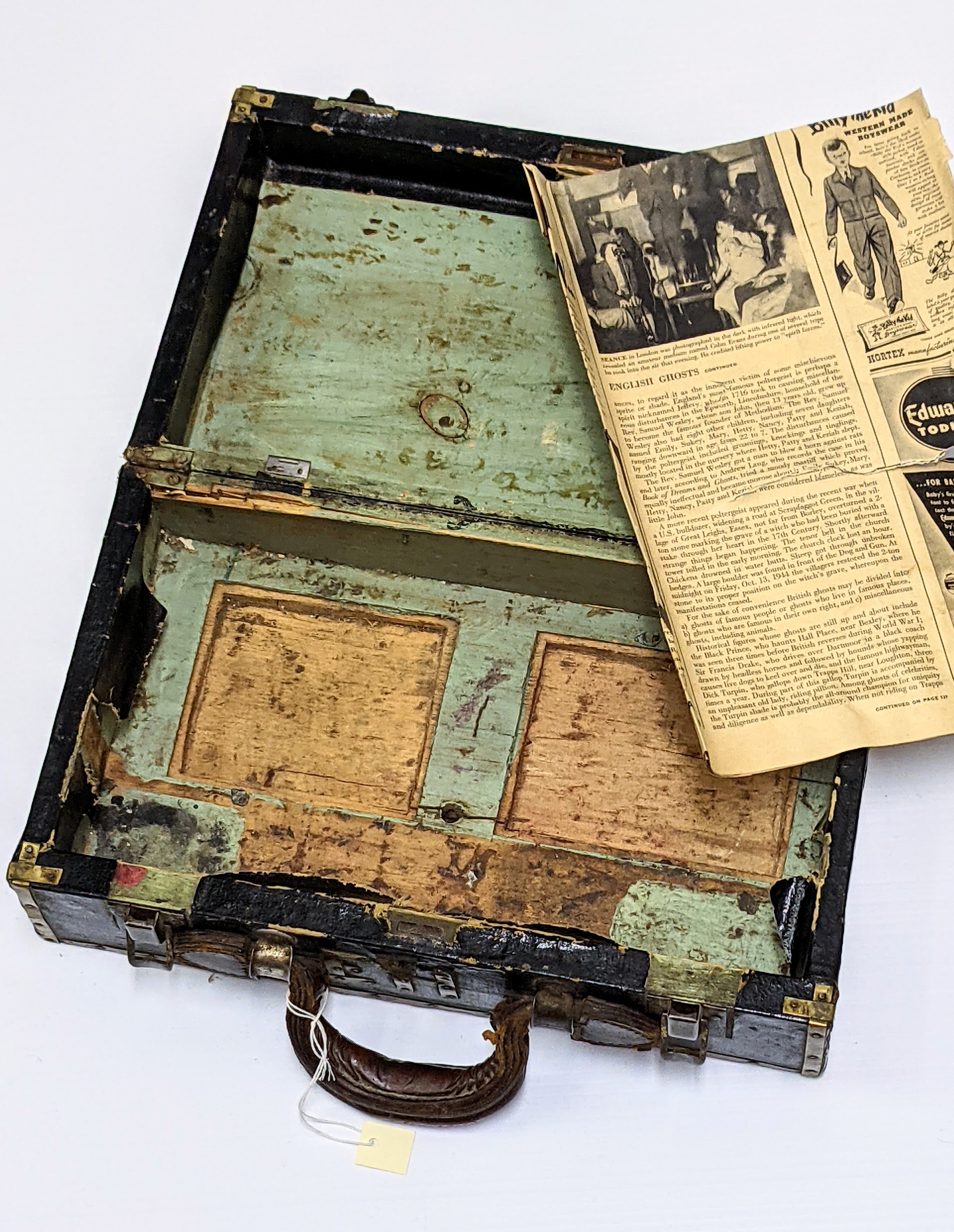
We believe this to be a protective case. For what exactly we are not sure. It is a bit large for jewelry, though does have the Initials "EH" stamped on the front indicating it to be a personal item. The paint markings, hollowed base, and extra hinges indicate secret compartments or other elements no longer present

The inconsistent work on of the trim and fabric covering indicate it was homemade or repurposed from it's original use. The newspaper was found inside as a bottom and gives us a ball park estimate on the age of the artifact. The paper comes from the September 22, 1947 issue of Life Magazine! 
If you have any insight on its purpose - please let us know!

08/08/2021
2007.61.20 / Tourangeau, Martha & Harvey

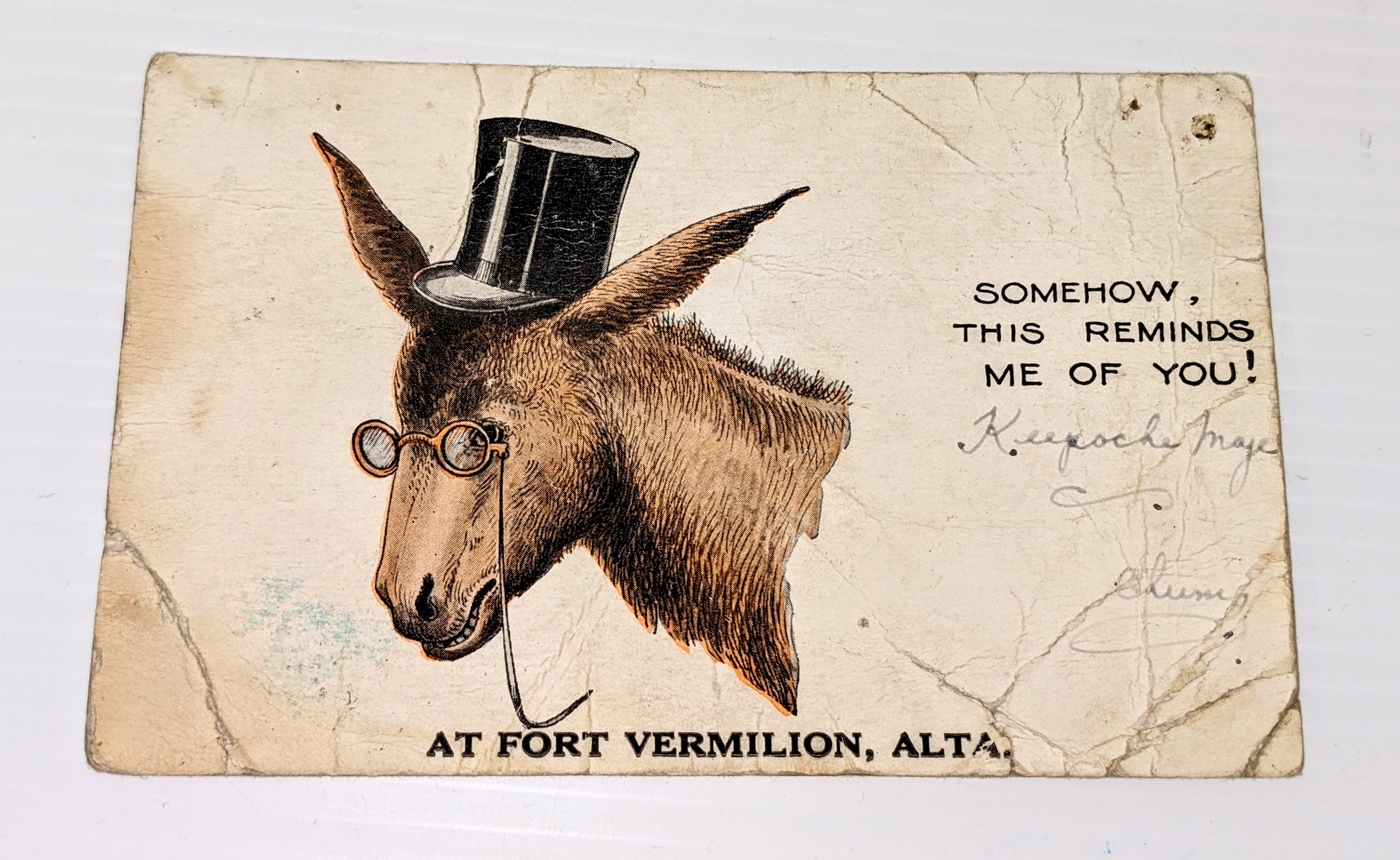
This is a postcard for Fort Vermilion from 1934. Made in the United States, the brand is "Donkey Comics" and who made generic postcards that any town or locale could add their title too. Considering the age of the post card the Board of Trade likely put the "At Fort Vermilion" stamp on it. The card is not signed nor has been sent. You'll notice on the right hand side a few words in cursive - we can't quite understand them so if you can please let us know!

16/08/2021
2001.17.01 / Mcleod, William A.

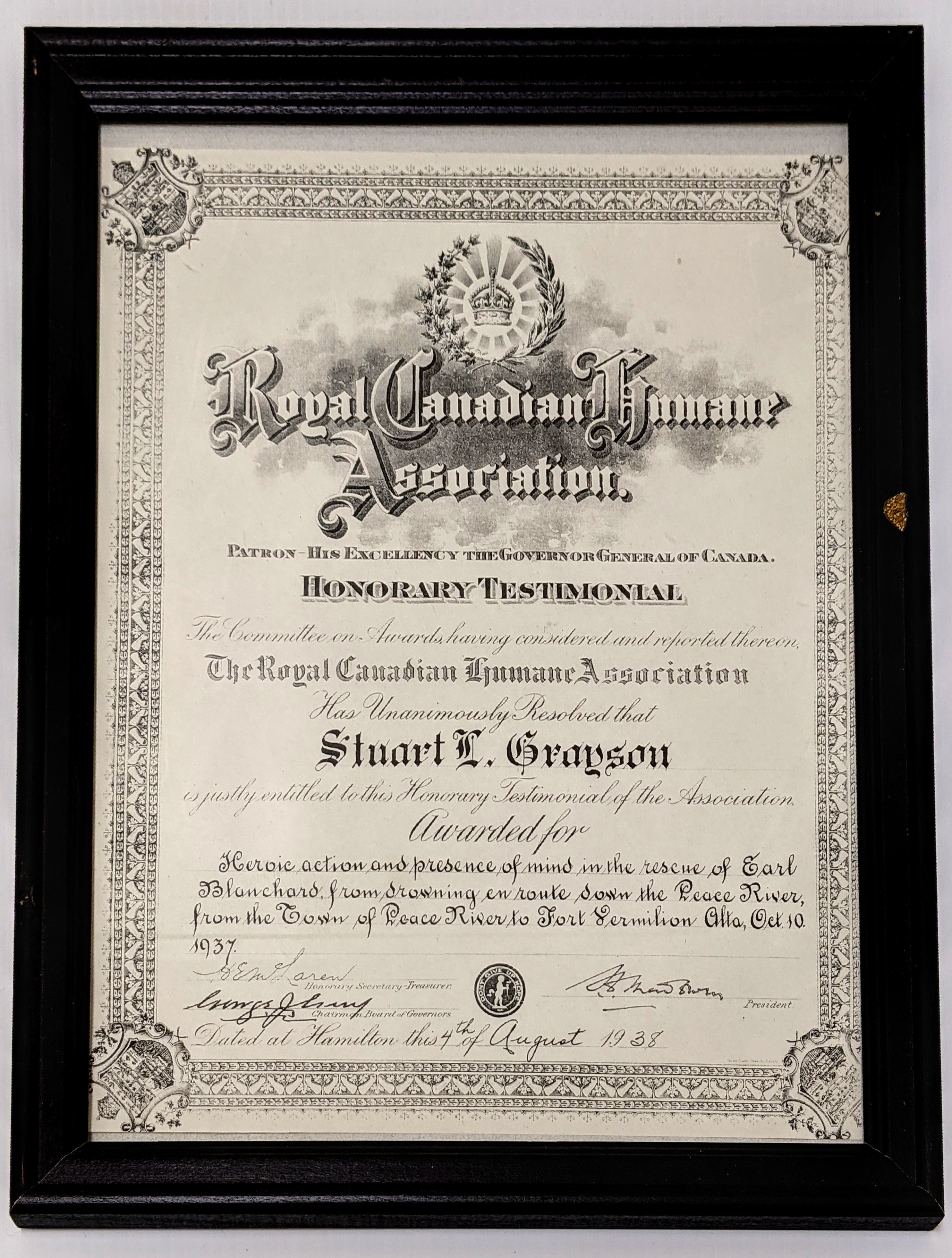
This award comes from the Royal Canadian Humane Association and is granted to Stuart Grayson. As the story goes, while travelling in mid October, Earl fell off the boat "Weenusk" and Greyson dove into the frigid waters to save him. The Royal Canadian Humane Association still exists today ( its headquarters are in Edmonton!) and you can nominate individuals who have shown heroic action!

23/08/2021
2000.45.01 / Grayson, Stuart

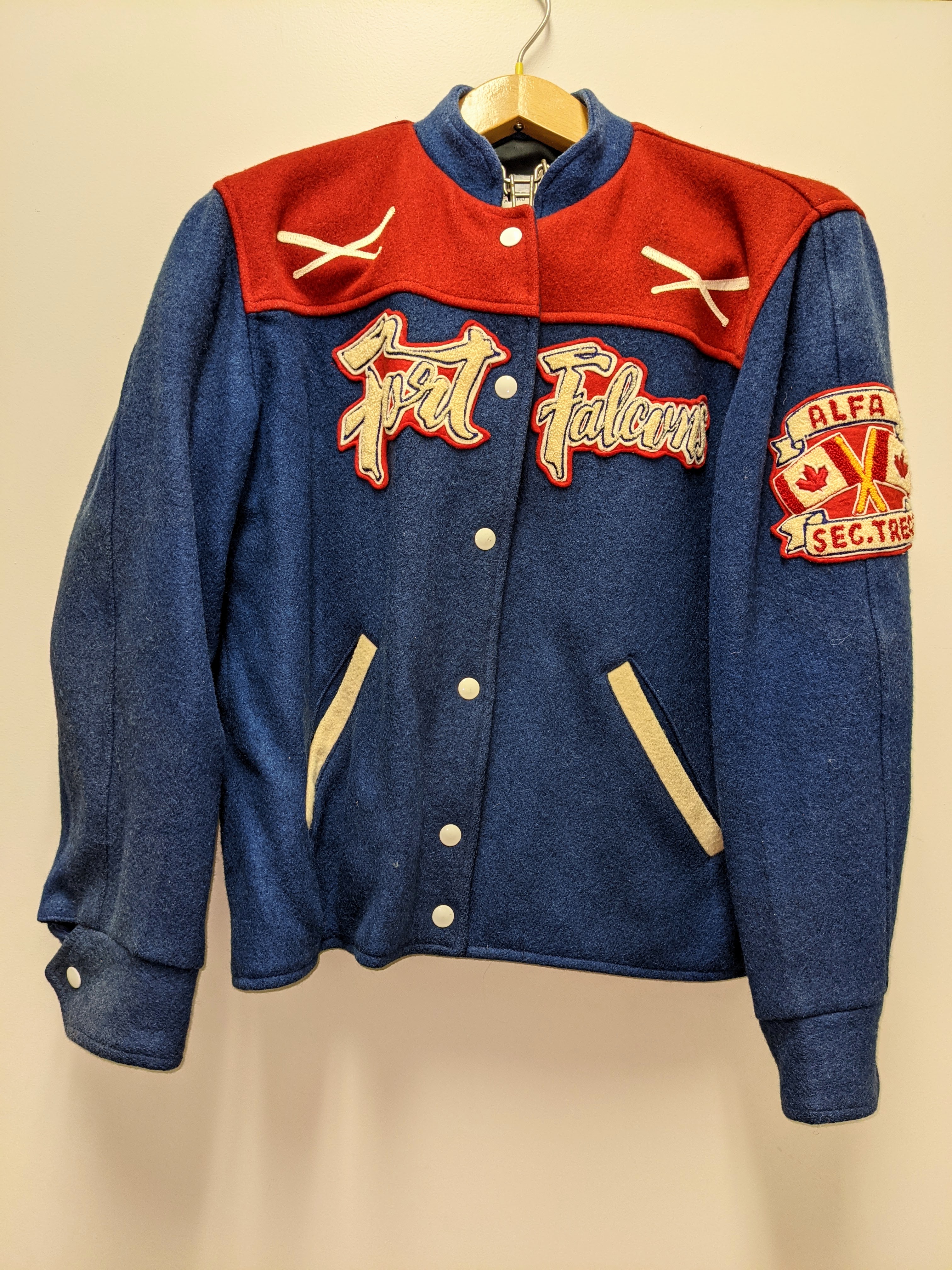
A 1968 bomber jacket of the "Fort Falcons" Baseball team is our artifact of the week! This jacket was owned by Alfa Twidale -as notated in the crest on the left sleeve. Alfa was the Secretary / Treasurer of the team in 1968. Competitive baseball has been enjoyed by Fort Vermilionaires for over a century. The earliest teams made up of neighbours from each locale  (Stony Point, Buttertown, Fort Vermilion) and played on grassy meadows!

30/08/2021
2004.03.138 / Twidale, John + Alfa

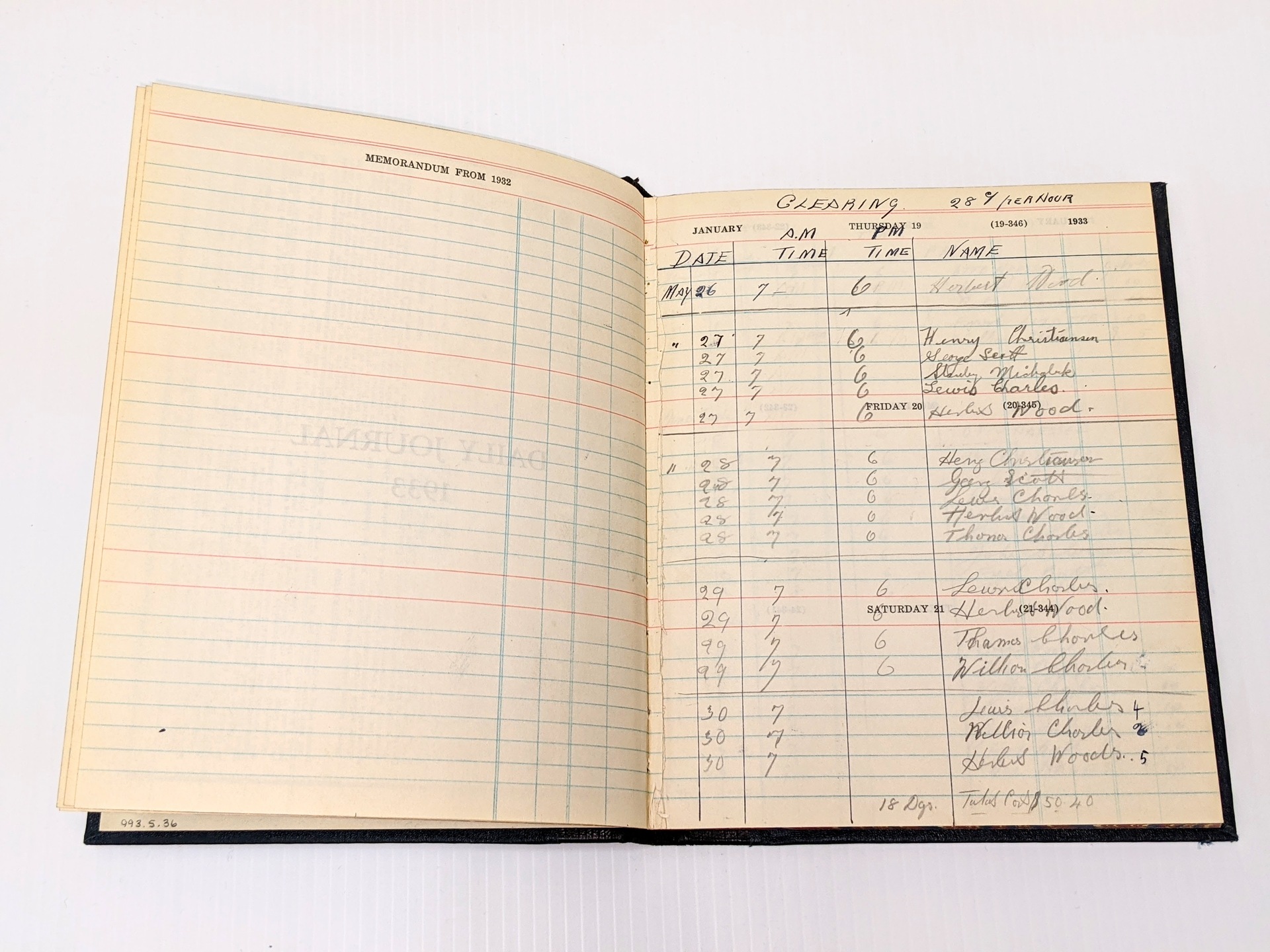
In keeping with the labour day long weekend, we have labour records from 1933! This journal comes from the experimental farm and notes the hours, wages, and individuals who were hired for "clearing". Considering this dates before the 1934 flood this clearing work would have been carried out at the Stony Point location of the Experimental Farm. It is interesting to note that the work day was 10hrs long and workers were paid 28ยข / hr  for a total payout of $50.40. You will also notice inconsistency in the names of the paid labour - it is likely these individuals did not work at the farm full time rather were hired on for this task as they had availability. While we have a long weekend to commemorate labour and work this crew didn't have a weekend at all - the first day of work was Friday the 26th - working each day until Tuesday the 30th! 

06/09/2021
1993.5.36 / Fort Vermilion Experimental Farm

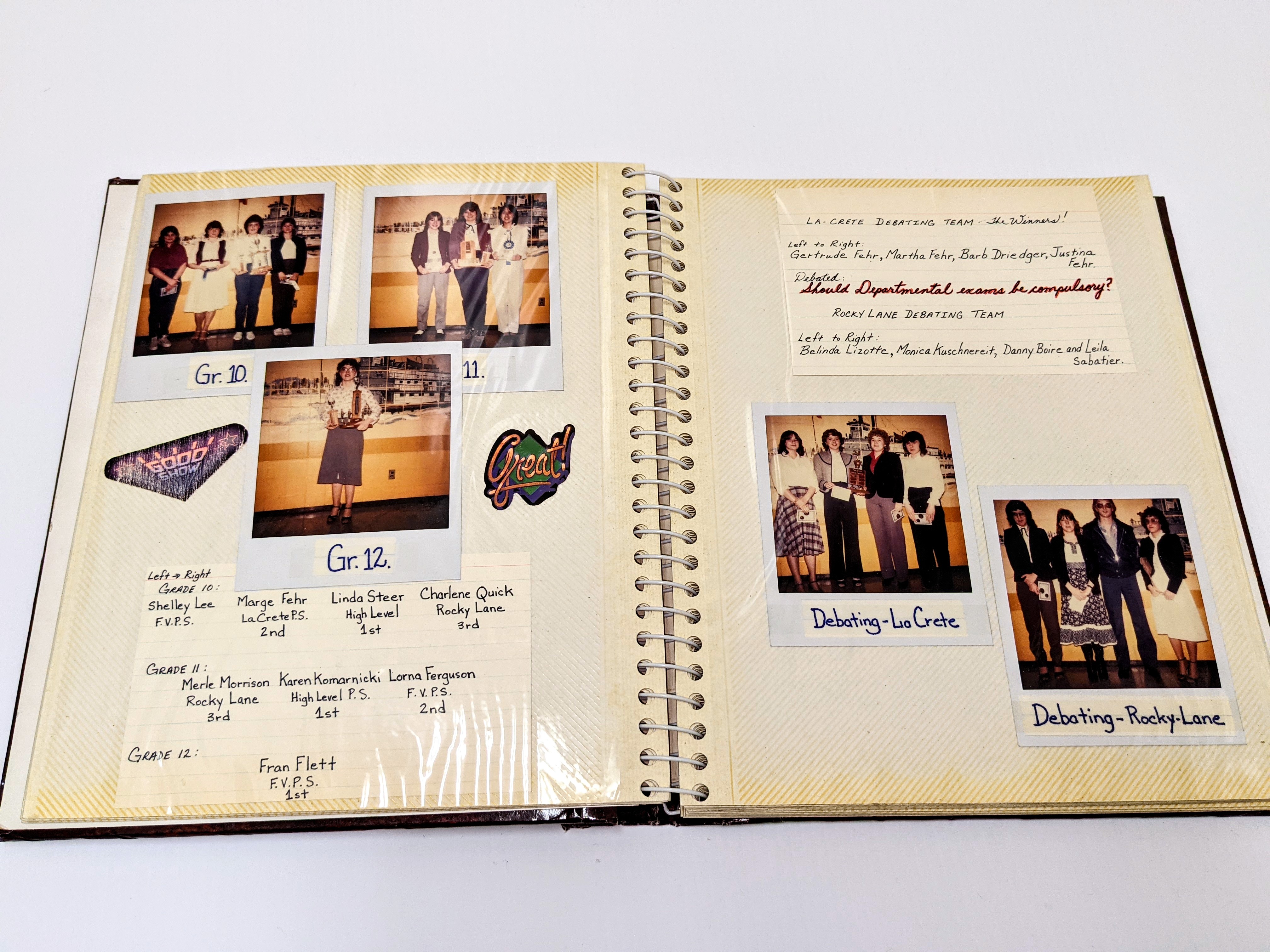
Not necessarily an old artifact - but interesting nonetheless. This scrapbook is labelled as "Public Speaking" and documents the competitors, winners, and categories of the competition. This was an annual competition and this scrapbook documents the years 1983 + 1984. Just like sports competitors came from across the region (High Level, Rocky Lane, La Crete, Buffalo Head Prairie) to duel and challenge each other in debating and prove their oratory skills!

20/09/2021
2011.20.118 / Fort Vermilion Public School

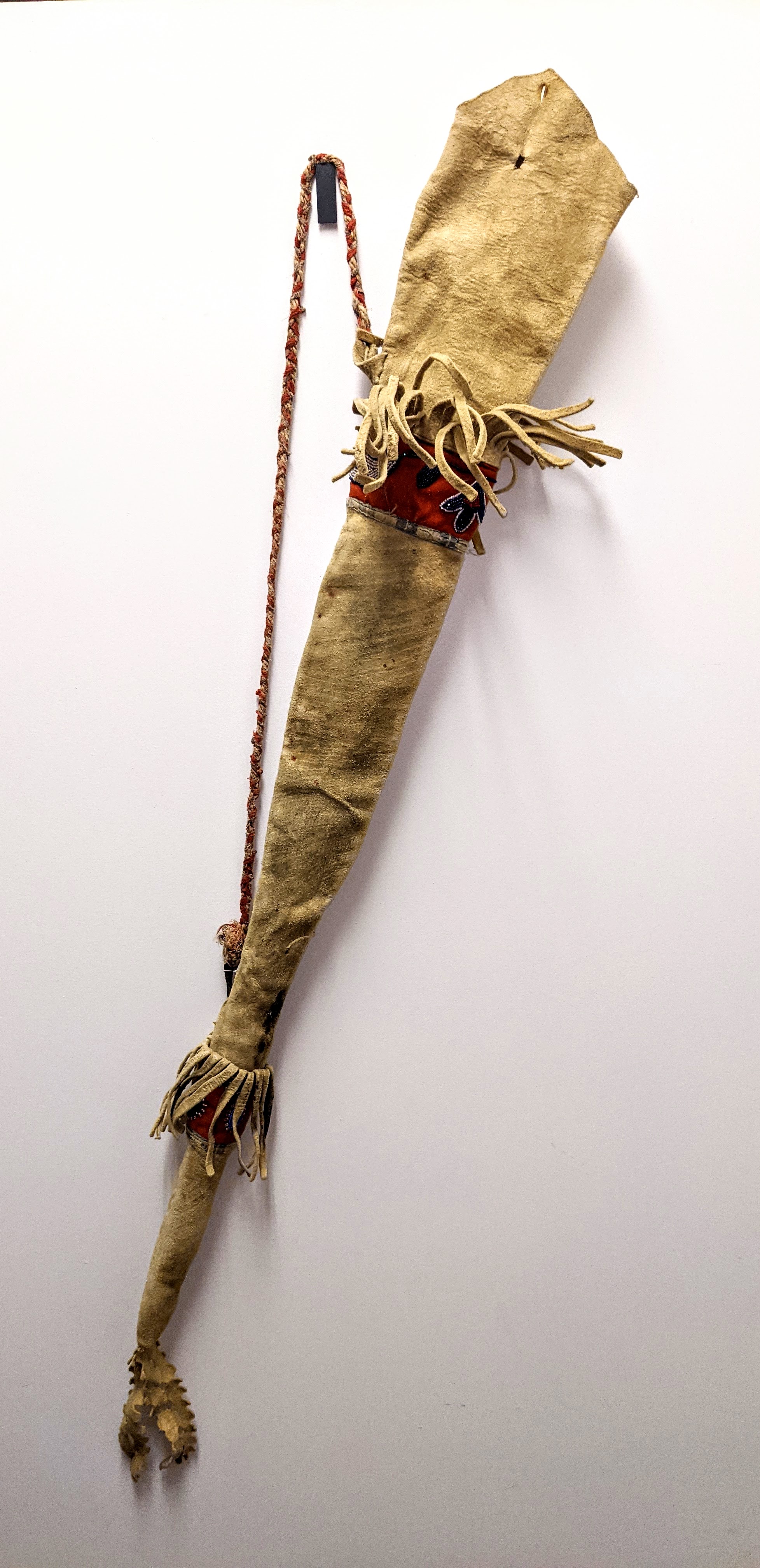
Considering the current moose hunting season we chose this beautiful moose hide gun case. Crafted by hand this case is more decorative in nature, though wear spots do indicate that it was well used. For many years hunting wild game was the only manner in which fresh meat could be obtained here in Fort Vermilion. That has since changed with wide variety and selection in the grocery stores - though many people prefer moose meat and spend days (sometimes weeks) on the hunt for it! This time of year is perfect for moose hunting as they are in Rut (looking for a mate) which means the animals are a lot more active physically and verbally thus making them easier to hunt!

27/09/2021
2007.12.09.09 / Stevens, Douglas + Ann

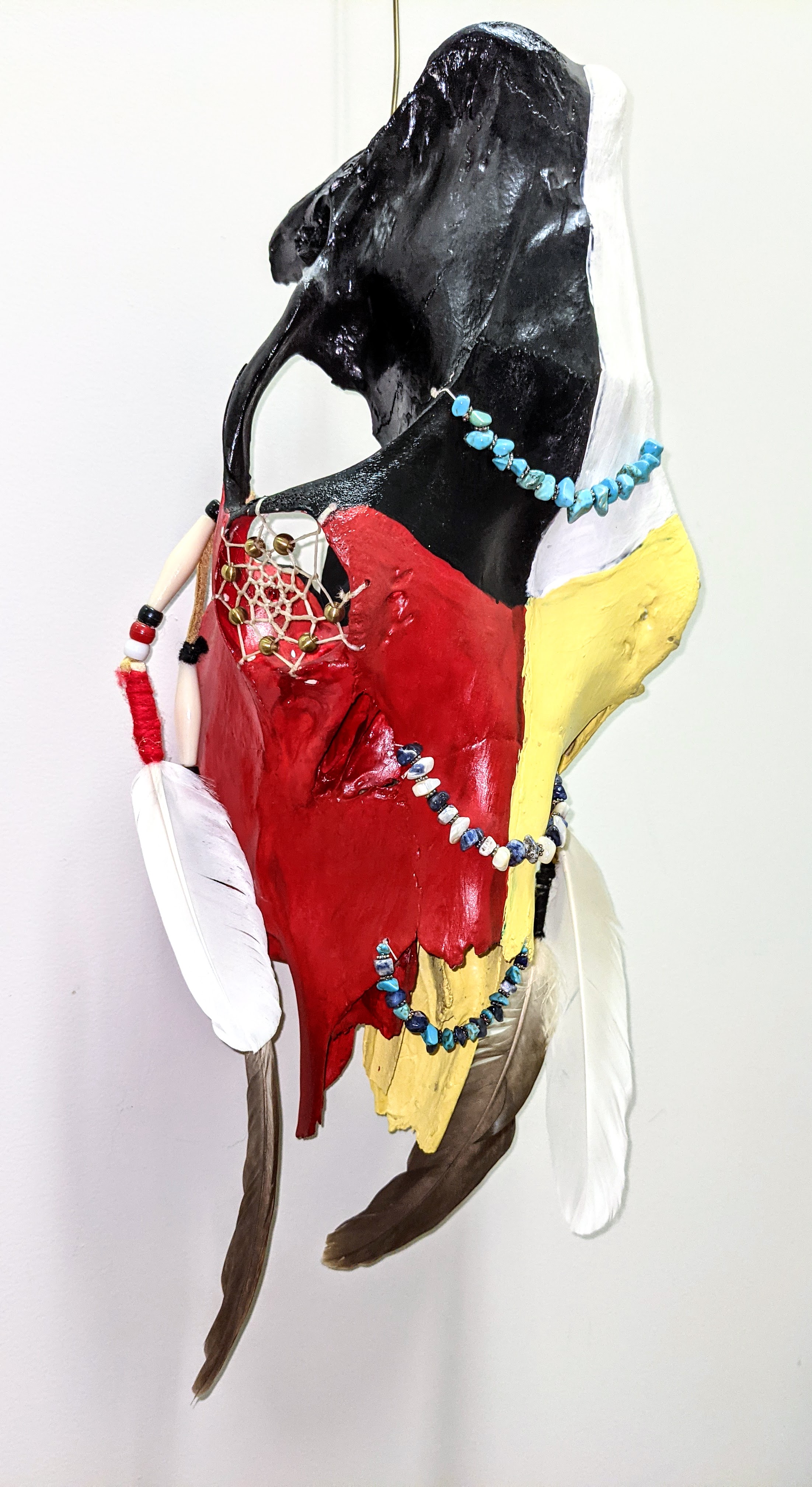
A newer addition to our collection (2018) this beautiful moose skull was kindly donated by Michael Hamelin. The four main colors (Black, white, yellow and red) compose the medicine wheel - each color representing various aspects of life. Today (Oct. 4th) is international animal day which advocates for the humane treatment of animals world wide. Started in 1925 this commemorative day is nearly at its centennial. We felt this skull aligns with this day as it depicts that though moose are commonly hunted for their meat - other parts of the body can be used in various applications - thereby not being wasteful and respecting the animal; a common practice by indigenous nations.

04/10/2021
2018.18.01 / Hamelin, Michael

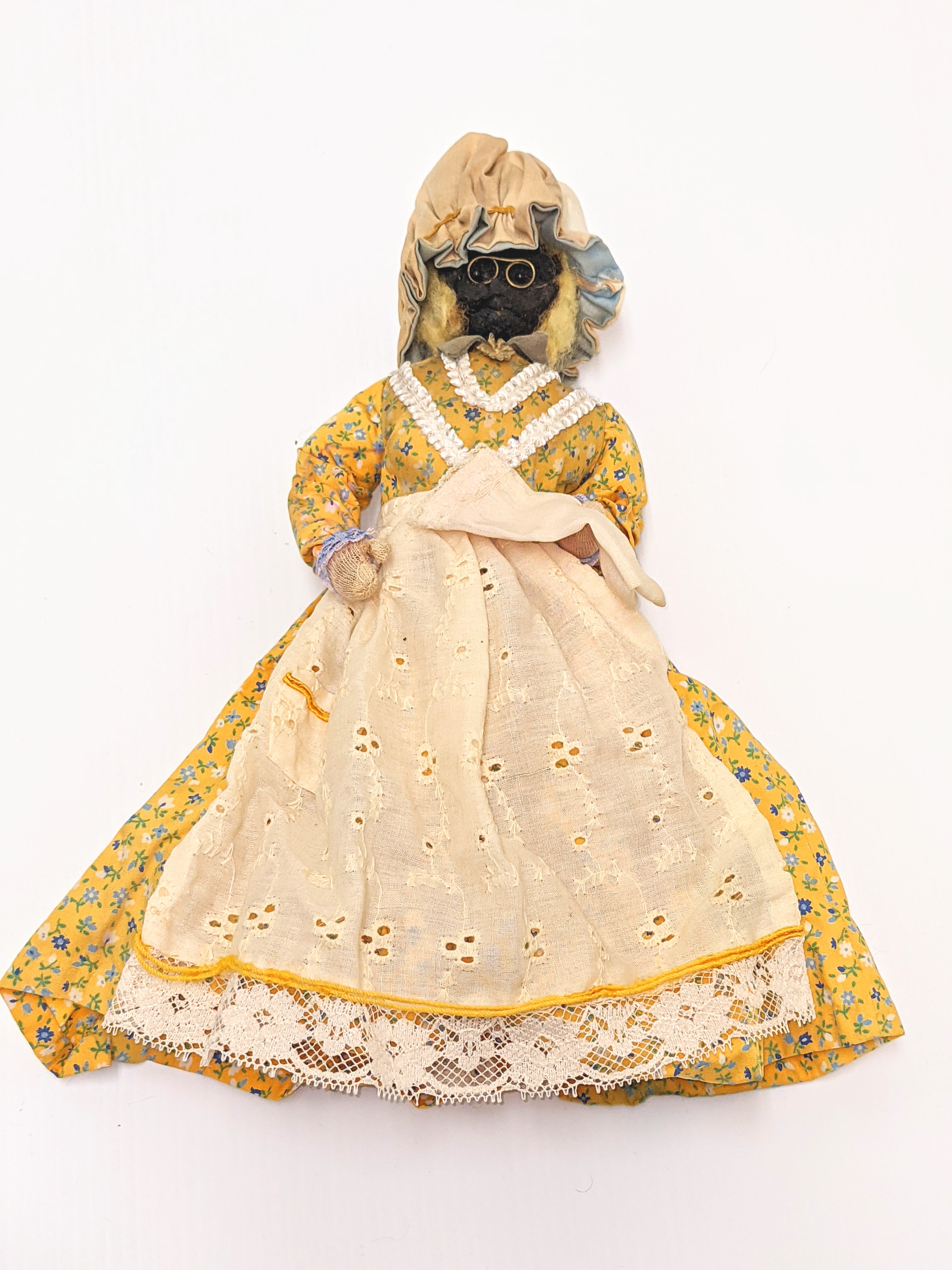
This piece is a testament of detailed work and creativity. Detailed because it is all handmade! The wire frame, and clothing pieces are likely scrap material fashioned into this wonderful play doll. Everything is hand sewn together and even her tiny hands are knit. Creative for upcycling various materials, but mostly for the head. It's withered look comes naturally as it is actually an apple!

11/10/2021
2017.22.221 / Creighton, Harold + Evelyn

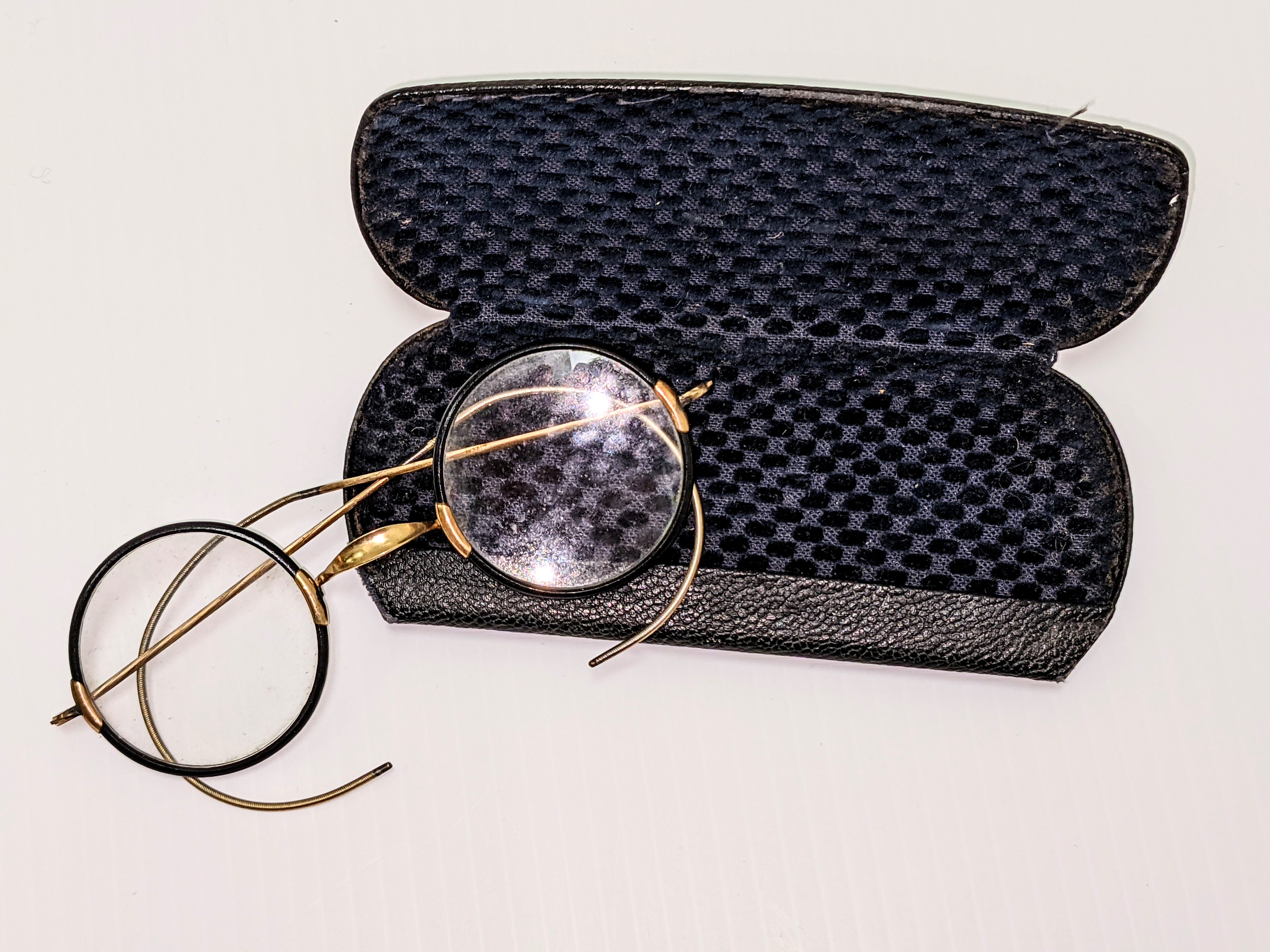
These fashionable looking spectacles are from the Tourangeau collection. The long curved arms of the glasses are springy and wrap around the wearers ear to ensure the glasses stay perched on their face. The lenses are quite thick and act as miniature magnifying glasses which is conducive to reading. Surprisingly there is no brand name on the glasses or case. The Tourangeau family started with Joseph Tourangeau moving into Fort Vermilion in 1901 in attempt to get away from easy access to liquour which had "got the best of him" after the sudden passing of his wife and children in St. Albert.

18/10/2021
2007.61.03.04.01 / Tourangeau, Martha + Harvey

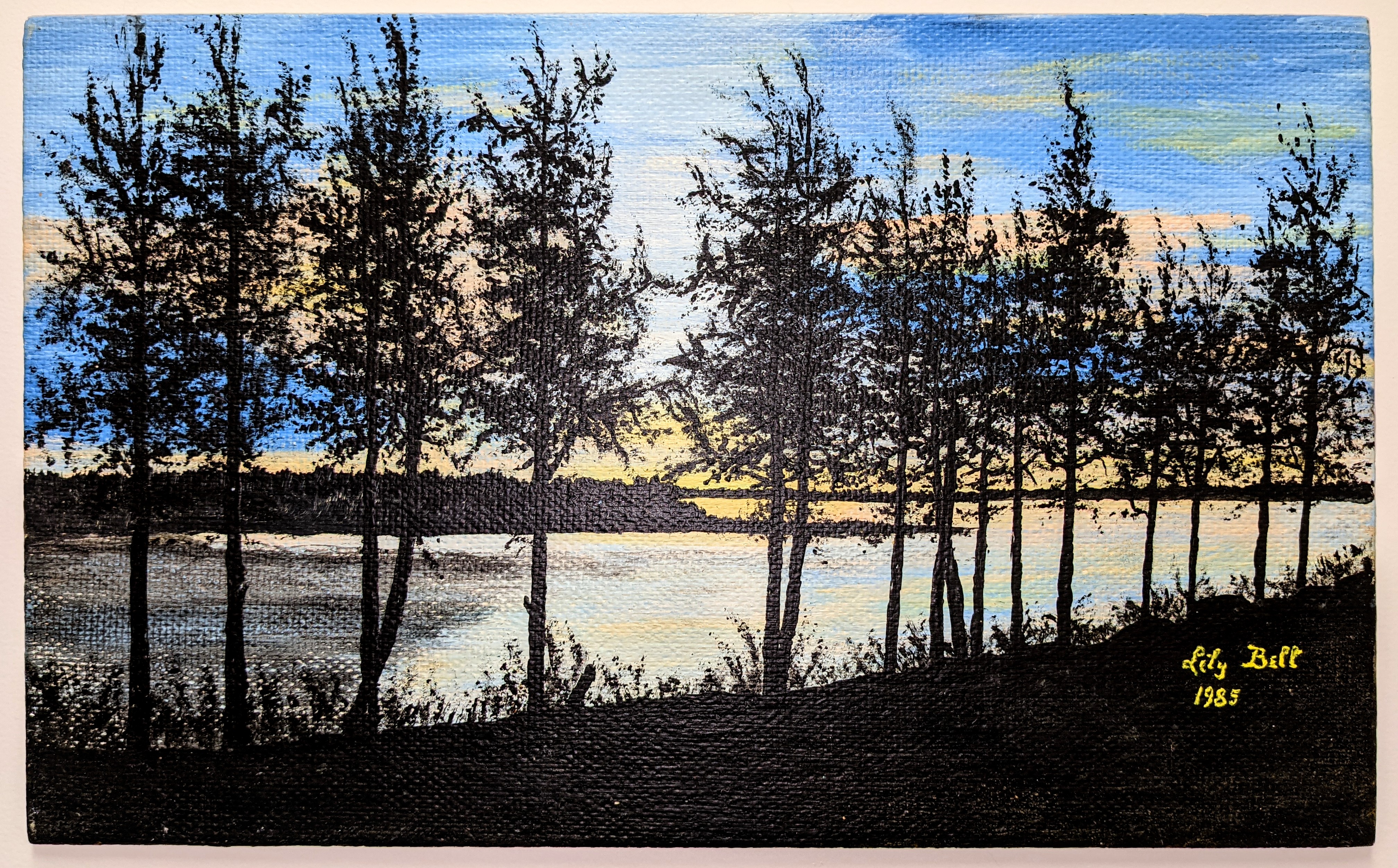
Today is international artist day! We have chosen this wonderful painting of the Peace River by Artist Lily Bell as a way to commemorate it! Lily loved to paint and loved Fort Vermilion. She moved to the area in 1963 to be a teacher - but was soon involved in the community in many other interesting ways. She had a column in the newspaper, was secretary of the legion and loved to paint. After retiring from teaching in 1968 she went to the Banff school of arts and brought her skills back to Fort - painting numerous pieces for public buildings throughout town. The  piece above is an original that is labelled as "Midnight June 21st East Vermilion Island" and is painted on a piece of wall panelling. If it looks familiar, that's likely because there is a large re-creation of it that hangs prominently at the Hallet Hansley Legion!

25/10/2021
2020.07.14 / Cranna, Marilee

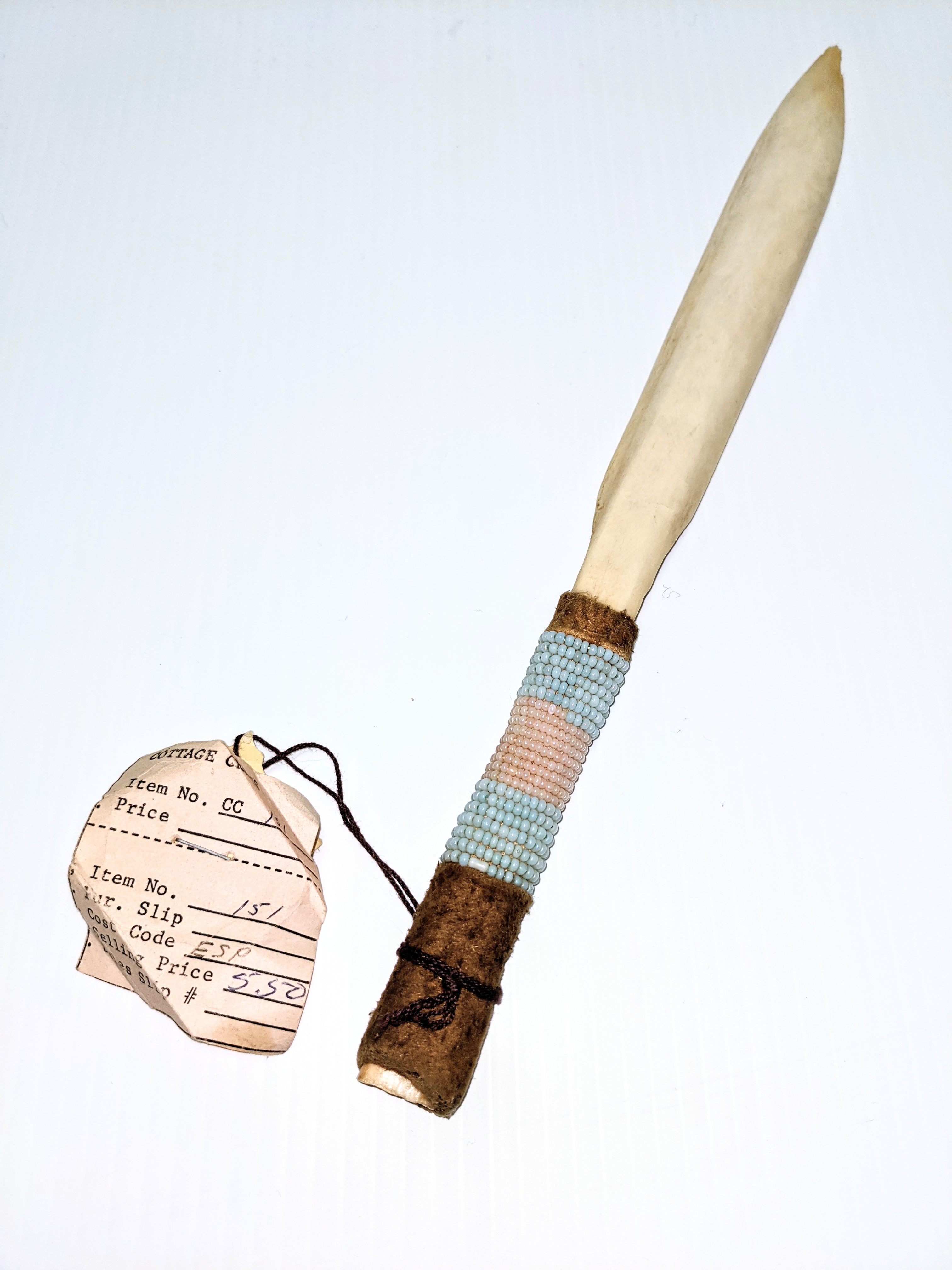
This bone knife is hand carved, has traditionally tanned moose hide leather as part of the handle, and has a pretty good edge on it! Before the arrival of traders and settlers to the area indigenous nations used such knives as weapons and tools in daily life. Long time Buttertown resident Helen Randolph purchased this knife from "Team Products" for $5.50. She donated it to us in 2005.

1/11/2021
2005.44.07 / Randolph, Helen

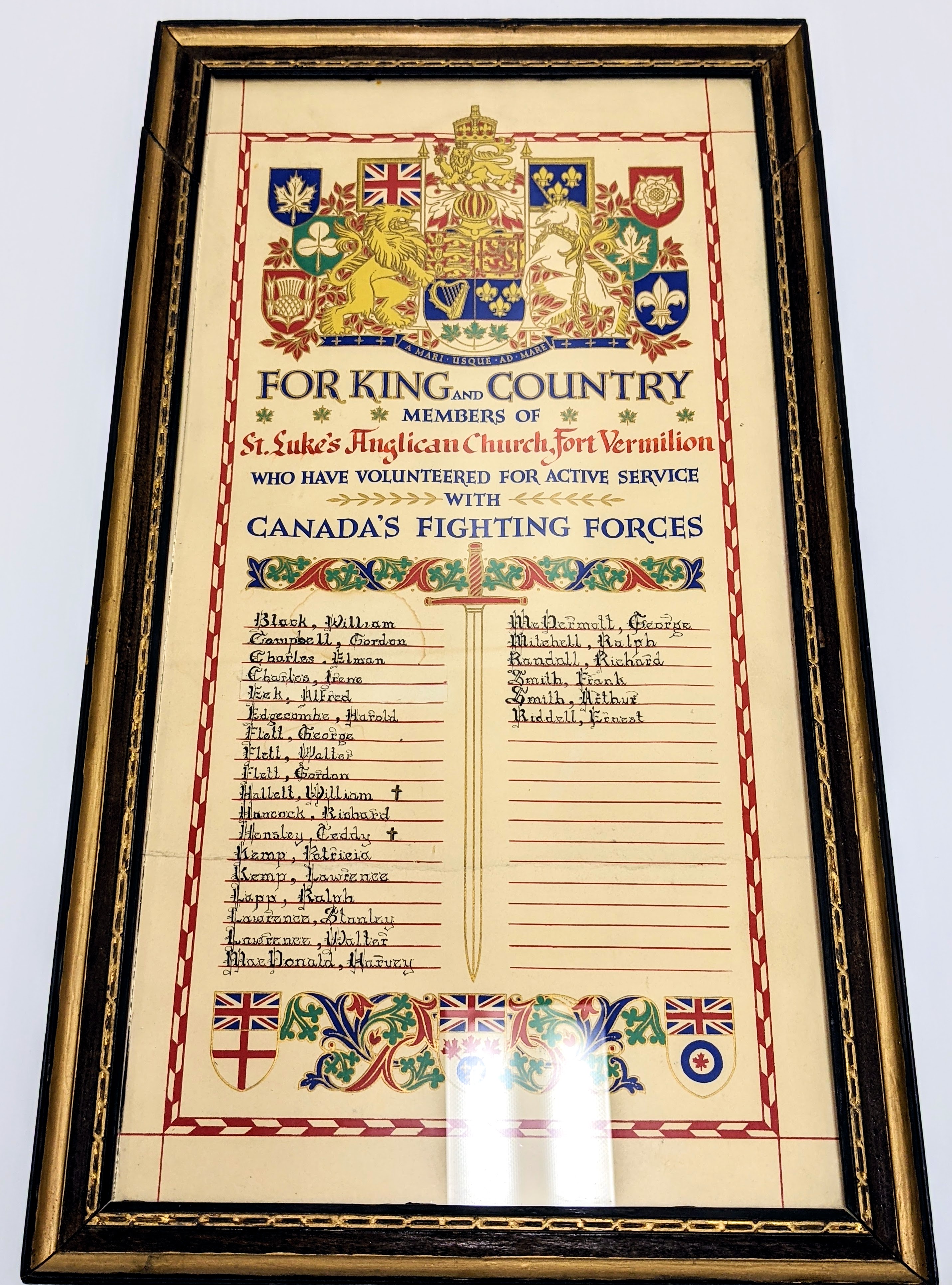
In Honor of Indigenous Veterans day today (Nov. 8 ) and national Remembrance Day on Thursday (Nov. 11) we have chosen this plaque labelling many of the Veterans from Fort Vermilion. Each name is carefully penned in by hand and the small crosses indicate those who were killed in action. The plaque comes from the St. Lukes Anglican church and is by no means a comprehensive list of the veterans from Fort Vermilion Area - if you would like such a list please get in touch!

8/11/2021
2001.13.18 / St. Lukes Anglican Church

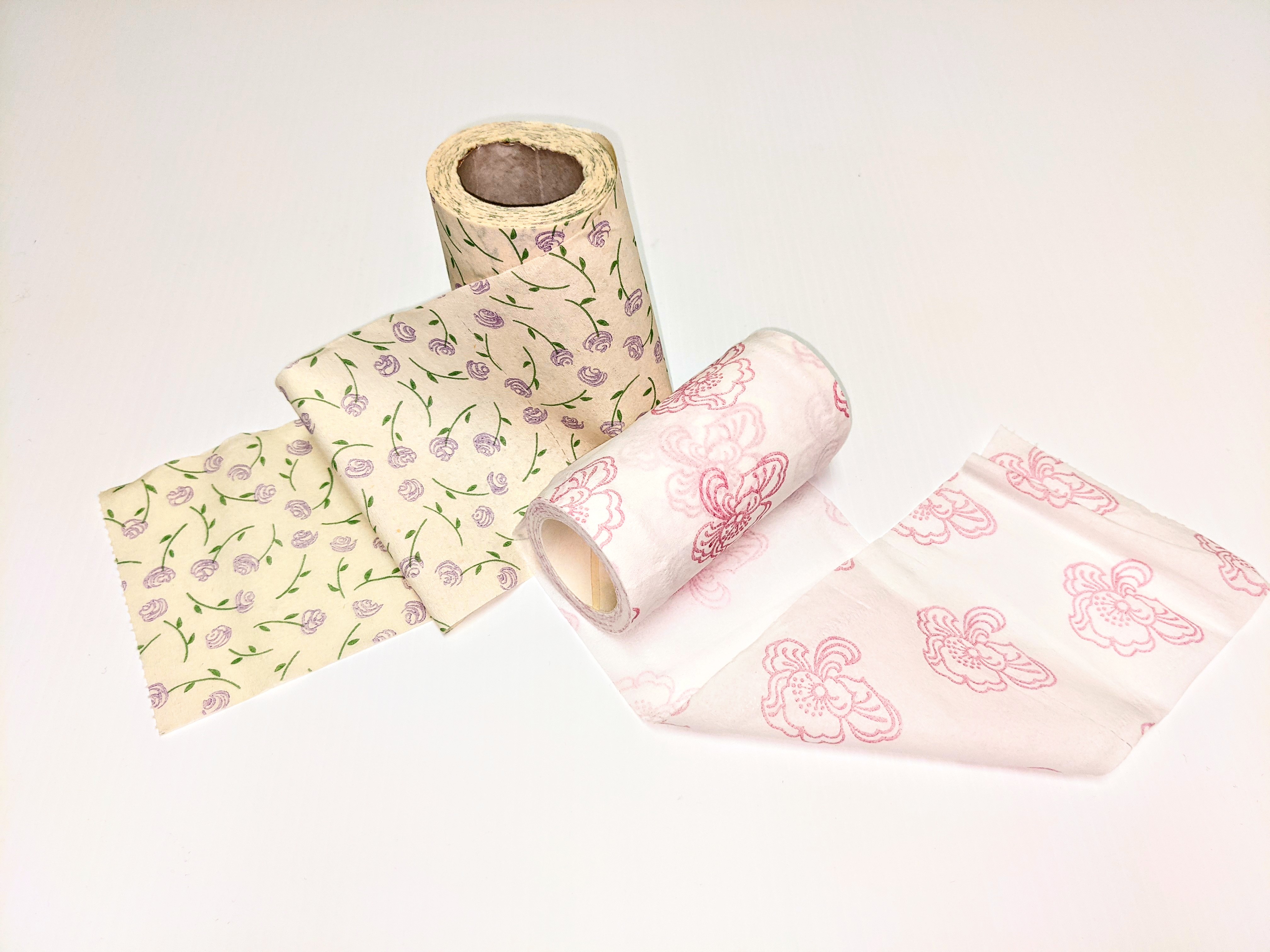
Colored and patterned  toilet paper became wildly popular in the 1950's. Its rise to fame came with themed bathrooms in which toilets, sinks, vanities and all other manner of bathroom accessories could be purchased in pastel colours - green blue and pink being the most popular ones. Patterned toilet paper is still common today - though the pattern is usually embossed into the white sheets instead of dyed on; this change came about after doctors warned on the potential health risks of ink in the paper! Coloured toilet paper (though not common) is still available today - perhaps a fitting way to celebrate world toilet day on Friday the 19th!

15/11/2021
2020.26.09 / Swalm, Mary
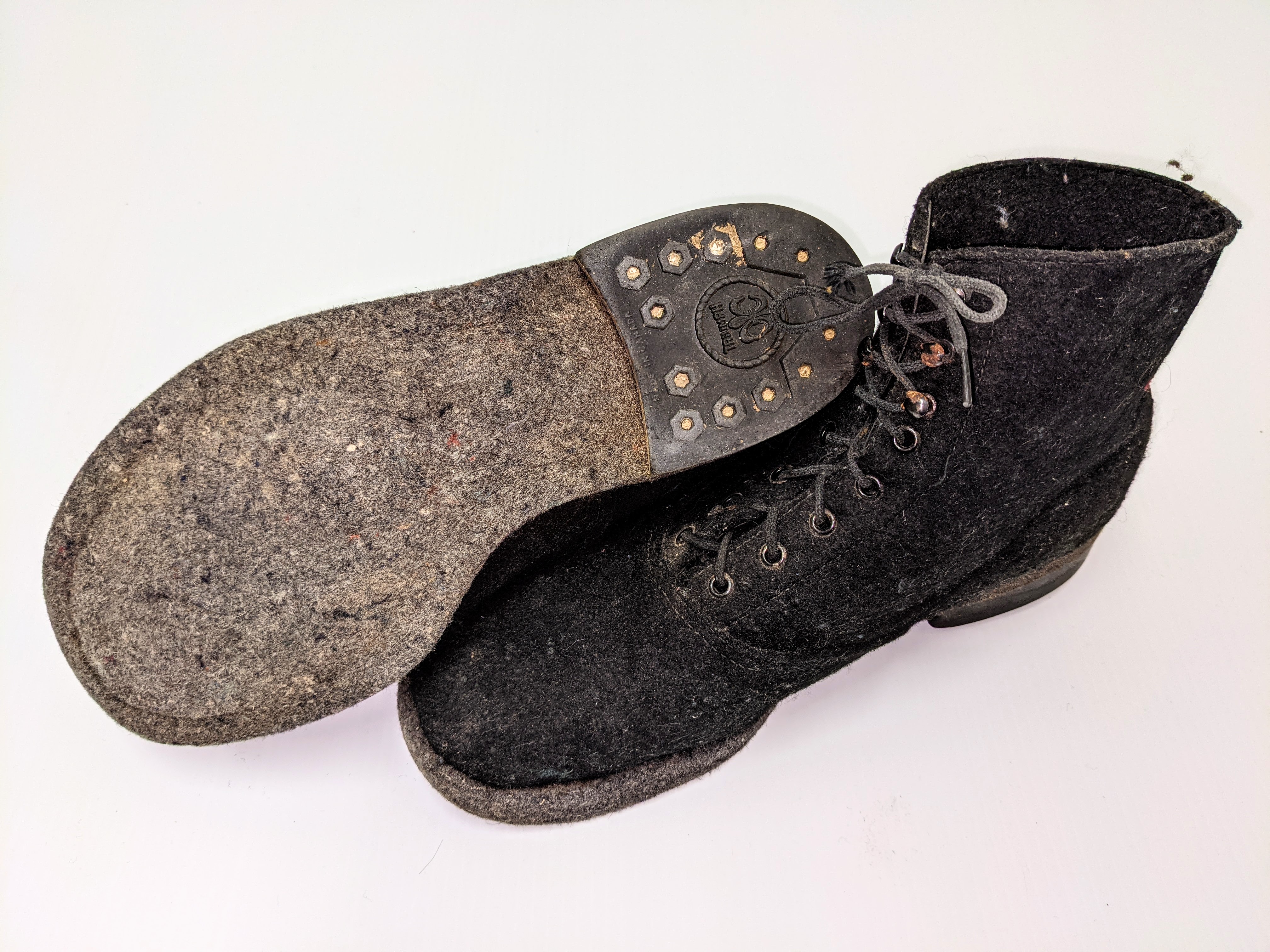
WOW what a dump of snow we just got - if you don't have your winter boots out yet, now's the time to get them!
The pair above are ones that we have in our collection and despite being labelled as "Triumph" brand and "made in Canada" our information (and searching) proved futile in providing more details. The heel of the boot appears to be genuine rubber and the tread of the shoe is completely felt - which seems  like it would be slippery on the snow and ice! Perhaps they are a special made boot for a specific job - if you have any leads let us know!

22/11/2021
996.40.05 / Eek, Marilyn

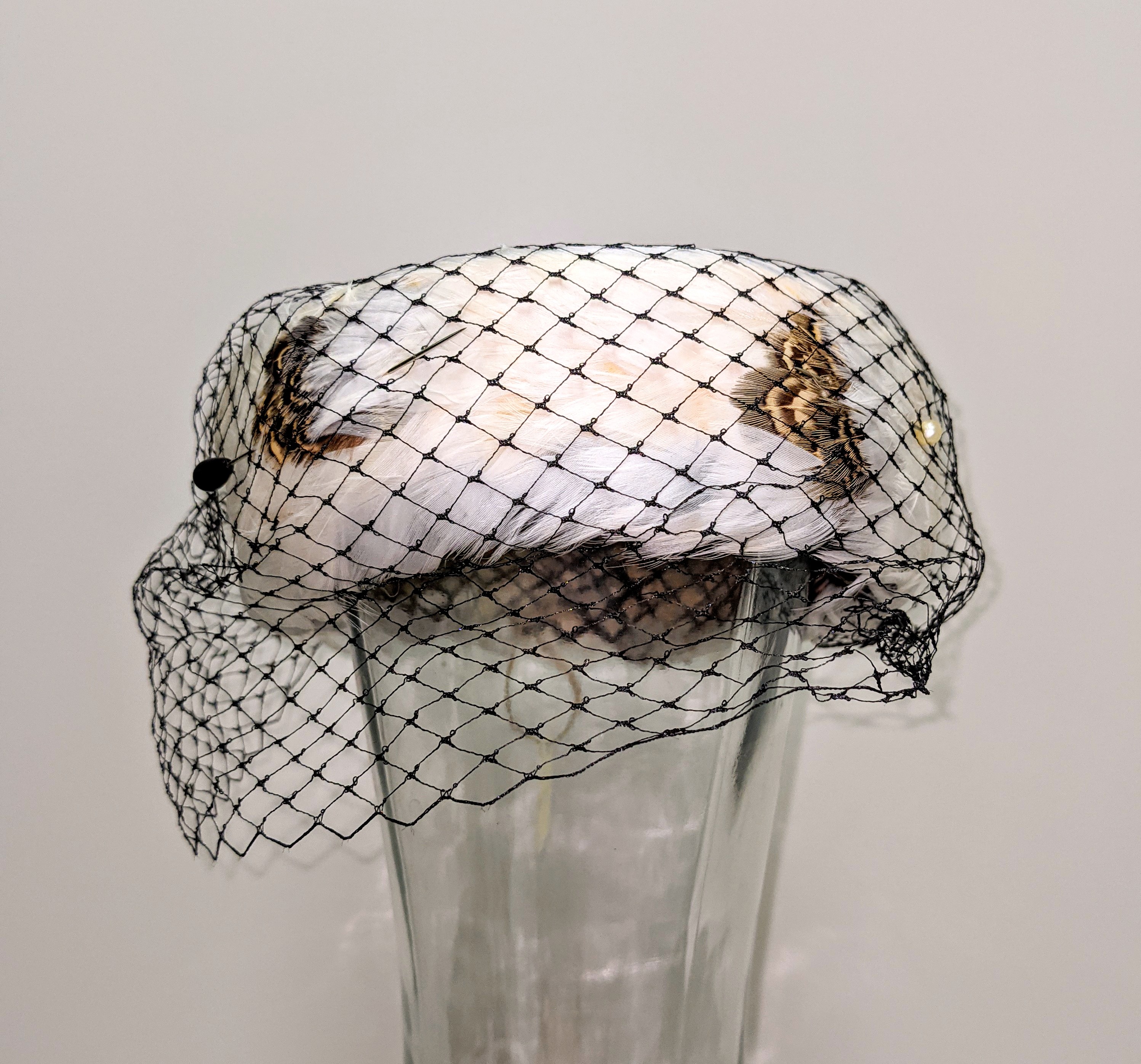
This beautiful hat comes from the Jean Campbell collection and harkens back to fashion in the 40's. Hats were not rationed through WWII but rather were considered a luxury item and heavily taxed - sometimes up to 33%! Small hats like this one were worn askew and used hat pins to hold them in place. Though this hat has no tags or stamp to label the maker - it likely isn't homemade considering it is made of real feathers (not chicken) with a plastic veil to cover the face.

29/11/2021
2002.81 / Campbell, Jean

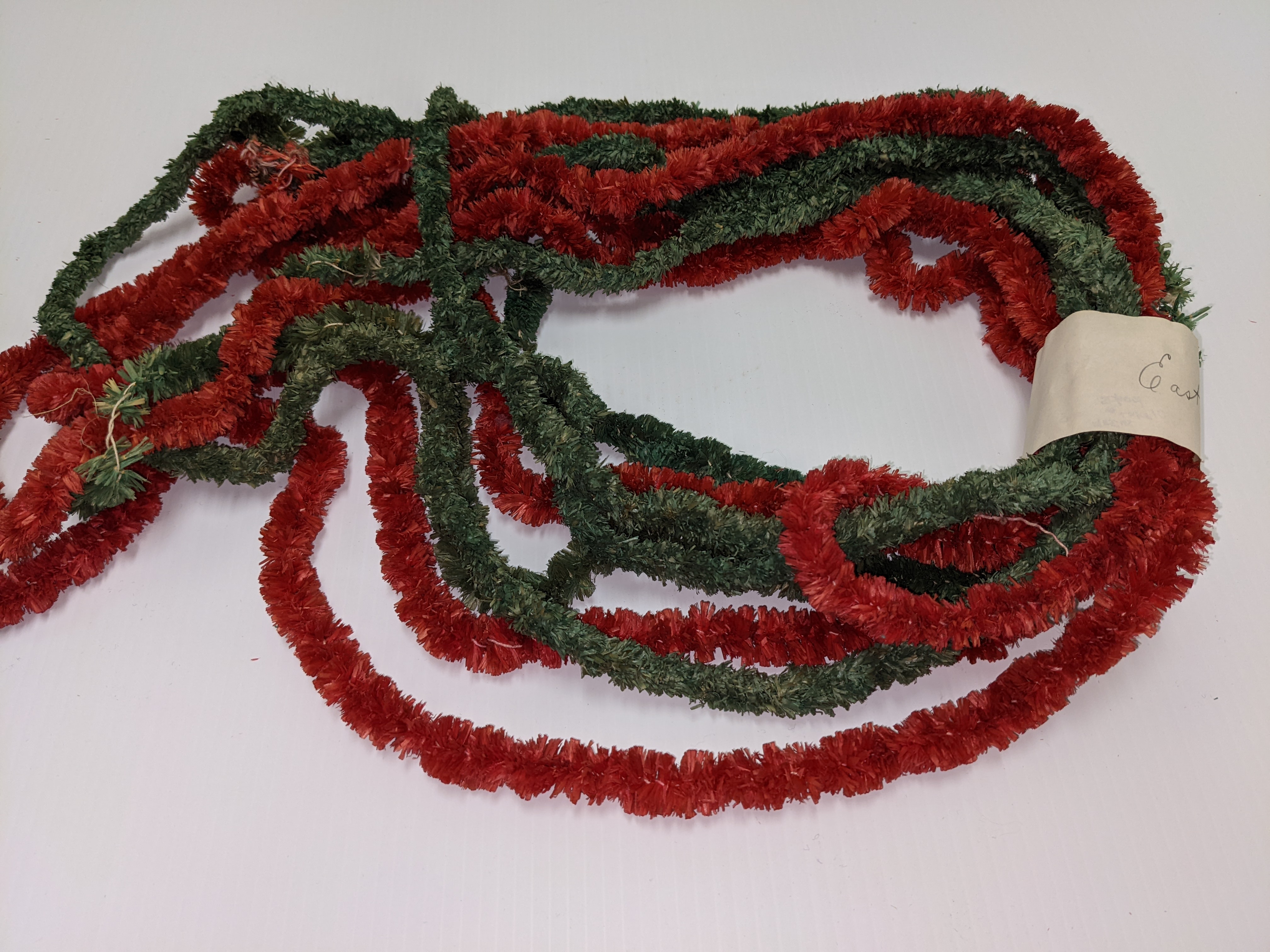
Look at this beautiful garland that once adorned many a Christmas tree! It's made of a natural fibre (potentially straw or grass) sewn and twisted together along a string. The garland was then dyed to get rich red and green colours. Though we are unsure of the time period this artifact comes from - it is very fragile and takes great care to prevent it from flaking apart!

13/12/2021
2002.226.118.02 / Campbell, Jean

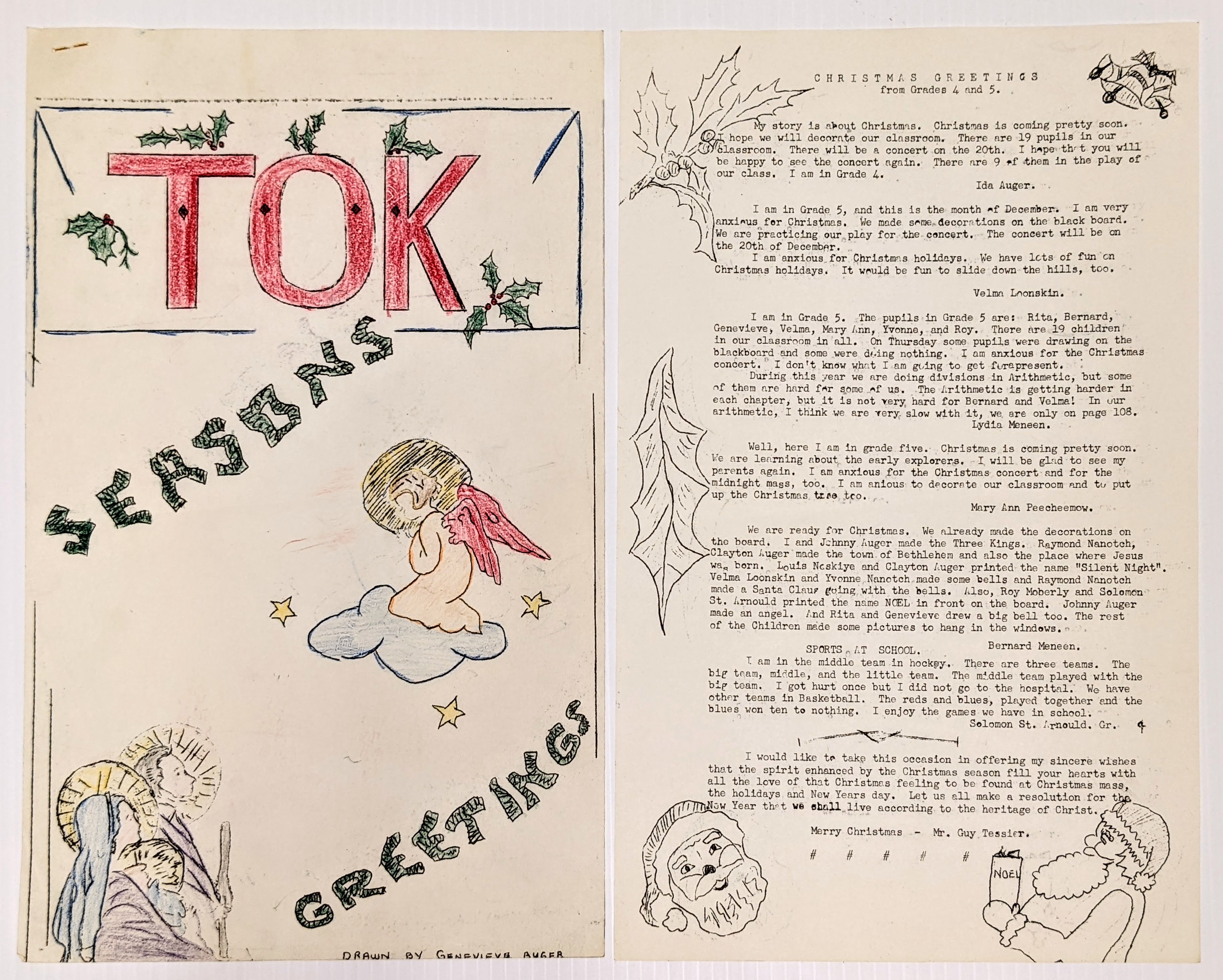
These two pages are original copies of the St Henri School Christmas Newsletter known as "TOK". This is the first edition and is dated December 1961. The newsletter contains all kinds of interesting details including interviews with various community members, Christmas wishes of various students, and pupils interpretation of the Christmas Story. If your interested in this news letter and want more information - stop by for a visit we have a copy you can flip through!
 If you know what the title "TOK" means - we would also love to know!
PS. If you read the greetings you will learn that on this day 60 years ago
these students were performing in their school Christmas Concert!
20/12/2021
998.01.47.01 / Newman, Jack and Pearl
0


This audio snippet comes from an interview between Warren Clarke and Lorna Bell in 1971. The duration of the interview is about 30 mins long and covers topics such as Diptheria, Life in the Old Bay House and other various rabbit trails. The main story of the interview is Warrens witness account of the first Airplanes to fly over and land in Fort Vermilion. The planes were from the Imperial Oil Company and came to Fort Vermilion to pick up fuel that had been deposited a year or so before.  In 1921 many individuals in the community had never heard of an airplane - let alone seen one - have a listen to the clip above for Warrens rather amusing recollection of this event!

2005.02.03 / Bell, Lorna

06/12/2021

Contact Us
  • External link opens in new tab or window 5001 44th Tardiff Ave. , CA, Fort Vermilion
  • External link opens in new tab or window7809274603
  • External link opens in new tab or windowfvhc@hotmail.ca
Useful Links

Home

Hours

Contact

close lightbox